
Waldrand — History & Facts
Did the painter know this moment would outlive them? In the quiet embrace of nature, Waldrand invites us to ponder not just existence but the yearning that underpins it. Look to the left at the subtle play of shadow and light filtering through the trees, where dappled sunlight dances on the forest floor, creating a mosaic of warmth and coolness. The meticulous brushwork captures the delicate textures of leaves, their greens varying from deep emerald to pale lime, evoking a sense of vibrant life. The composition cleverly leads the eye along the winding path, suggesting a journey both physical and emotional—one that beckons exploration and reflection. As you delve deeper, consider the contrasts within the artwork: the solidity of the ancient trees stands in stark juxtaposition to the ethereal light that filters through, echoing the tension between permanence and fleeting moments.
Small details, like a solitary blossom amid the underbrush, signify hope and resilience, while the shadows hint at the unknown lurking just beyond the light’s reach. This interplay of elements conjures a feeling of longing, as if the viewer is caught between the beauty of the present and the mysteries of what lies ahead. In the early 20th century, Busch painted Waldrand during a profound transformation in the art world, marked by a shift toward modernism. At this time, he was exploring themes of nature and emotional depth, seeking to capture the essence of human experience through the lens of the natural world.
This piece reflects both his personal journey and the broader artistic movement, capturing a timeless moment that resonates deeply with the viewer.
More Artworks by Wilhelm Busch
Browse all →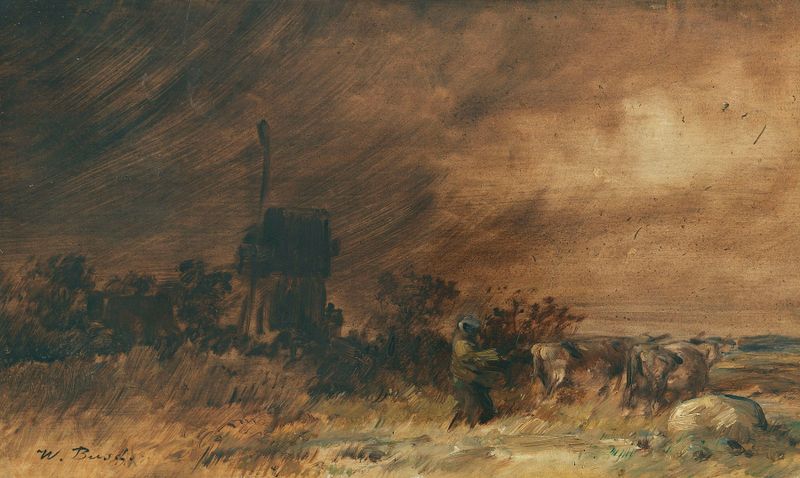
Wiedensahler Bockmühle bei aufziehendem Sturm
Wilhelm Busch

Niedersächsische Landschaft
Wilhelm Busch

Blick aus einer Scheune
Wilhelm Busch
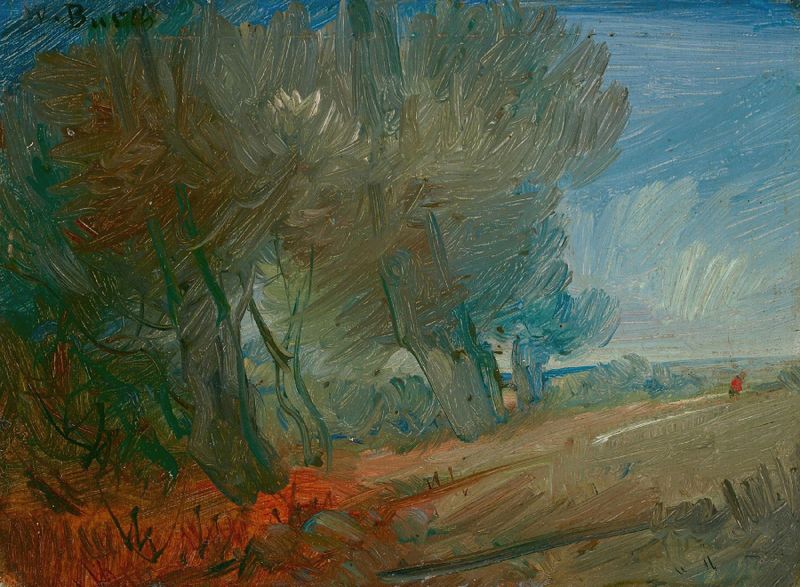
Waldrand mit Rotjacke
Wilhelm Busch

Weg zwischen Kornfeld und Sträuchern mit Katen im Hintergrund
Wilhelm Busch

Waldrand mit sonnenbeschienener Baumgruppe
Wilhelm Busch
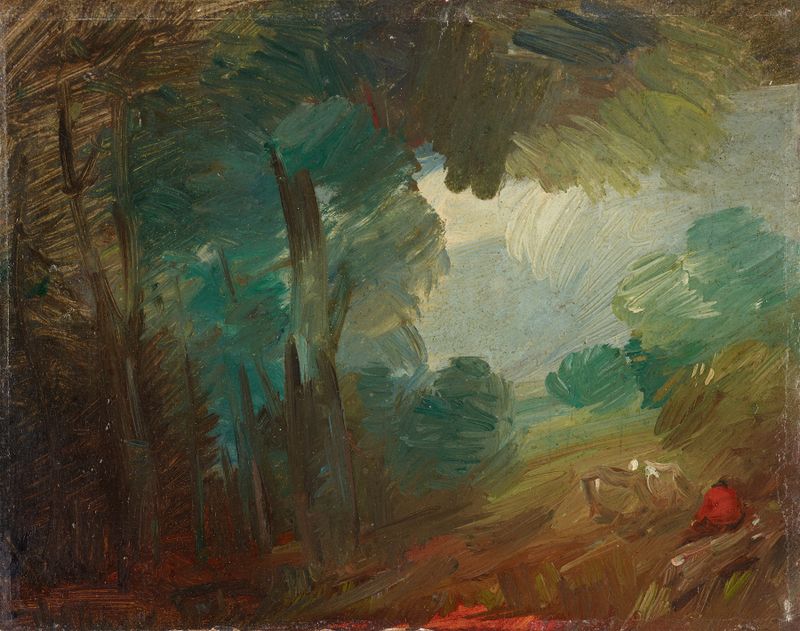
Waldlandschaft mit Kühen und Bauern
Wilhelm Busch





