
Blick von Heiligenstadt auf den Nußberg — History & Facts
Can beauty exist without sorrow? This question lingers in the air as vibrant landscapes stir the emotions within us, revealing the duality of joy and melancholy. Look to the horizon, where gentle hills rise and fall under a sweeping sky, painted in soft, atmospheric hues. The foreground teems with dense foliage and light-dappled paths that guide your gaze towards the Nußberg, a distant yet inviting presence. Each brushstroke breathes life into the scene, allowing the viewer to sense the changing seasons as warm sunlight dances on the leaves, creating an interplay of light and shadow that encapsulates both serenity and longing. Yet, beneath the tranquil surface, an undercurrent of tension exists.
The contrast between the lush greenery and the distant, shadowy hills evokes a sense of yearning and the inevitable passage of time. The harmonious colors invite the viewer into a moment of peace, while the looming mountains suggest a horizon filled with uncertainty and transformation. This is a landscape that reflects not just beauty, but the quiet revolutions within the human experience. Carl Moll created this piece in 1903, during a period of significant change in Vienna’s art scene.
As an influential member of the Vienna Secession, he was deeply engaged with the evolving dynamics of modern art. The vibrant colors and emotive landscapes of his work can be seen as a response to both personal and societal upheaval, capturing the essence of a world on the brink of transformation.
More Artworks by Carl Moll
Browse all →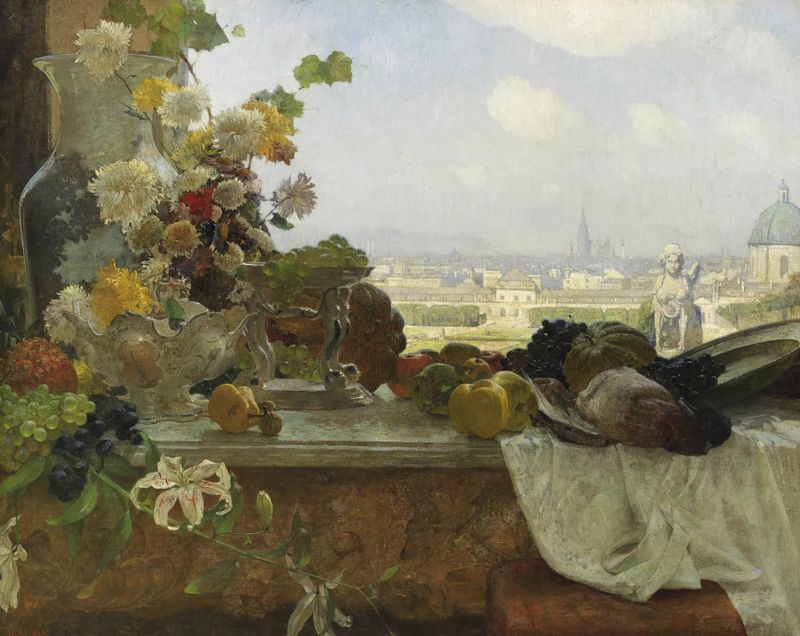
Blick vom Belvedere auf die Innere Stadt
Carl Moll

Garten in Döbling (Garden in Döbling, Vienna)
Carl Moll
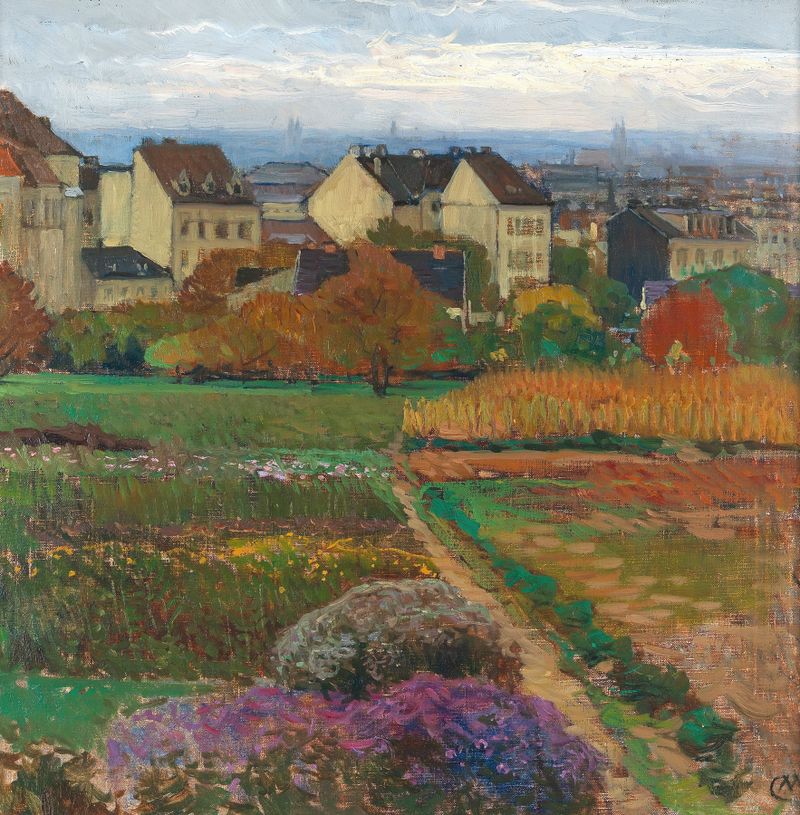
Döbling Wien
Carl Moll

Motiv aus dem Schloßpark in Jevisovice
Carl Moll
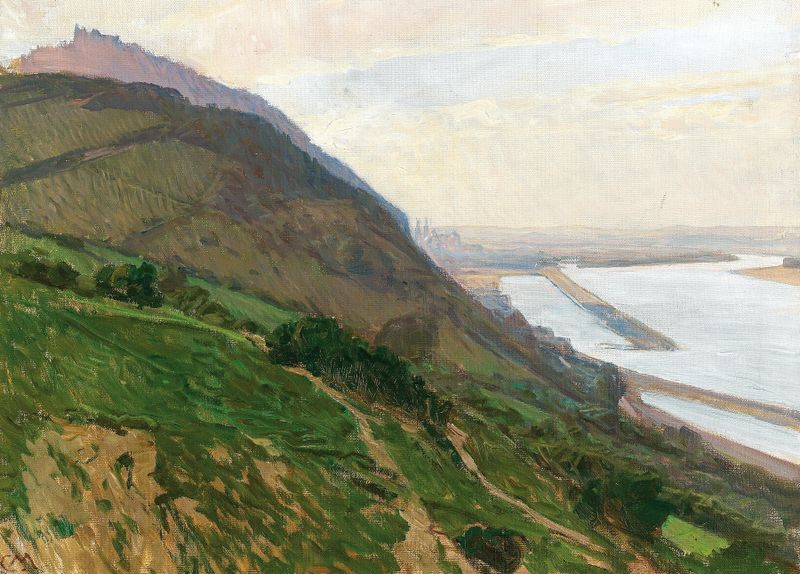
Donauansicht
Carl Moll
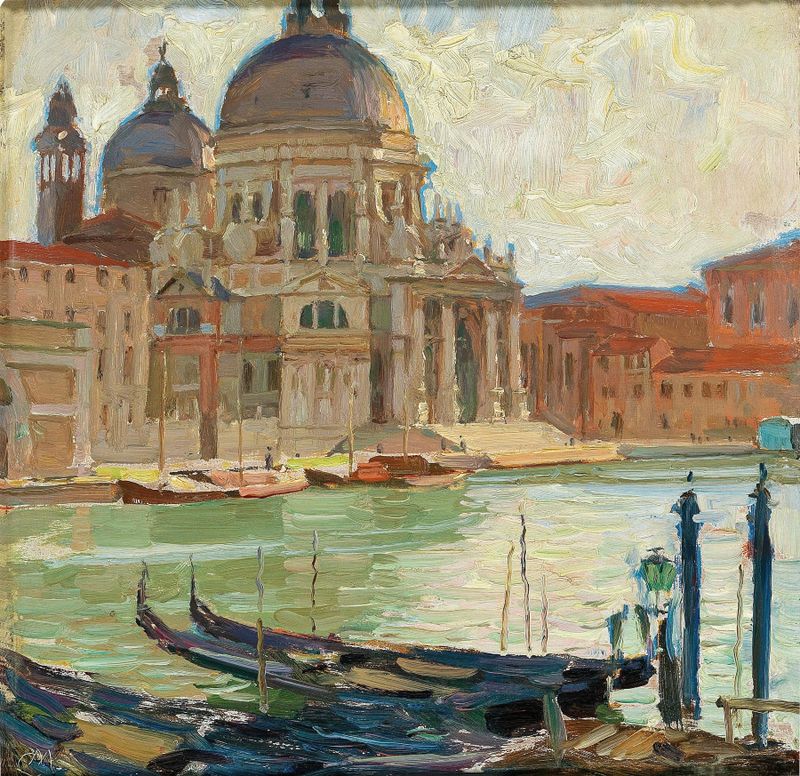
Kirche in Venedig
Carl Moll

Wassermühle in Goisern (nach Emil Jakob Schindler)
Carl Moll

Winter at Hohe Warte, Rothschild Gardens
Carl Moll

Römische Ruine in Schönbrunn
Carl Moll

Kirche St Michael in Heiligenstadt
Carl Moll





