
Boats on a choppy sea, in the background a frigate — History & Facts
What first draws the eye is the restless movement of the sea itself, each wave crest painted with a careful hand that invites the viewer to feel the roll and pitch of the boats. The largest vessel, its Dutch flag snapping in the wind, leans into the churning water, its sails taut and crew intent on their work—every line and gesture shaped by the demands of the moment. In the distance, a frigate rides the horizon, its rigging etched against a sky thick with layered clouds, suggesting both the vastness and the unpredictability of the North Sea.
The palette is sober, dominated by cool greys and muted blues, but touches of sunlight break through, catching the sails and the foam, creating a rhythm between light and shadow that animates the whole scene. Every detail, from the angled masts to the scattered boats, is a cue to the viewer: this is a world of vigilance, skill, and constant negotiation with nature. Works like this by Arnoldus Van Anthonissen belong to a proud tradition of Dutch marine painting, a genre that flourished in the seventeenth century as the Dutch Republic’s fortunes rose on maritime trade. Such paintings were prized by merchants and shipowners, who saw in them both a record of their nation’s prowess and a reminder of the perils that came with it.
While little is recorded about this specific work—its date, medium, and early history remain obscure, with its presence now documented only in Arcadja auction results—it stands as a testament to the era’s fascination with the sea as both livelihood and adversary. The image asks us to linger, to trace the sweep of the clouds and the tilt of the boats, and to imagine the stories that unfold just beyond the painted horizon.
More Artworks by Arnoldus Van Anthonissen
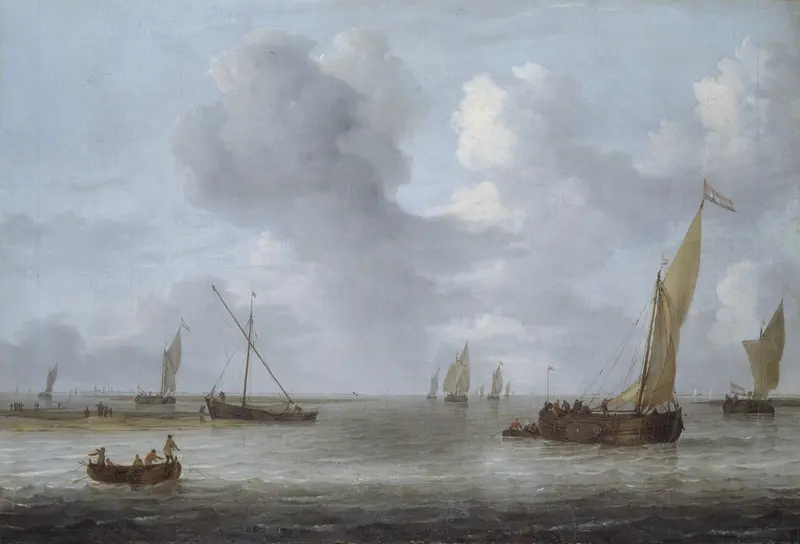
A River Scene with Shipping
Arnoldus Van Anthonissen
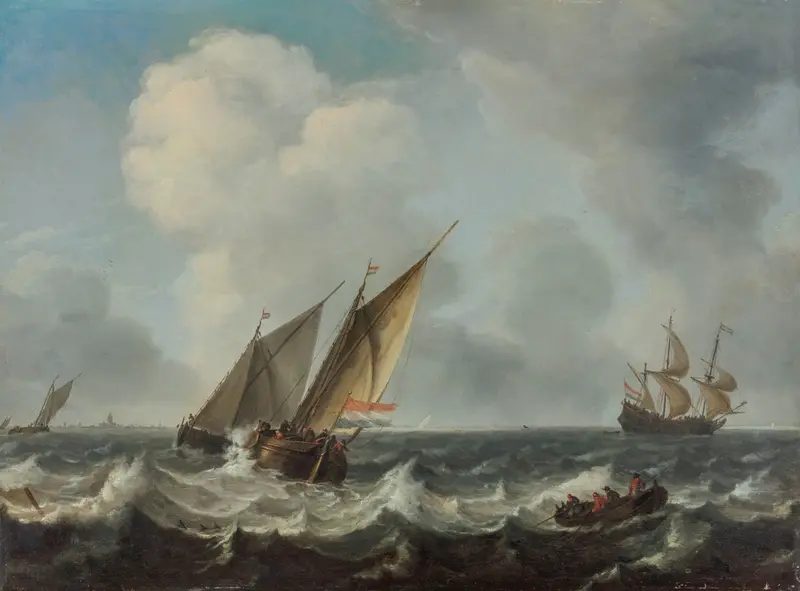
Two ‘smalschips’ and a rowing boat on choppy waters, a man-of-war and another sailing vessels beyond, a town on the horizon
Arnoldus Van Anthonissen
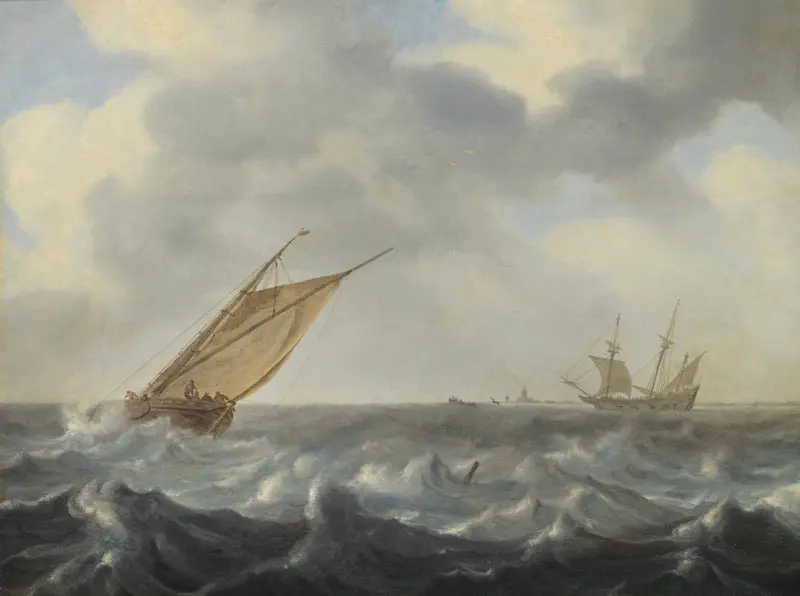
A fishing cutter and a two-master in choppy seas near a coast
Arnoldus Van Anthonissen
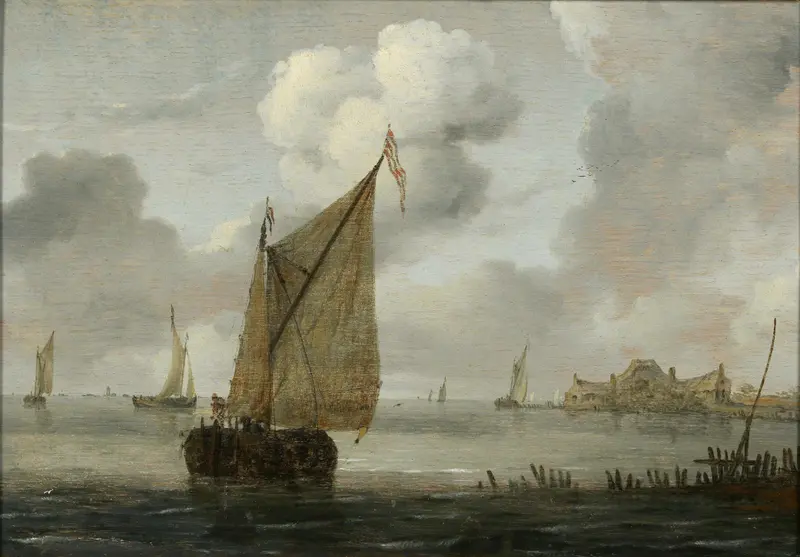
Sailing boats near a coast
Arnoldus Van Anthonissen
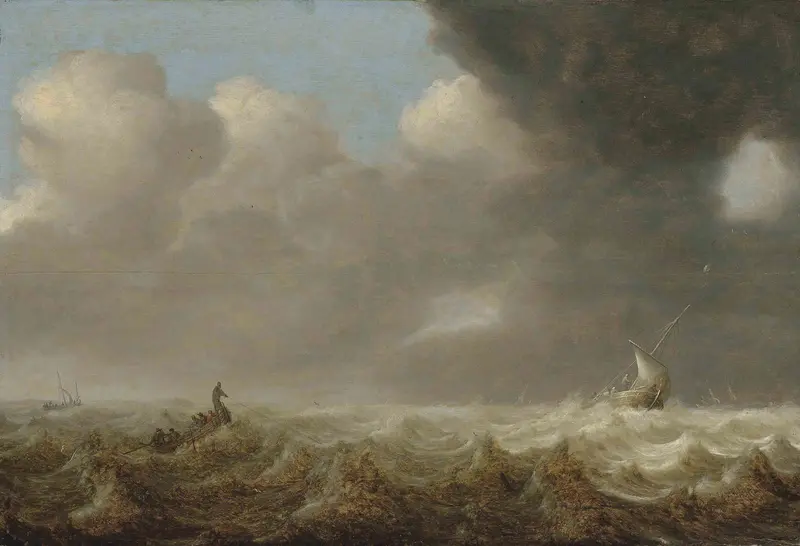
Fishing boats in rought seas
Arnoldus Van Anthonissen
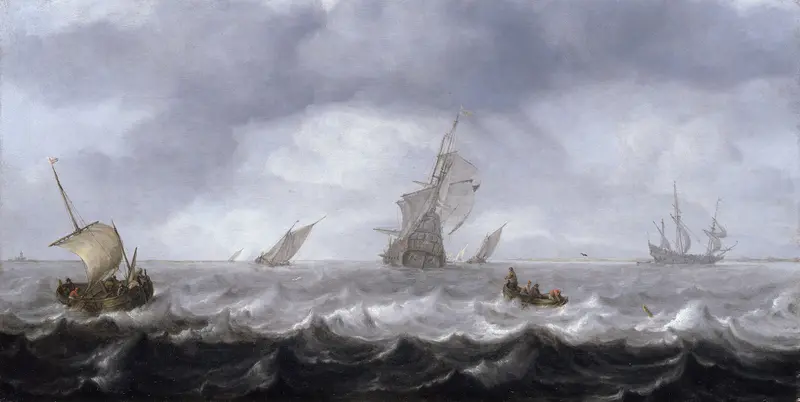
Seascape
Arnoldus Van Anthonissen
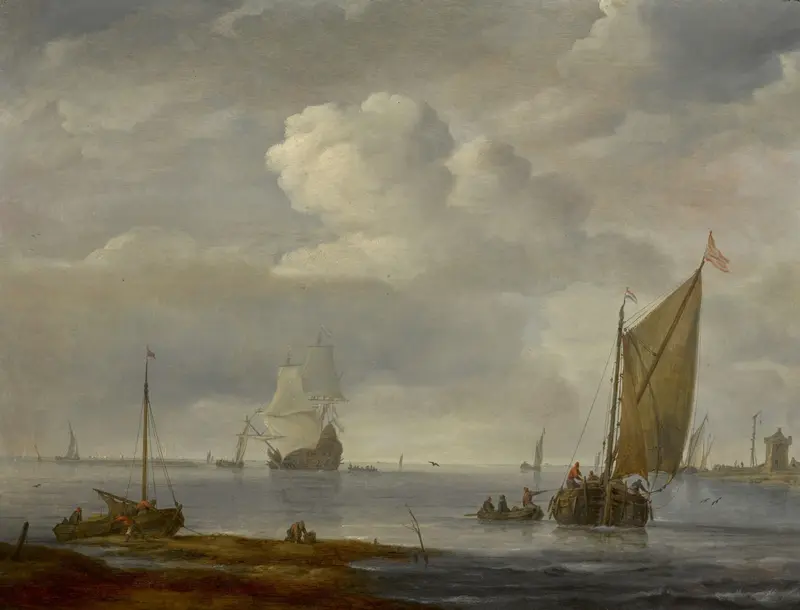
Coastal Scene with a Wijdschip Off-Shore, a Moored Pink, and a Man-O'-War at Anchor Beyond
Arnoldus Van Anthonissen
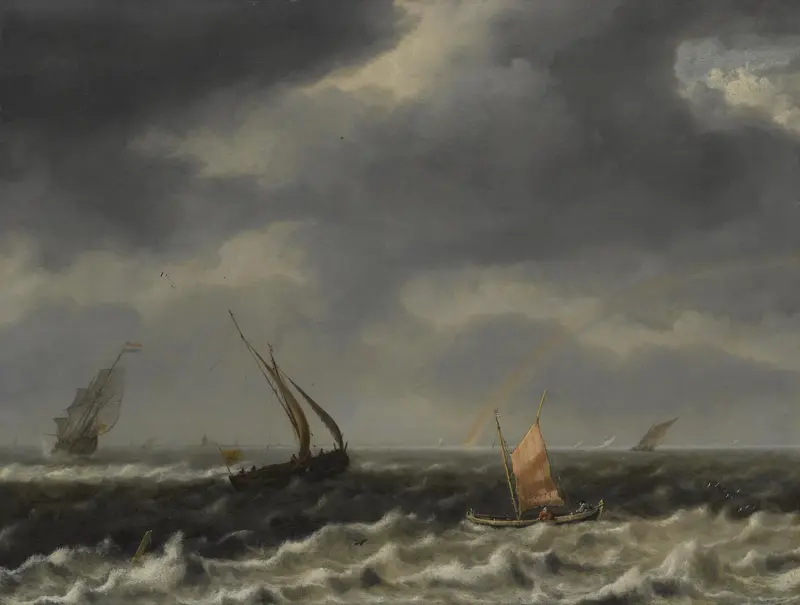
A seascape with Dutch shipping vessels in choppy seas and a rainbow in the distance
Arnoldus Van Anthonissen





