Boats Sailing Near A Rocky Coast — History & Facts
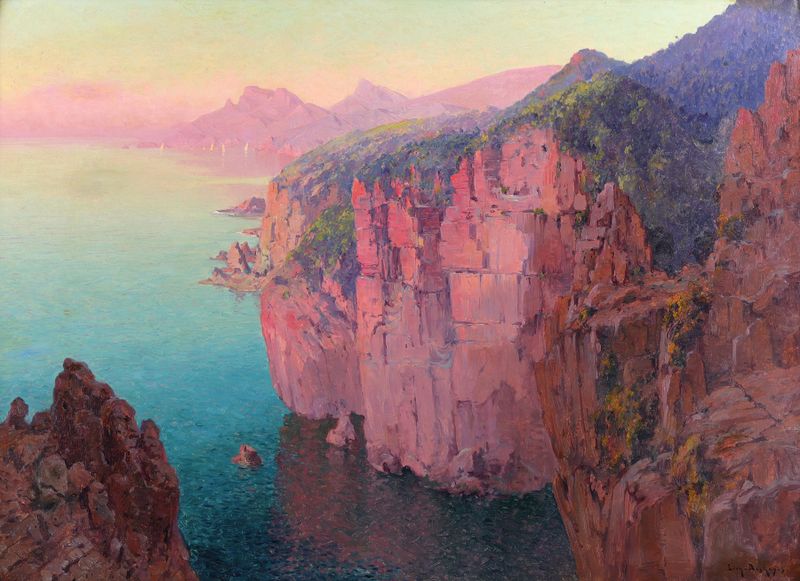
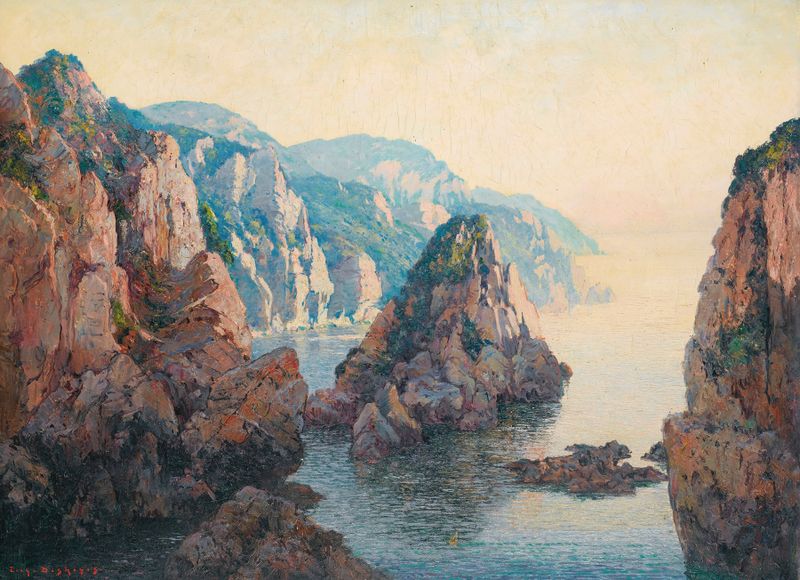
Where does light end, and longing begin? In Boats Sailing Near A Rocky Coast, the chaotic interplay of nature's elements invites us to ponder the boundaries of our desires amidst the tumult of existence. Look to the center, where the boats appear to dance precariously on the restless waves, their sails stretching taut against the wind. Notice how the vibrant blues of the sea clash with the deep grays of the rocky shore, creating a visual symphony of tension. The contrast of light and shadow is masterfully rendered, with sunlight piercing through the clouds, illuminating the boats while leaving the coast shrouded in a dramatic gloom.
This dynamic composition draws the eye toward the horizon, suggesting both freedom and the treacherous nature of the journey ahead. In the edges of the canvas, subtle details reveal deeper emotional currents. The tumultuous waters suggest chaos, while the distant shoreline symbolizes the stability yet unattainable dreams that elude the sailors. Each brushstroke captures the fleeting moment between calm and storm, a reminder of the fragility of human ambition when faced with nature's indifference.
The boats, though filled with promise, seem dwarfed by the overwhelming power of the landscape, reflecting the existential struggle of seeking purpose amidst uncertainty. Eugène-François-Adolphe Deshayes painted this work in an unspecified but pivotal moment in his artistic career. Active during the 19th century, he was influenced by the Romantic movement, which emphasized the sublime in nature. This painting reflects a transitional period in his style, illustrating a growing fascination with the interplay of light, shadow, and emotion that would resonate throughout his oeuvre.