Calanques Near Bougie In Algeria — History & Facts
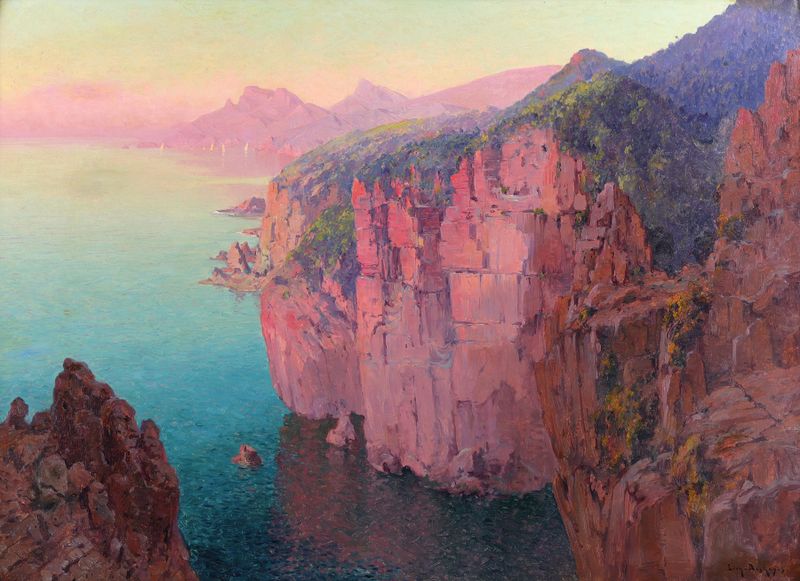
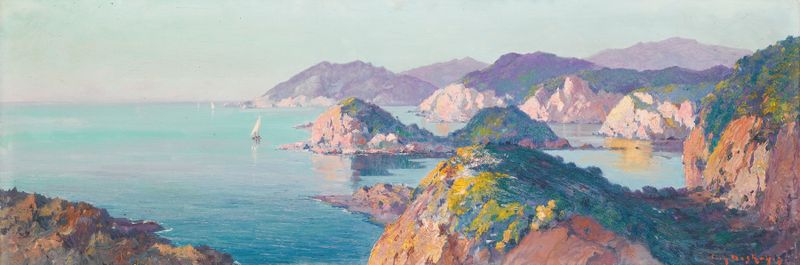
As we gaze upon the landscape captured in this painting, a profound revelation unfolds, whispering secrets of nature’s duality. Focus your attention on the rugged cliffs that rise dramatically to the left, their rich, earthy tones intermingling with streaks of sunlight that cascade down their faces. Notice how the cerulean sea embraces the shoreline, its waves gently lapping against the rocks, creating a captivating interplay of motion and stillness. The palette, infused with warm golds and vibrant blues, evokes a sense of tranquility, yet hints at the underlying turbulence of both land and water. As you delve deeper, consider the contrasts at play: the serene beauty of the seascape juxtaposed with the jagged cliffs signifies not just a physical boundary but an emotional one.
The light bathes the scene in an almost ethereal glow, suggesting that beneath the surface beauty lies the weight of history and struggle. This duality mirrors the human experience—where calm often resides next to chaos, and beauty sometimes conceals deeper truths. Created during a time when the artist was exploring the Mediterranean landscapes, this piece reflects the burgeoning movement towards realism and the fascination with the natural world in the 19th century. As Deshayes navigated the complexities of his artistic journey, the vibrant beauty of Algeria became a canvas for not just the external world but an insight into the inner turmoil of existence, capturing both the allure and hardship of life itself.