Boerenhofstede met schuur — History & Facts
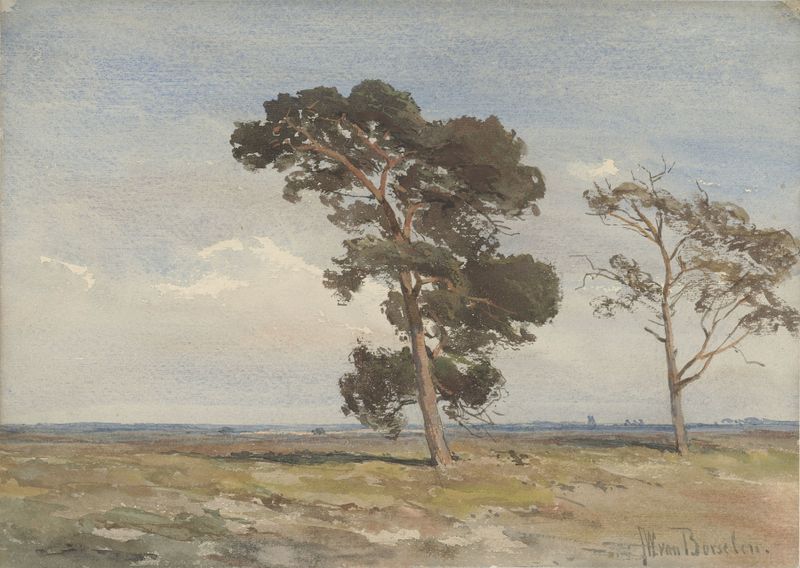
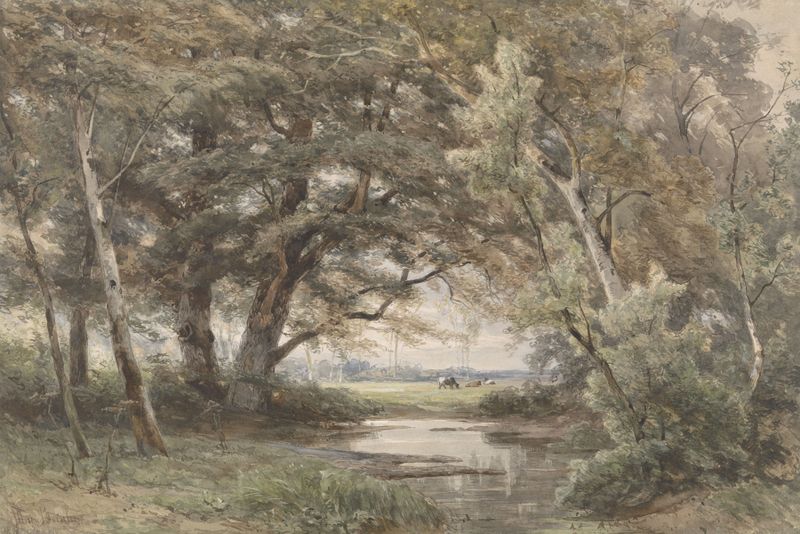
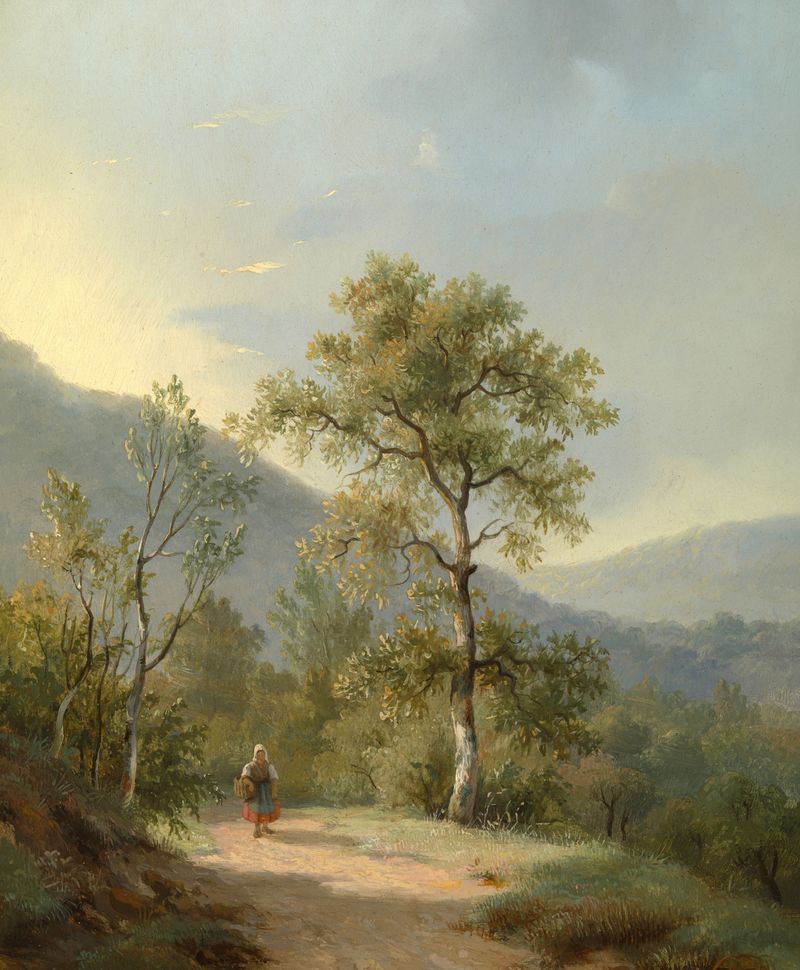
What if beauty was never meant to be finished? This question lingers in the air, evoking an obsession with the essence of rural life captured in stillness and time. Look to the foreground where a humble farmhouse nestles among lush fields, its weathered facade telling stories of seasons past. The artist layers rich greens and earthy browns that contrast with the soft, golden hues of sunlight spilling across the scene. Notice how the light dances upon the thatched roof, illuminating the texture of the straw and revealing the delicate brushwork that brings the landscape to life.
The careful attention to detail invites the viewer to consider not only the architecture but also the life it sustains. Within this tranquility lies a deeper narrative, woven into the fabric of pastoral existence. The isolation of the farmhouse speaks to the solitude of rural life, while the surrounding fields, both inviting and daunting, reflect the perpetual dance between abundance and scarcity. Small figures tending to the land echo a timeless ritual of labor and love, suggesting that the beauty of this scene is imbued with a sense of longing and resilience. Jan Willem van Borselen painted this work during a transformative period in the Netherlands, between 1835 and 1892.
As the country navigated industrial change, the artist focused on capturing the essence of his homeland's rural landscapes, becoming part of the broader movement that sought to preserve the beauty of nature in the face of progress. This painting stands as a testament to an era filled with both hope and nostalgia, encapsulating an obsession that transcends time.