Watertje onder bomen aan het einde van een bos — History & Facts
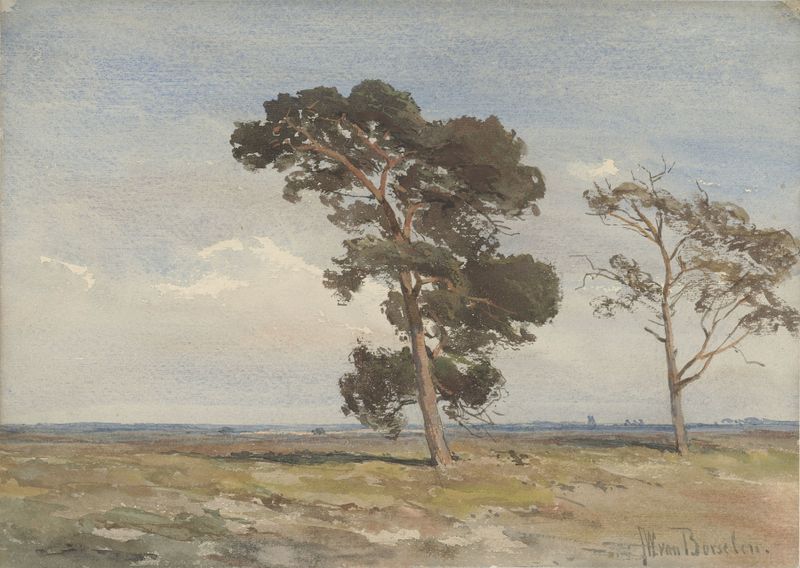
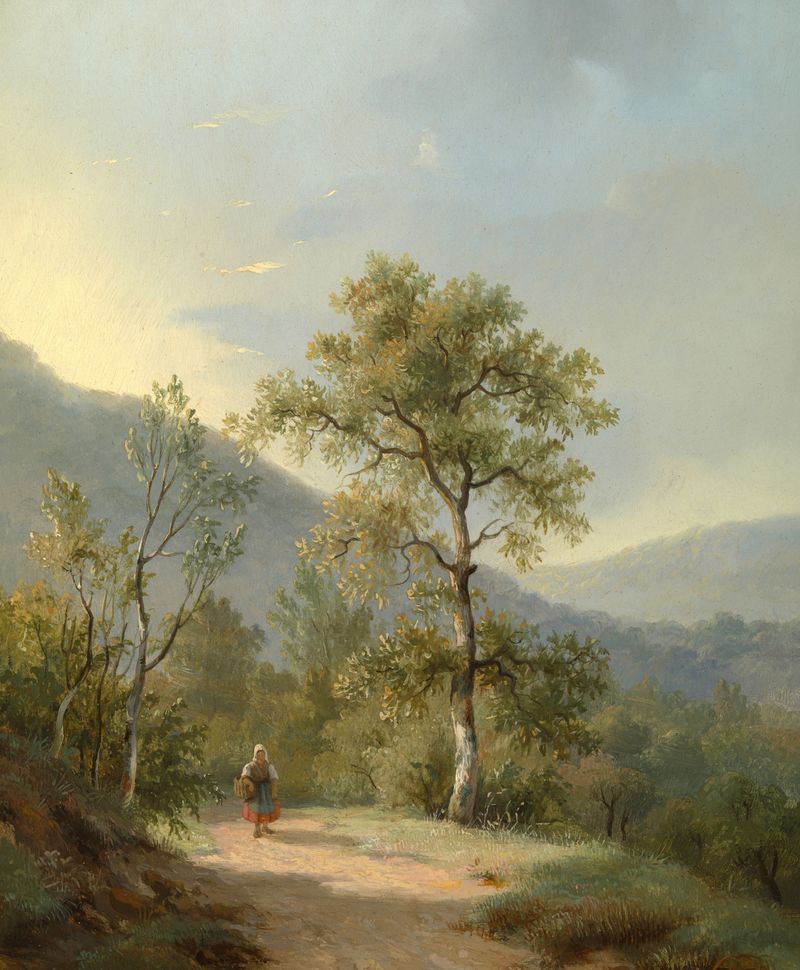
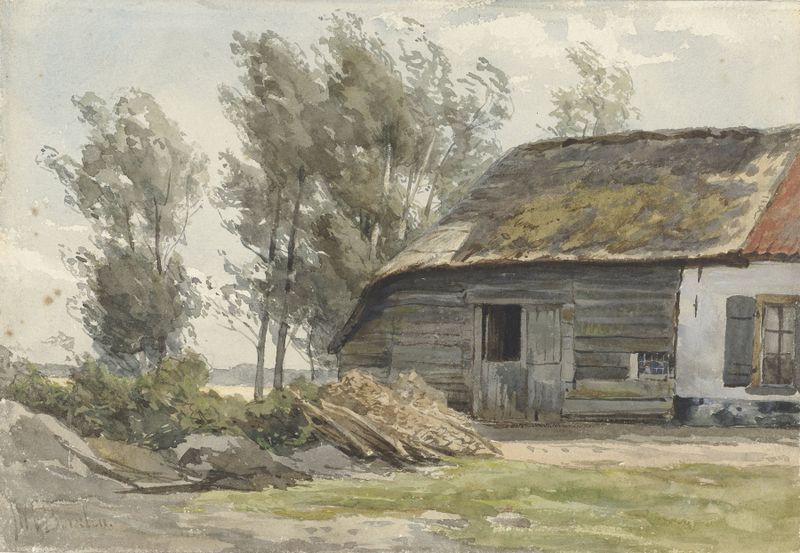
Could a single brushstroke hold eternity? In Watertje onder bomen aan het einde van een bos, the essence of yearning unfolds like the delicate leaves in the dappled light of a forest glade. Look closely at the tranquil scene where a gentle stream snakes through the underbrush. Notice how the soft greens and muted browns mingle, inviting the eye to meander as if drifting downstream. The light filtering through the trees creates a mosaic of shadows and highlights, each brushstroke adding depth and texture that breathe life into the stillness.
The composition draws you into the heart of the forest, where water reflects the sky and secrets linger just beneath the surface. Among the foliage, feelings of nostalgia and serenity intermingle, beckoning the viewer to linger. The serene flow of water symbolizes time and continuity, while the encroaching trees suggest safety and solitude. This contrast creates a moment of introspection, where the viewer might find themselves grappling with their own memories and dreams, echoing the artist's quiet contemplation of nature’s beauty and transience. In the mid-19th century, Jan Willem van Borselen painted this piece during a period of personal exploration and development.
Nestled in the tradition of Romanticism, he sought to capture the sublime in everyday scenes, mirroring broader movements in art that celebrated emotion and nature's majesty. This work reflects not only his technical prowess but also a deep yearning for simplicity and connection amidst the complexities of life.