Herder met schapen bij boerderij aan water — History & Facts
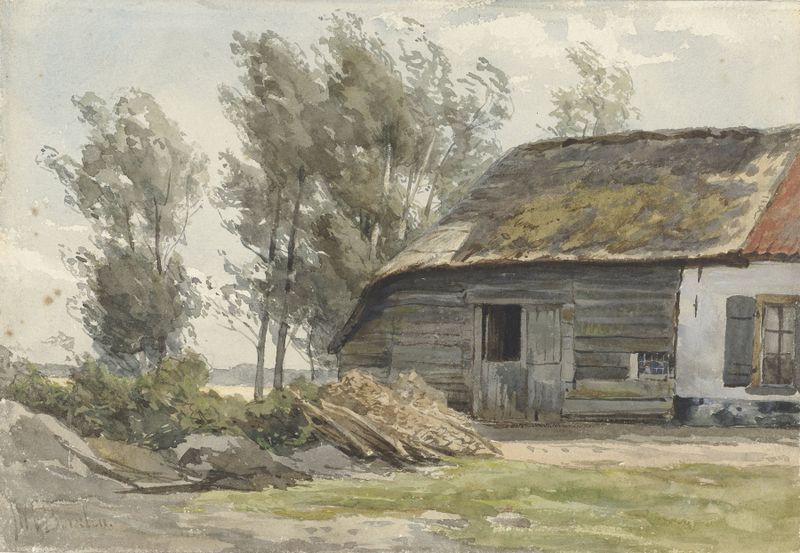
Could beauty survive in a century of chaos? In a world often overshadowed by turmoil, the image of pastoral tranquility offers a poignant reminder of hope. Focus on the serene water in the foreground, reflecting the gentle curves of the landscape. The herder, stationed beside his flock, draws the eye with a subtle gesture, guiding the viewer into the embrace of nature. Notice the soft hues of green and blue, intermingling with the warm earth tones that blanket the modest farm structure in the background.
Each brushstroke seems deliberate, evoking a sense of peace that contrasts with the tumult of the era. Amidst this idyllic setting lies a deeper narrative of resilience. The sheep, symbols of gentleness and simplicity, graze contentedly, embodying the persistence of life even in challenging times. The herder’s unwavering presence suggests the human spirit's tenacity against the backdrop of societal upheaval, hinting at a connection between man and nature that transcends the chaos beyond the canvas.
Here, hope emerges through the quietude, offering solace and comfort. Painted between 1835 and 1892, this work emerges from a time when the Netherlands was grappling with significant social and economic changes. Jan Willem van Borselen found his artistic voice within the academic traditions of his time, yet he infused his scenes with a deep appreciation for the simple joys of rural life. As Europe faced industrialization, his focus on serene landscapes served as a counterpoint to the rapid changes surrounding him, capturing a moment of stillness amid the storm.