Gezicht op de heide met twee bomen — History & Facts
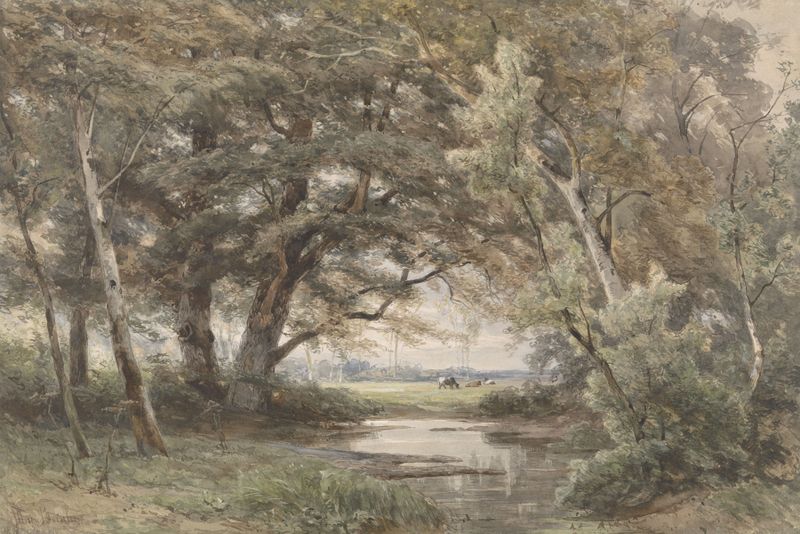
Could a single brushstroke hold eternity? In Jan Willem van Borselen's Gezicht op de heide met twee bomen, we find ourselves enveloped in a landscape that speaks to the heart's quiet longing, evoking profound melancholy amidst serene beauty. Look to the foreground, where the gentle undulations of heather stretch across the canvas, painted in soft purples and browns that harmonize effortlessly. The two trees stand sentinel, their gnarled branches extending skyward, capturing the soft glow of a late afternoon sun. The artist's technique — a delicate interplay of light and shadow — invites us to explore the depth of the scene, while the muted palette enhances the contemplative mood that lingers in the air. As you absorb the composition, consider the contrast between the vibrancy of the heather and the stillness of the trees.
They symbolize the transient nature of life, with the ever-changing landscape mirroring the passage of time. Each brushstroke tells a story of yearning, a connection to nature that transcends the visible, hinting at an invisible bond between the earth and our innermost feelings. The subtle interplay of colors whispers secrets of both joy and sorrow, revealing the duality of existence. Painted during the late 19th century in the Netherlands, this piece reflects a time of tranquility after the tumult of earlier conflicts.
Van Borselen, a member of the Hague School, embraced a style that celebrated the Dutch landscape, finding beauty in its quiet moments. His works often conveyed a sense of introspection, resonating deeply with a world that was evolving, yet still sought solace in the familiar embrace of nature.