Bord de la Seine à Meulan — History & Facts
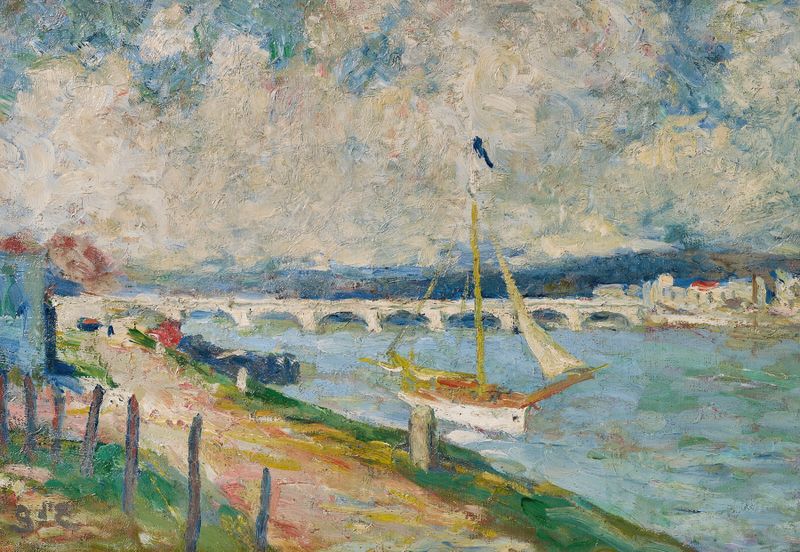
In the stillness of a moment, hope and faith intermingle like the colors on a painter’s palette, hinting at deeper truths that lie beyond the surface. Gaze at the gentle curve of the Seine, shimmering under the soft embrace of twilight; the river becomes a mirror, reflecting the dreams of those who stand before it. Notice how d'Espagnat builds layers of color with a deft hand, creating a tranquil atmosphere that invites the viewer to linger. The verdant trees, lush and vibrant, frame the scene, while the subtle gradations of blue and gold in the sky evoke a sense of serenity, suggesting a world where one might pause and contemplate the beauty of existence. Beyond the picturesque, the painting whispers of contrasts — the balance between nature and civilization, the harmony of evening light against the encroaching darkness.
The tranquil water appears to cradle the weight of the world, while the figures in the distance, almost ghostlike, hint at human fragility amid nature’s grandeur. This juxtaposition evokes a layered dialogue between faith in the beauty of the ordinary and the inevitable passage of time, allowing viewers to reflect on their own connections to the world. Created between 1898 and 1899, this work emerged during a pivotal time in d'Espagnat's career, as he was exploring Impressionism and its emotional resonance. The late 19th century marked a transition in the art world, with artists seeking to capture fleeting moments of life and nature.
The artist painted this piece while immersed in the rich artistic environment of France, where experimentation and innovation flourished, allowing him to explore the interplay of light and color that defined much of his body of work.