Vue de Paris, le Pont Neuf — History & Facts
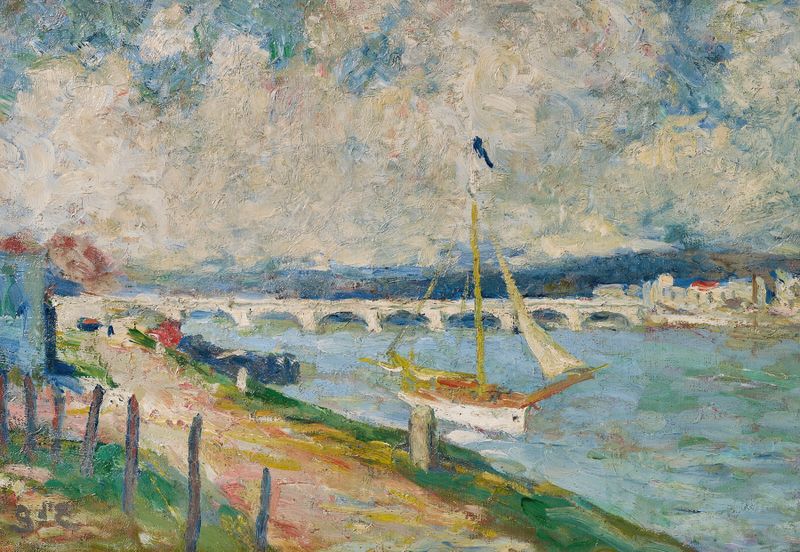
Can paint confess what words never could? In Vue de Paris, le Pont Neuf, the canvas breathes solitude, each brushstroke whispering the unspoken longing that weaves through the streets of Paris. Look to the bottom left, where the shimmering reflection of the famous bridge dances upon the water’s surface. The subtle interplay of blues and greens evokes the quiet melancholy of dusk, while the soft pinks of the sky hint at a fleeting warmth. Notice how the figures stand apart, their gestures muted, as if lost in thought, rather than connected in conversation.
The composition draws the eye along the bridge and into the distance, inviting you to drift alongside the solitary boat navigating the Seine. The contrast between the vibrant city and the somber mood invites deeper contemplation. The sun setting over the horizon suggests an end, while the stillness of the water mirrors the stillness within each figure. This juxtaposition of life and isolation embodies the theme of loneliness that permeates the piece.
Each element, from the cobblestones to the distant rooftops, echoes the unfulfilled desires of those who traverse this iconic landscape. In 1930, Georges d'Espagnat was captivated by the beauty of Paris, a city alive with artistic fervor yet overshadowed by global unrest. He painted during a time when modernism was challenging traditional forms, and his delicate approach to Impressionism reflects a personal quest for connection amidst the chaos of the world. This work captures not just a view, but a profound emotional truth of its era.