Tanger et le Soko — History & Facts
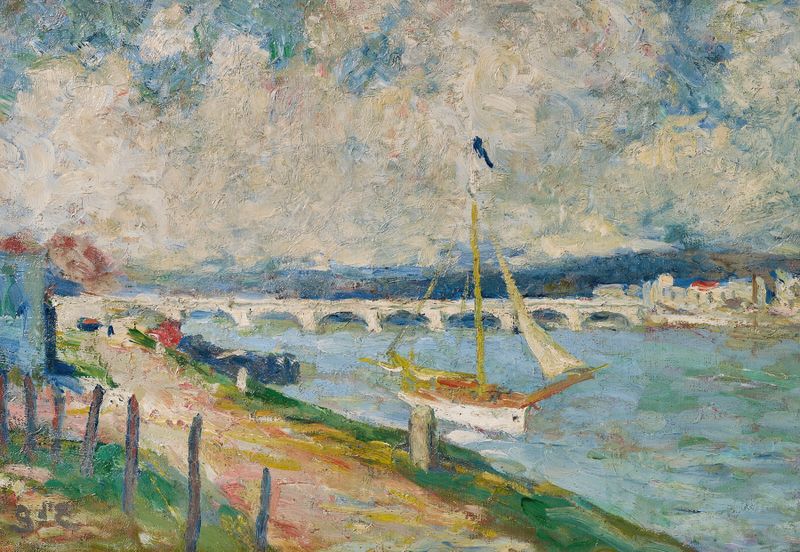
Is this a mirror — or a memory? The boundary between reality and recollection blurs in the depths of this intricate artwork, creating a haunting atmosphere that evokes trepidation and nostalgia. Look to the left at the vibrant oranges and yellows that dance across the canvas, illuminating the bustling marketplace beneath a midday sun. The fluid brush strokes and harmonious color palette draw the eye to the figures—vendors and buyers—interacting in a lively exchange, while dappled light filters through the trees, casting gentle shadows that hint at the passage of time. The composition is both dynamic and tranquil, inviting the viewer to linger in the scene's warmth even as it stirs an underlying sense of unease. Yet, amid the vibrancy lies an emotional tension.
The expressions of the figures reveal a spectrum of human experience—some appear joyful, while others seem burdened, hinting at personal stories intertwined with the marketplace's lively facade. The juxtaposition of the busy scene with the solitary figure in the foreground, who gazes toward the horizon, invites reflections on isolation and yearning amid communal life. D’Espagnat’s technique captures this juxtaposition beautifully, blending serene beauty with a disquieting undercurrent. In 1904, Georges d'Espagnat painted this piece during a time of artistic awakening in France, where the Impressionist movement was evolving and influencing new styles.
Living in Paris, he navigated the tensions of modernity while staying connected to the vivid colors and themes of the North African landscape. This interplay of cultural influences and emotional depth reflects the artist's position in a world grappling with rapid change, making Tanger et le Soko a resonant exploration of fear and memory.