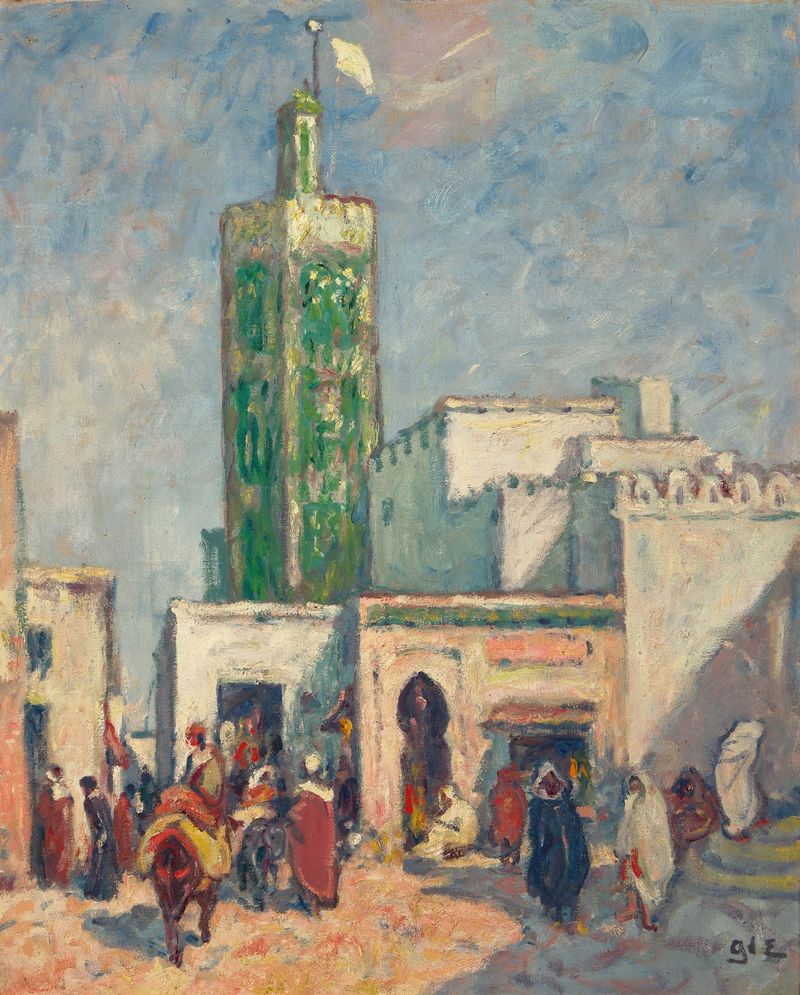
Quai de Seine — History & Facts
In the serene embrace of this artwork lies an obsession—a stillness that beckons the soul to linger. Each brushstroke reflects an intimate dialogue with the unseen, inviting you to explore the depths of longing wrapped in muted tones. Look to the left where soft blues and greens converge, creating a peaceful lake that mirrors a quiet sky. Notice how the light dances delicately on the water’s surface, capturing fleeting moments of tranquility.
The subtle gradations of color draw your gaze toward the distant banks, where whimsical trees stretch their arms skyward, framing the horizon in gentle arcs. The composition offers a balance that whispers of nostalgia, evoking a sense of time suspended. Delve deeper, and the emotional undercurrents become apparent. The stillness of the water suggests a longing for connection, while the distant figures—a solitary boat and its occupant—reflect isolation amidst beauty.
This interplay of presence and absence reveals an inner tension, as though the world outside is inaccessible, tantalizing yet just beyond reach. The absence of noise amplifies the weight of contemplation, making each element pulse with meaning. Created during the early 20th century, the artist was immersed in the post-impressionist movement, where the boundaries of color and form were continuously explored. Georges d'Espagnat’s work emerged from a time of increasing modernism, reflected in his choice to emphasize the emotional resonance of landscapes.
Living in France, he sought to convey the ephemeral beauty of nature, while grappling with his own visions and obsessions—a quest that echoes in every detail of this piece.