Bords de l’Oise dans le Vexin — History & Facts
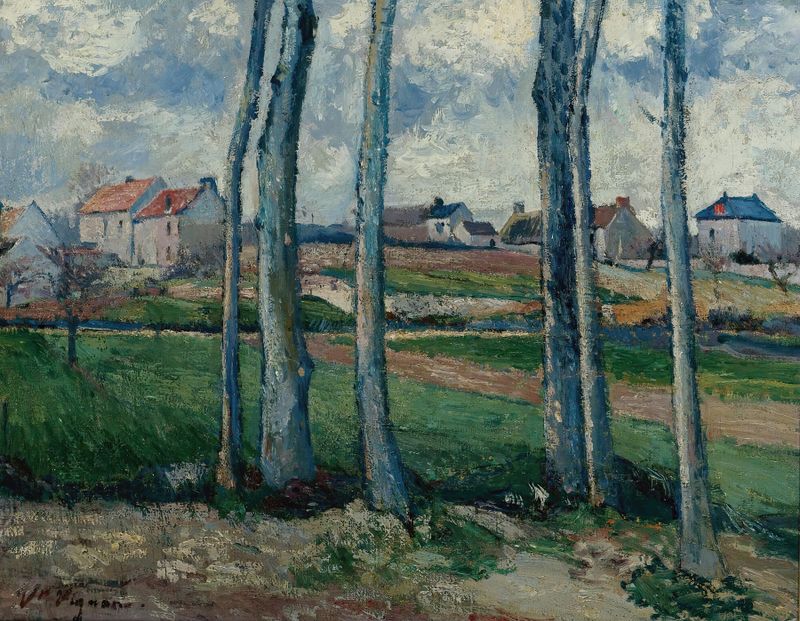
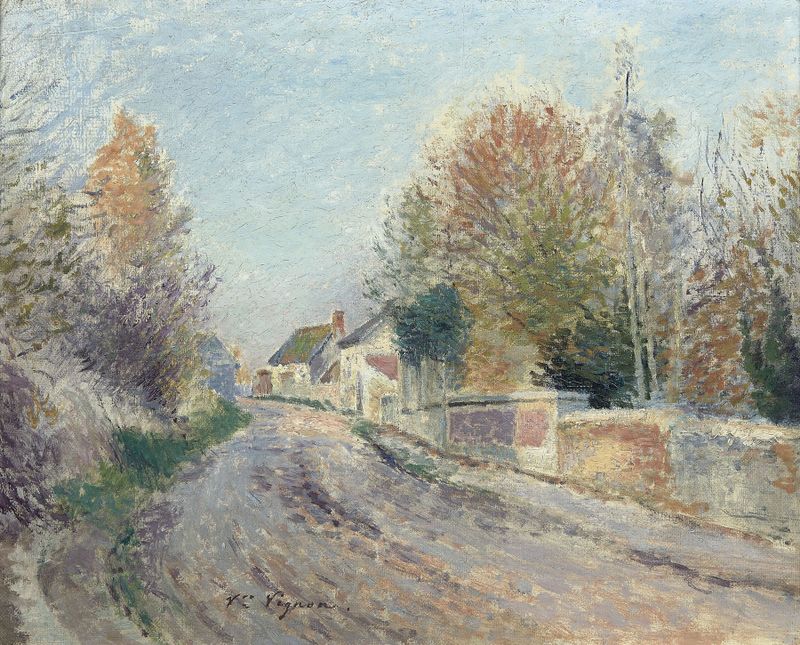
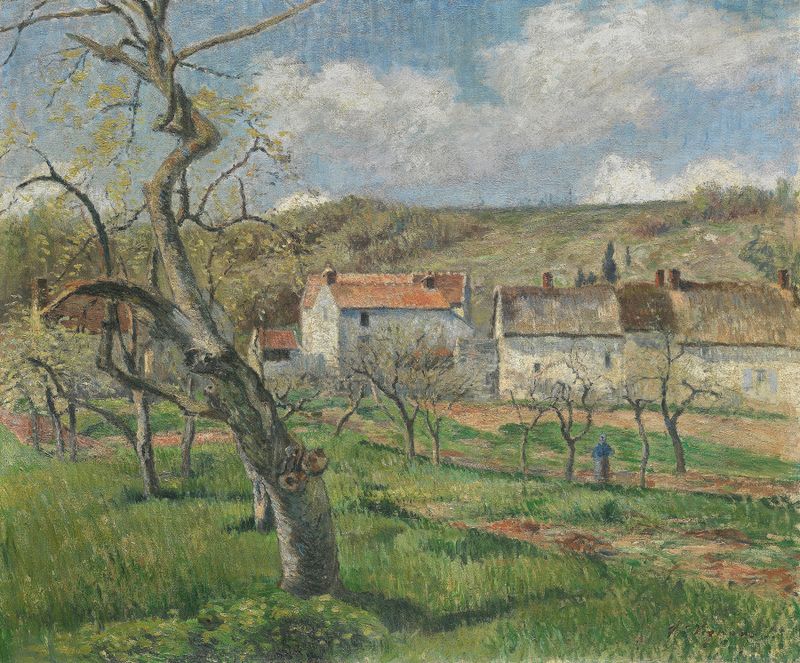
Where does light end, and longing begin? In the delicate interplay of hues, the boundaries of reality blur, inviting the viewer to a realm where madness dances with serenity. Focus first on the soft embrace of light that spills across the canvas, illuminating the shimmering waters of the Oise. The gentle brushwork lends a dynamic quality, as if the air is alive; each stroke of blue and green pulses with an undulating rhythm. Look closely at the trees lining the riverbank, their forms rendered with a subtle impressionistic touch that evokes both solidity and transience, while the sky, a canvas of pastel colors, hints at both dawn’s promise and dusk’s mystery. Delve deeper into the painting's contrasts: the stillness of the water juxtaposes the vibrant energy of the landscape, reflecting an underlying tension between calmness and chaos.
Notice how the colors are not just beautiful; they seem to whisper secrets of the natural world, a chaotic beauty that stirs an almost fevered longing. The interplay of light and shadow suggests a fragile balance, hinting at the thin line between the tranquility of nature and the tumult of the human soul. Victor Vignon, painting during the late 19th century, was immersed in the Impressionist movement that sought to capture fleeting moments in time. Working in France, he was influenced by the changing perceptions of light and color that defined the era, while also navigating personal struggles that often intertwined with the chaotic beauty he sought to portray.
It was a time of experimentation, where artists pushed against tradition, seeking new ways to express the tumultuous emotions of the world around them.