Les coteaux d’auvers — History & Facts
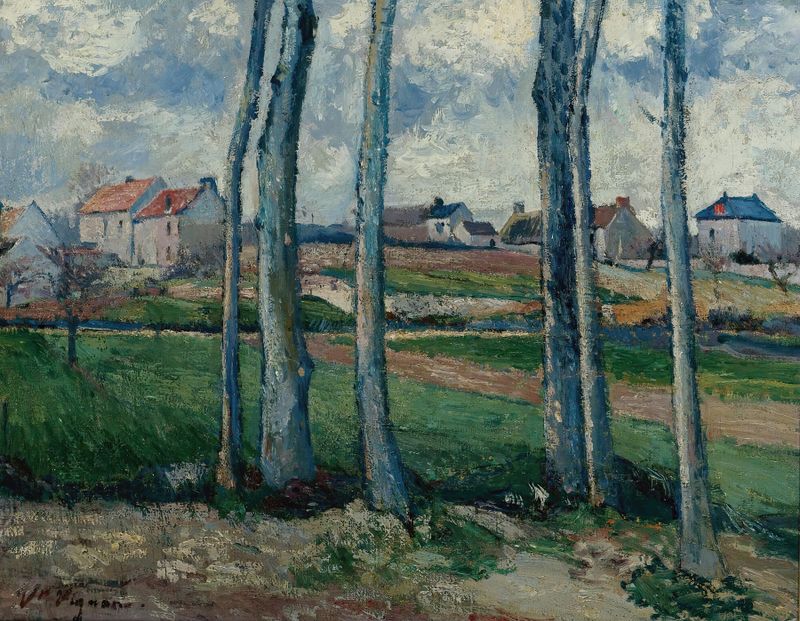
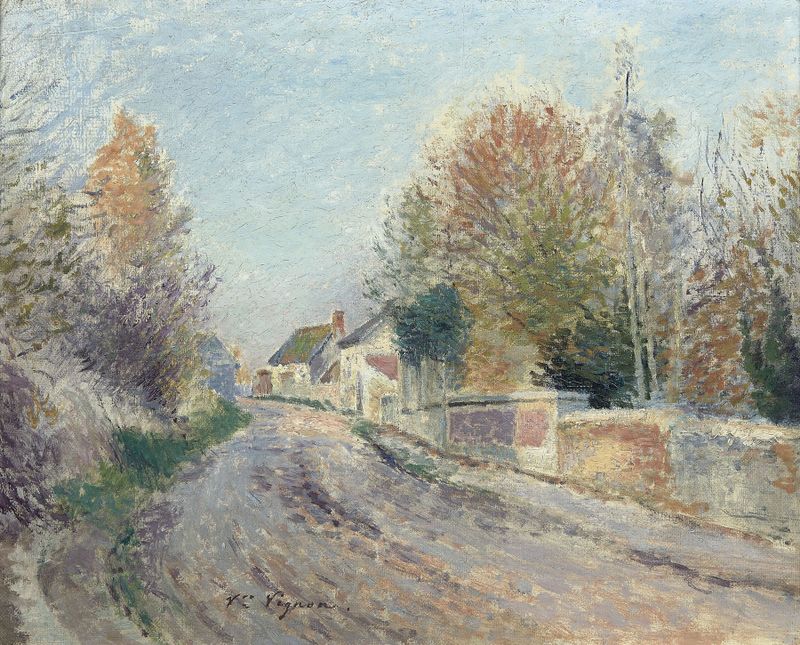
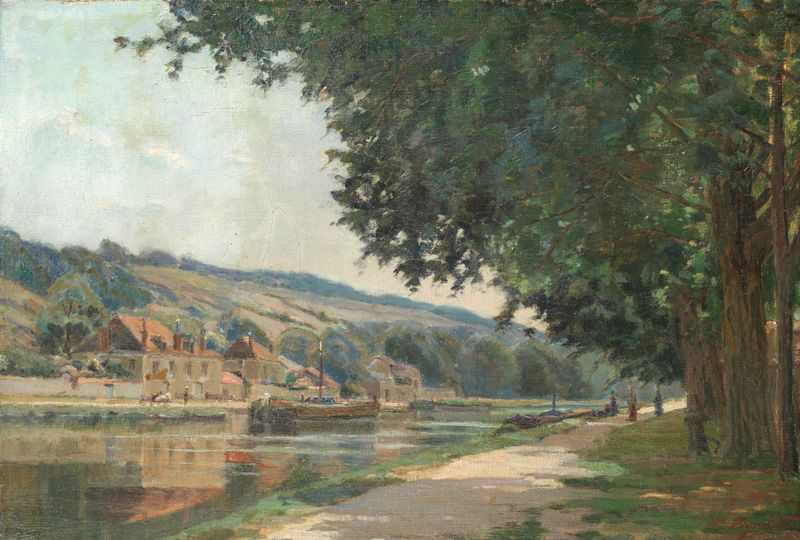
The interplay of serenity and sorrow finds its expression in Les coteaux d’auvers, where the landscape whispers secrets beneath its vibrant hues. Look to the center, where undulating hills roll gently towards the horizon, bathed in a warm, golden light. The artist employs thick, expressive brushstrokes to evoke the lively textures of the fields, inviting the viewer to traverse the undisturbed tranquility of this pastoral scene. The palette, dominated by yellows and greens, creates a harmonious balance, while the vivid sky interspersed with delicate clouds draws the eye upward, mirroring the weightlessness of the moment. Yet, within this serenity lies an undercurrent of emotional tension.
The hills seem to cradle both the joy of life and the shadows of loss, a duality that speaks to the struggles of existence. The juxtaposition of light and shadow hints at the complexities of rural life, reflecting the beauty of nature alongside the burdens borne by those who inhabit it. Each brushstroke carries with it a sense of longing, inviting the viewer to contemplate what lies beyond the surface. In 1888, Victor Vignon painted this piece amidst a burgeoning post-impressionist movement, deeply influenced by the works of Van Gogh and his contemporaries.
At this time, the artist was immersing himself in the landscapes of Auvers-sur-Oise, capturing the essence of a world in transition. The tranquility of the scene belies the turbulence of the era, as art began to delve deeper into the emotional and psychological realms of experience.