Village À Travers Les Arbres — History & Facts
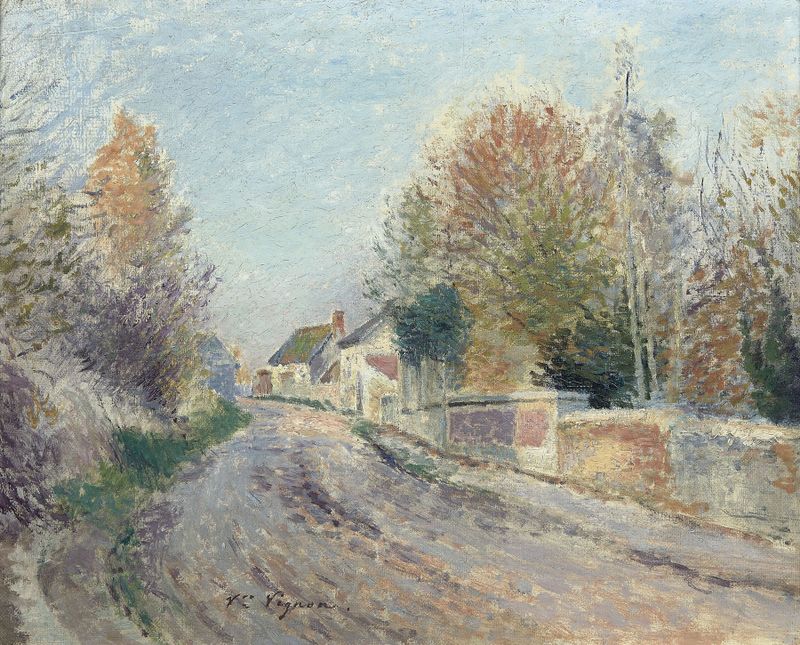
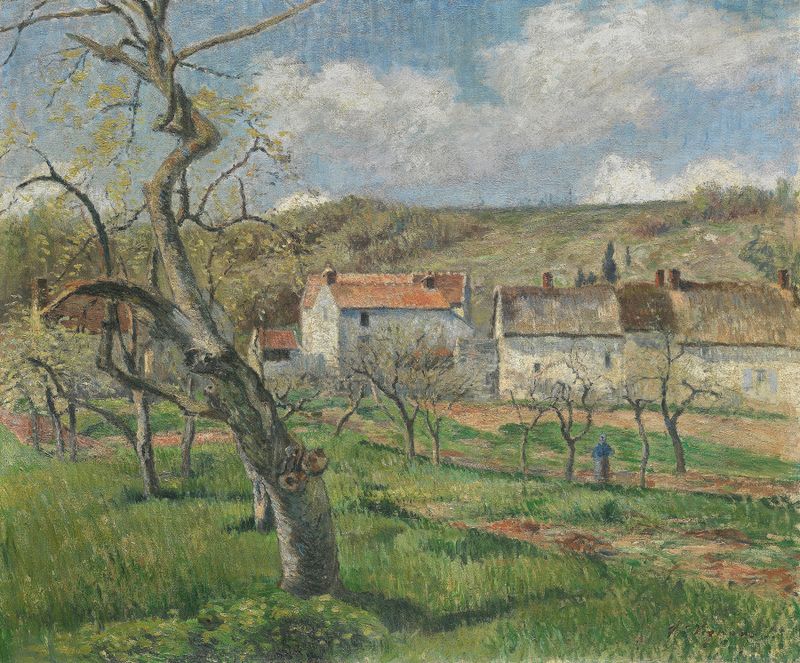
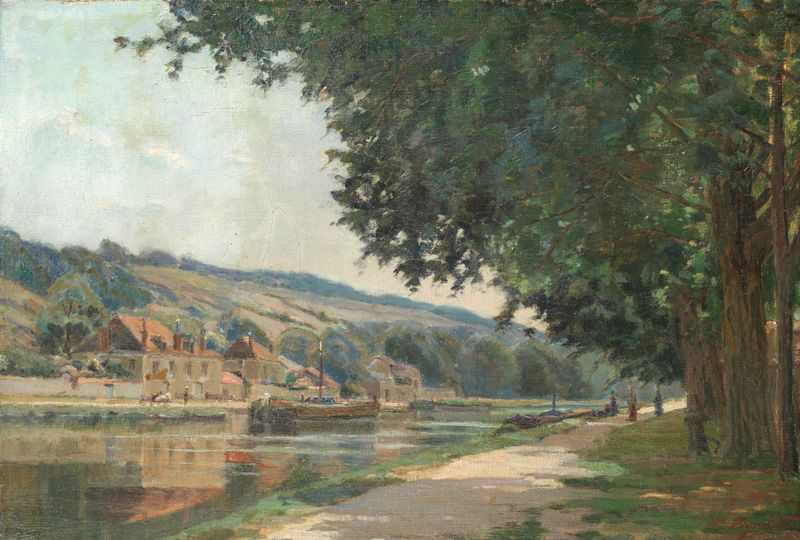
What if beauty was never meant to be finished? In the quiet embrace of decay, transformation reveals itself as a poignant kind of artistry. Focus your gaze on the soft, muted hues that flow through the canvas, where greens and browns blend harmoniously. Notice how the light dances through the treetops, creating dappled shadows that cradle the earth below. The brush strokes are both loose and deliberate, evoking movement while suggesting an impermanence, a moment caught between growth and decline.
As your eyes traverse the scene, let the delicate interplay of color and light envelop you in a tranquil sense of nostalgia. In the midst of this picturesque calm lies a tension between vitality and decay. The village, partially obscured by the lush trees, invites contemplation of human existence amidst nature’s inevitable cycle. The overgrown foliage hints at a world reclaiming itself, where the whispers of time resonate through the landscape.
Each element serves as a reminder of fragility, urging viewers to acknowledge the beauty found within transience. Victor Vignon created this piece during a period when artists were increasingly exploring the effects of light and color, influenced by the Impressionist movement. Painted in the late 19th century, it reflects both personal exploration and a broader cultural shift towards capturing the fleeting moments of rural life. In an era marked by rapid industrialization, Vignon’s work stands as a gentle reminder of the serene beauty that remains in the natural world.