
Brücke in Avignon — History & Facts
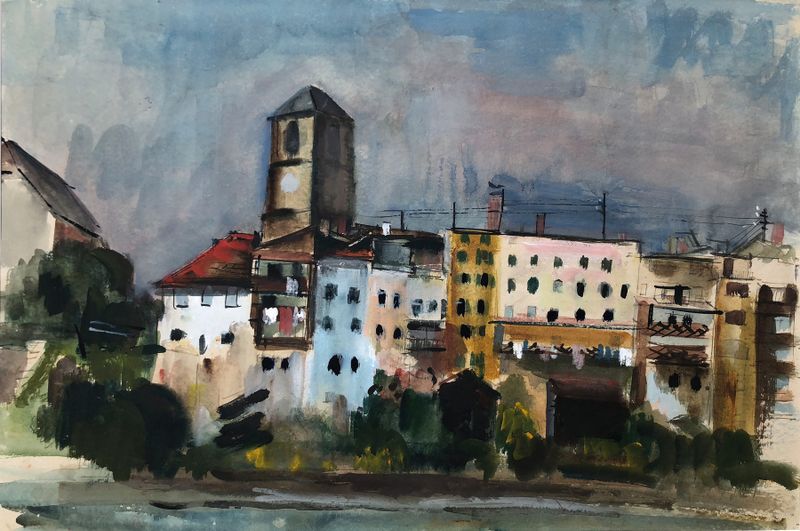
Can paint confess what words never could? In moments of solitude, it captures the essence of our silent struggles, whispering the unspoken truths that dwell within us. Look closely at the left side of the composition, where the bridge stretches across the canvas, a tangible link yet a reminder of distance. The play of light dances on the water, creating a shimmering path that invites the eye to follow, only to reveal the stark absence of figures. Notice how the muted palette of blues and greens conveys a sense of melancholy, while the bold brushstrokes depict the bridge’s solid structure, juxtaposing the ephemeral nature of human connection with the permanence of architecture. The emotional tension resonates in the contrast between the vibrant, bustling scene of life on one side and the quiet, almost desolate expanse of the water on the other.
The bridge stands as a metaphor for the divide between longing and fulfillment, illustrating a complex narrative of loneliness that lingers in the air. The empty spaces evoke a feeling of yearning, making the viewer contemplate what lies beyond the horizon, hinting at connections that remain unfulfilled. Geigenberger painted Brücke in Avignon during a time when he sought solace in the beauty of nature while grappling with his own sense of isolation. Living in southern France, the artist found inspiration in the landscape, yet he was also influenced by the artistic movements around him, which explored the intersection of solitude and existence.
This work reflects his nuanced understanding of loneliness, captured beautifully in the serene yet haunting imagery.
More Artworks by Otto Geigenberger
Browse all →
Hohe Munde bei Seefeld in Tirol
Otto Geigenberger
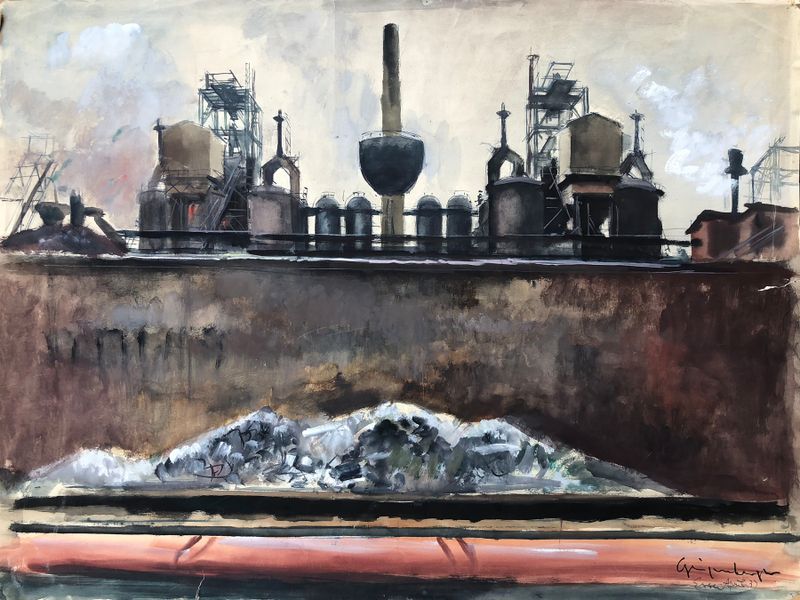
Stahlwerk Krupp in Essen
Otto Geigenberger

Landschaft mit Kirche
Otto Geigenberger

Passau am Inn 2
Otto Geigenberger
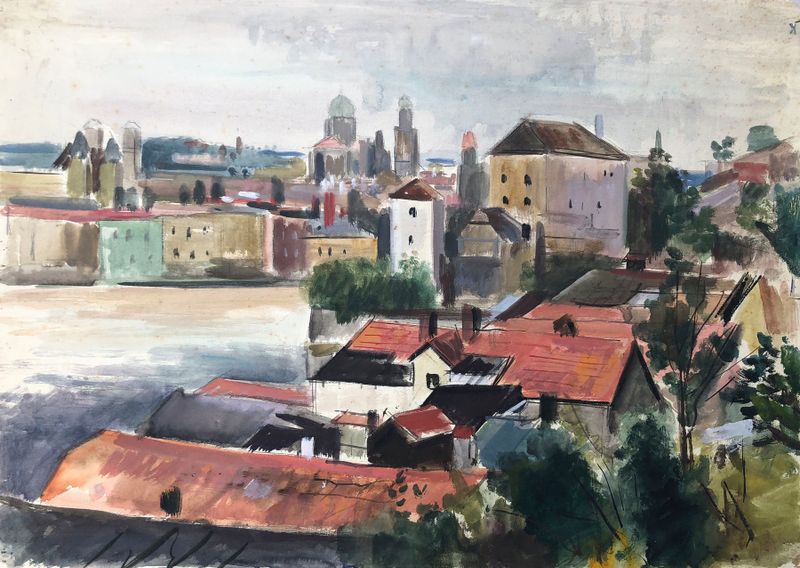
Passau am Inn
Otto Geigenberger
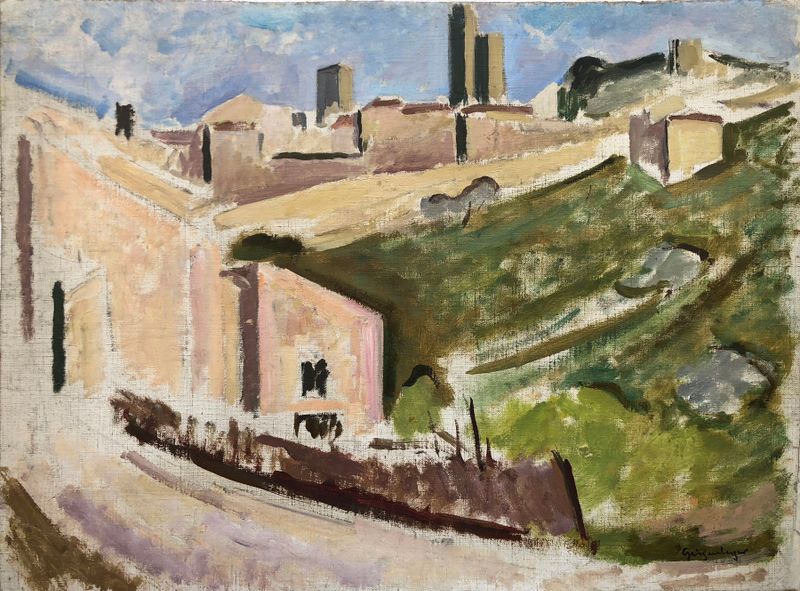
Südliche Stadt auf einem Hügel
Otto Geigenberger

Wasserburg am Inn – Häuserpartie am Inn
Otto Geigenberger

Wasserburg am Inn – Innfront
Otto Geigenberger
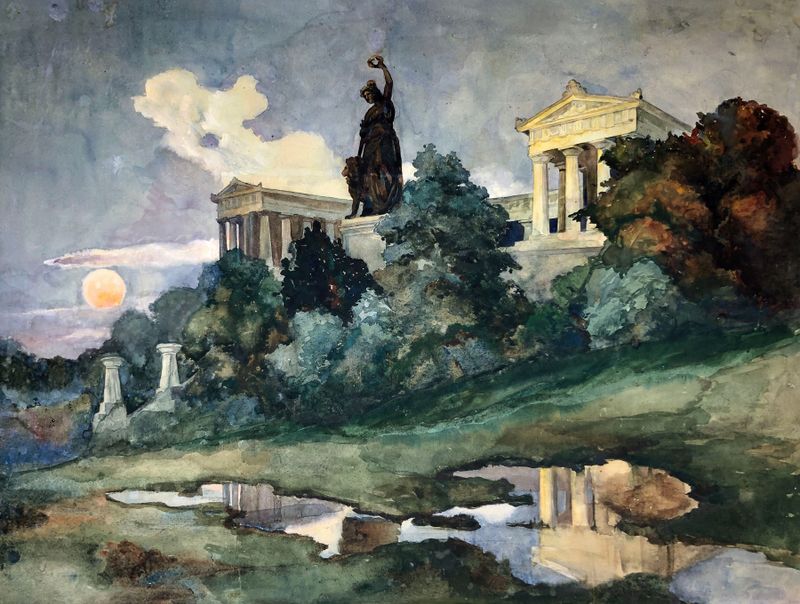
Sonnenuntergang an der Bavaria und Ruhmeshalle in München
Otto Geigenberger
Wasserburg am Inn – Innfront.
Otto Geigenberger





