
Bridge at Caracas — History & Facts
Who listens when art speaks of silence? In Bridge at Caracas, a lingering sense of yearning pervades the tranquil landscape, beckoning the viewer to pause and reflect. Look to the left at the gentle curve of the river, where the water glistens with flecks of deep blue and soft white, an invitation to trace its journey beneath the bridge. The subtle strokes of Pissarro's brush breathe life into the foliage, each leaf a whisper, each shadow a moment of contemplation. The interplay of light and shadow creates a delicate harmony, setting a serene yet poignant atmosphere that envelops the scene. As your gaze wanders, notice the absence of human figures; the silent bridge stands alone, a testament to isolation amid nature’s vastness.
This emptiness contrasts with the vibrant colors of the landscape, symbolizing a longing for connection in a world that often feels distant. The clouds above, heavy with unexpressed emotion, seem to echo the yearning felt within the viewer, inviting introspection about the spaces we inhabit and the silence we sometimes endure. In 1854, Pissarro was immersed in the vibrant art community of Paris, grappling with his identity as an artist amidst the evolving Impressionist movement. Capturing scenes like this, he sought to express the emotional resonance of the natural world, using color and technique to convey feelings that were often ineffable.
This work reflects his early exploration of landscape painting, setting the stage for his later masterpieces that would shape modern art.
More Artworks by Camille Pissarro
Browse all →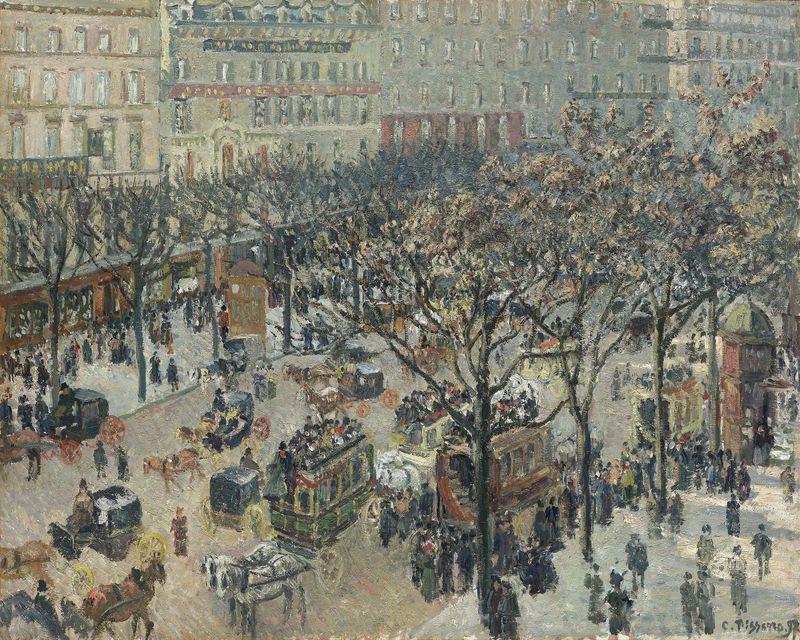
Boulevard des Italiens,Morning_Sunlight
Camille Pissarro
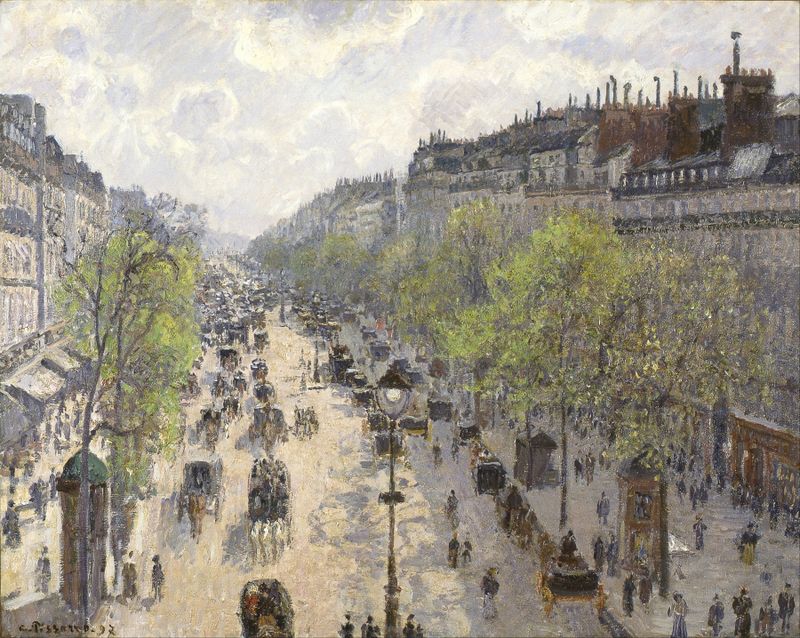
Boulevard Montmartre, Spring
Camille Pissarro
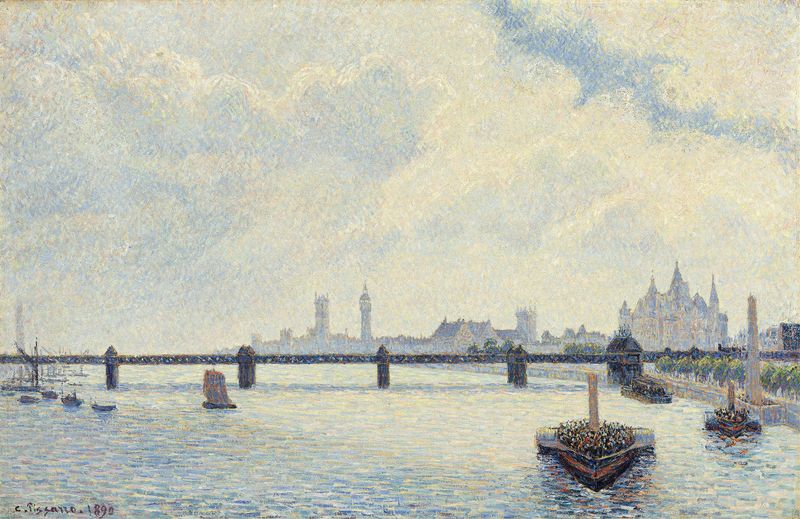
Charing Cross Bridge,London
Camille Pissarro
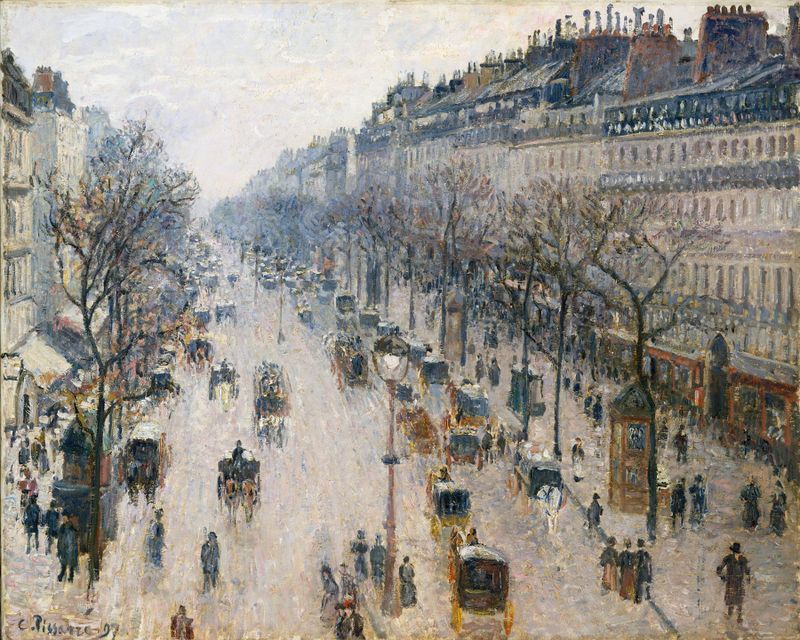
The Boulevard Montmartre on a Winter Morning
Camille Pissarro
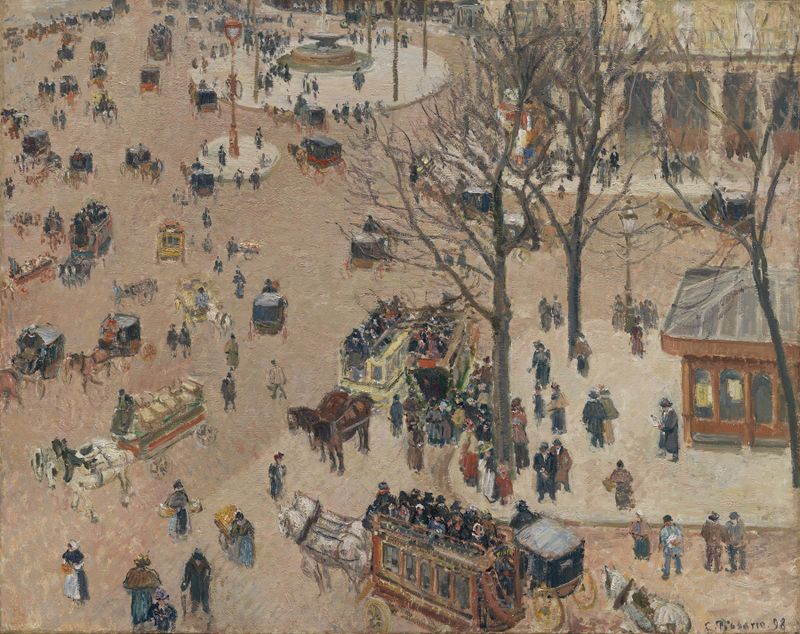
La Place du Théâtre Français
Camille Pissarro

Rue Saint-Lazare, Paris
Camille Pissarro
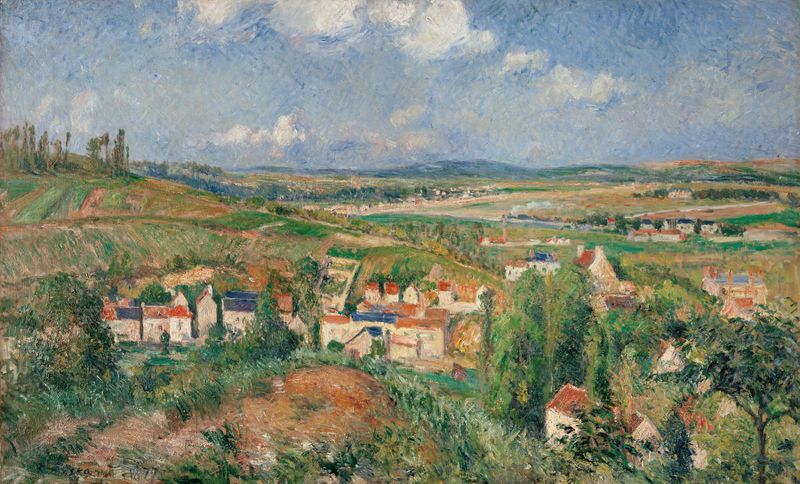
L’hermitage En Été, Pontoise
Camille Pissarro

Place du Theatre Francais,Fog Effect
Camille Pissarro
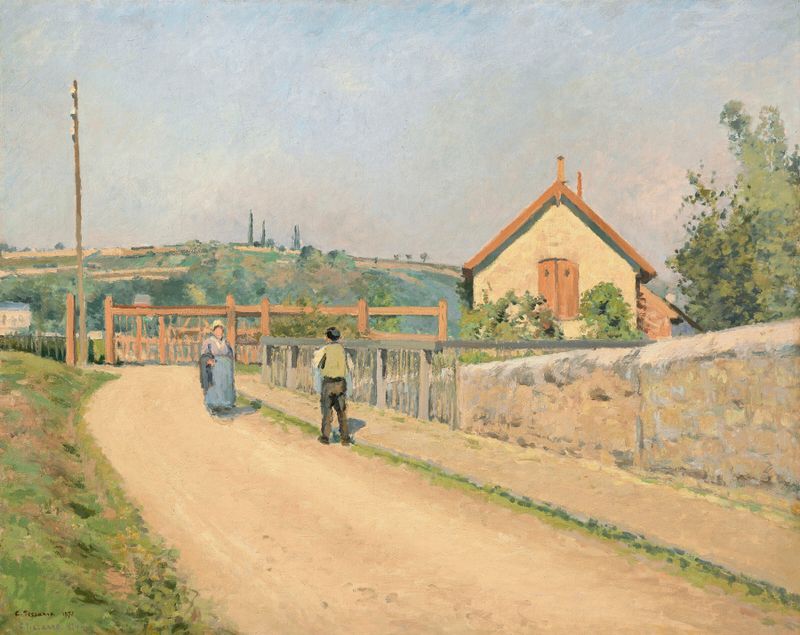
La barrière du chemin de fer, aux Pâtis près Pontoise
Camille Pissarro
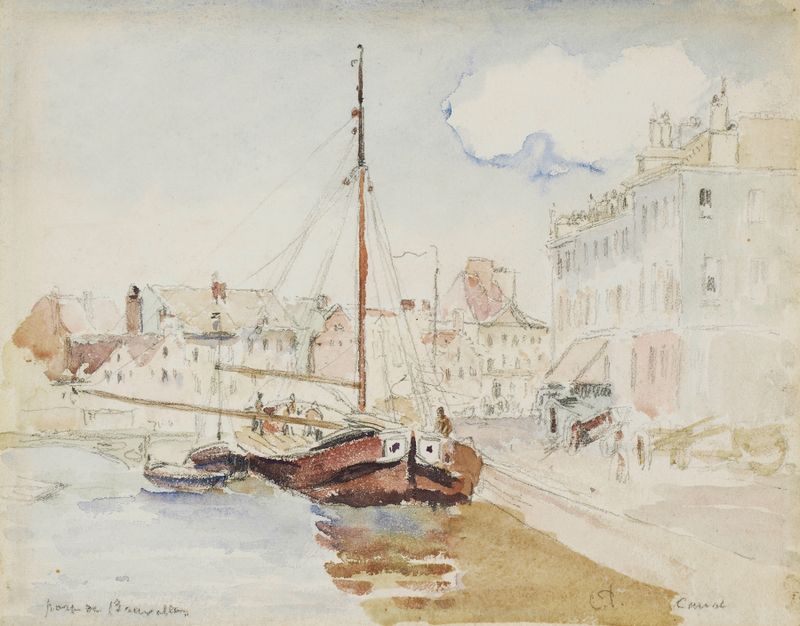
Port de Bruxelles
Camille Pissarro





