
Broadway, East Side. Howard to Grand St. — History & Facts
In an era where truth can be obscured by the noise of modernity, this piece takes us on a journey into the heart of urban life. It captures a moment where every passerby holds a story, yet the city remains unfazed by their individual narratives. Look closely at the bustling street on the canvas, where the vibrant energy of Broadway pulses through the scene. Notice how the light spills onto the cobblestones, each brushstroke creating the illusion of movement.
The figures, both pedestrians and horse-drawn carriages, merge together in a dance of daily life, with the artist's palette employing a mix of warm hues and shadows to emphasize both the excitement and the chaos of the East Side. This composition, framed by the architectural details of the buildings, draws the viewer's gaze into a world teeming with activity. Within the cacophony, subtle contrasts emerge—between the rush of the city and the stillness of an unnoticed moment, the lavishness of the storefronts against the everyday struggles of the crowd. Each figure expresses a different facet of urban existence, revealing a spectrum of emotions from joy to indifference.
The juxtaposition of light and shadow symbolizes the duality of city life, where brilliance often coexists with shadows of solitude. In 1899, the artist found inspiration in the vibrant streets of New York during a period of rapid growth and change. As modernization swept through the city, transforming its landscape and social fabric, the artwork encapsulated the essence of an era defined by emerging identities and unyielding progress. The artist's keen observation reflects a critical moment in the evolution of urban art, marking a departure from romanticized notions of the past.
More Artworks by Mail & Express
Browse all →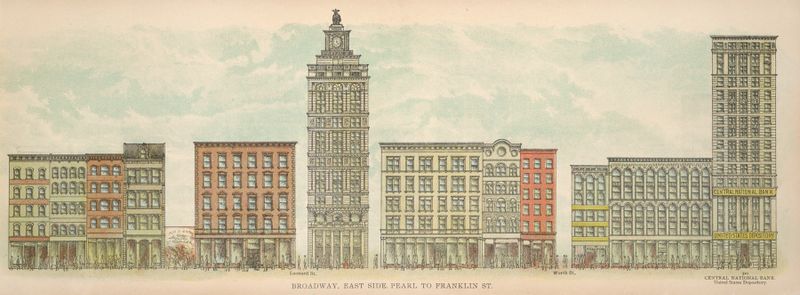
Broadway, East Side. Pearl to Franklin St.
Mail & Express

Broadway, East Side. 20th to 23rd St.
Mail & Express
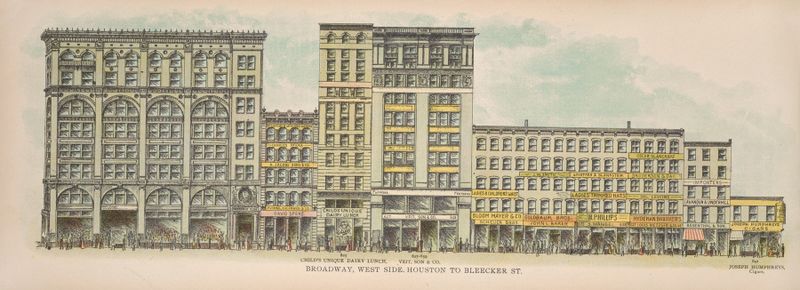
Broadway, West Side. Houston to Bleecker St.
Mail & Express

Broadway, East Side. Bowling Green to Hudson Bldg.
Mail & Express
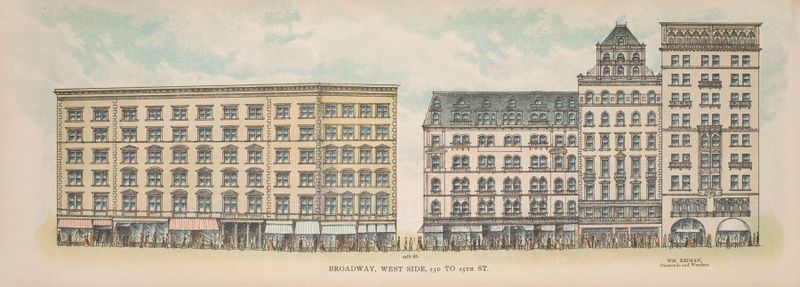
Broadway, West Side. 23rd to 25th St.
Mail & Express

Broadway, West Side. Trinity Church to Liberty St.
Mail & Express
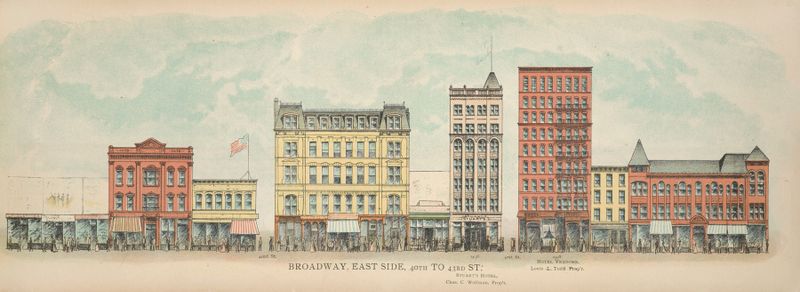
Broadway, East Side. 40th to 43rd St.
Mail & Express
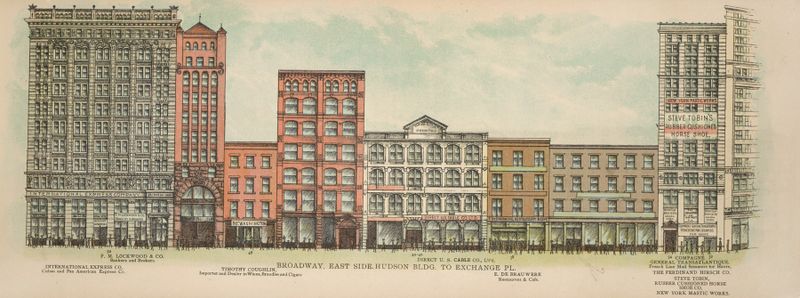
Broadway, East Side. Hudson Bldg. to Exchange Pl.
Mail & Express
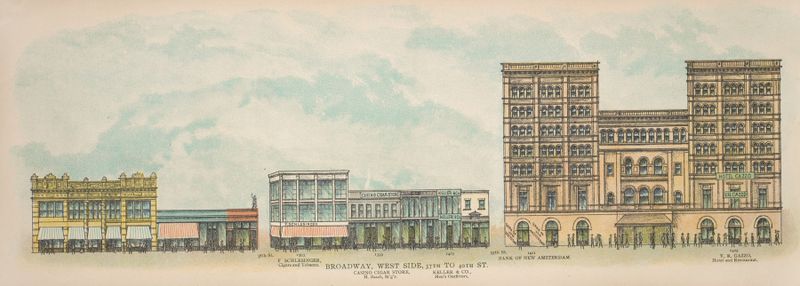
Broadway, West Side. 37th to 40th St.
Mail & Express
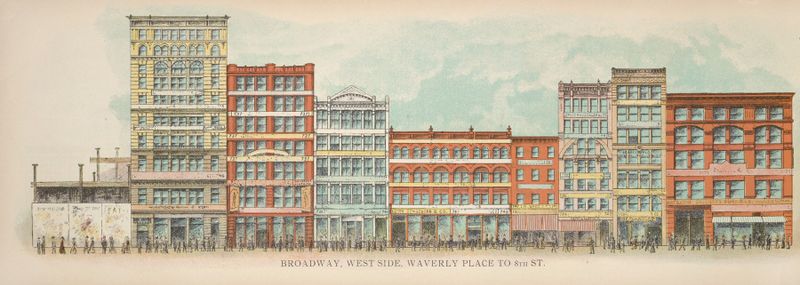
Broadway, West Side. Waverly Place to 8th St.
Mail & Express





