
Broadway, West Side. Broome to Spring St. — History & Facts
Who listens when art speaks of silence? In Broadway, West Side. Broome to Spring St., the palpable energy of a bustling city street becomes a poignant testament to the movement that pulses through life. Each figure captured in this scene not only traverses the canvas but also evokes the shared stories and unseen voices of urban existence. Look to the left at the crowded sidewalk, where a diverse assembly of pedestrians flows like a river, their figures rendered in rich but muted tones.
Notice how the light breaks through the canopies of awnings, casting elongated shadows that dance across the pavement. The composition unfolds in layers, with the rigid architecture of buildings framing the soft, organic forms of people, creating a striking harmony of structure and spontaneity. This juxtaposition of the static and the dynamic invites the viewer to feel the very heartbeat of the city. Hidden within the thrumming chaos are moments of intimacy and isolation.
The couple sharing a fleeting glance amidst the crowd hints at love amid the rush, while a solitary figure stands apart, enveloped in melancholy, contrasting the vibrancy surrounding him. These small details illuminate the range of human experiences encountered in the city—joy, longing, and solitude—all woven together by the unrelenting movement of life. In 1899, the artist operated within a rapidly changing New York City, where innovation and modernity shaped the urban landscape. This was a time of technological advancements, such as the emergence of the subway system, and an increasing influx of immigrants, which led to a vibrant yet chaotic atmosphere.
Amidst this transformation, the artwork captures a moment frozen in time, allowing viewers to appreciate both the energy and the isolation intrinsic to city life.
More Artworks by Mail & Express
Browse all →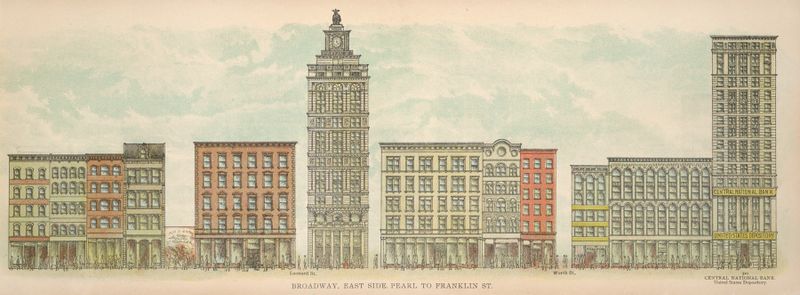
Broadway, East Side. Pearl to Franklin St.
Mail & Express

Broadway, East Side. 20th to 23rd St.
Mail & Express
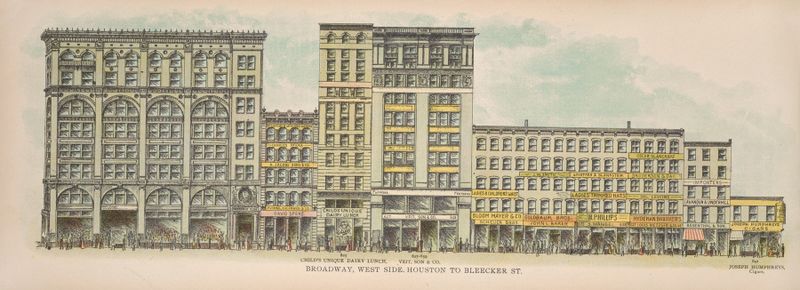
Broadway, West Side. Houston to Bleecker St.
Mail & Express

Broadway, East Side. Bowling Green to Hudson Bldg.
Mail & Express
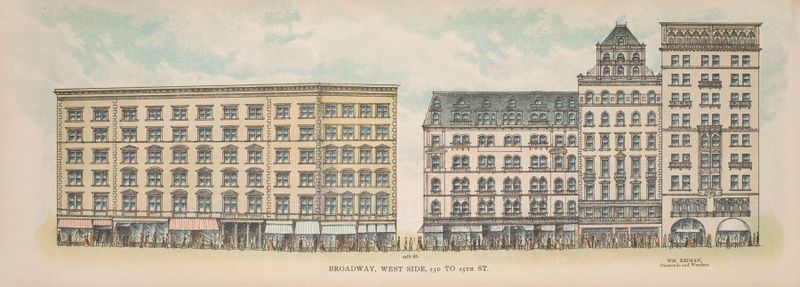
Broadway, West Side. 23rd to 25th St.
Mail & Express

Broadway, West Side. Trinity Church to Liberty St.
Mail & Express
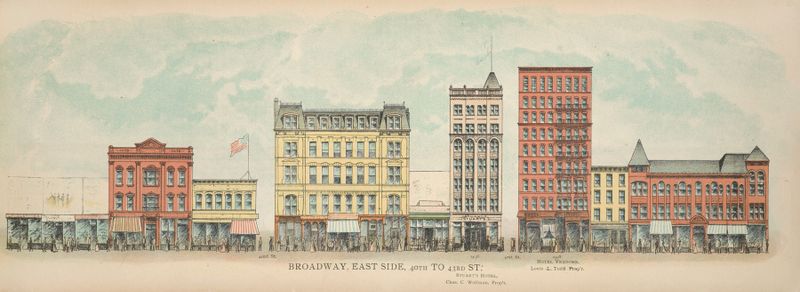
Broadway, East Side. 40th to 43rd St.
Mail & Express
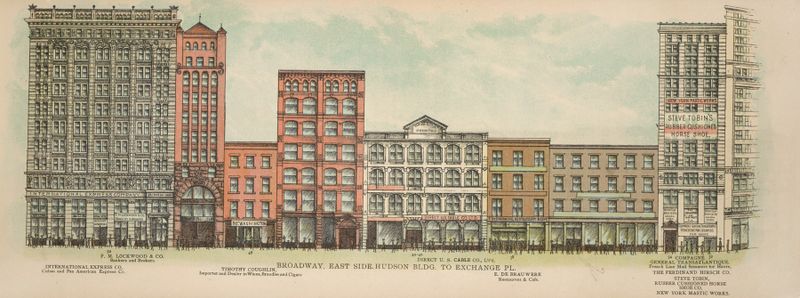
Broadway, East Side. Hudson Bldg. to Exchange Pl.
Mail & Express
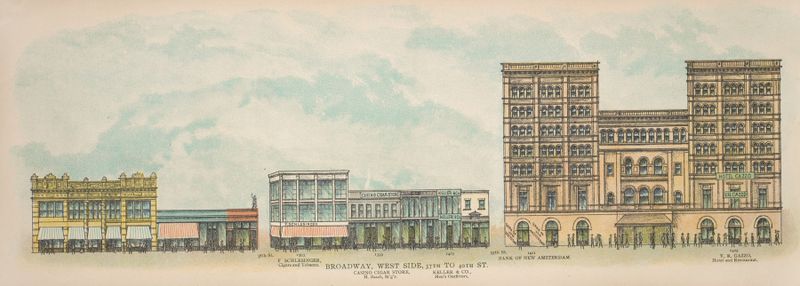
Broadway, West Side. 37th to 40th St.
Mail & Express
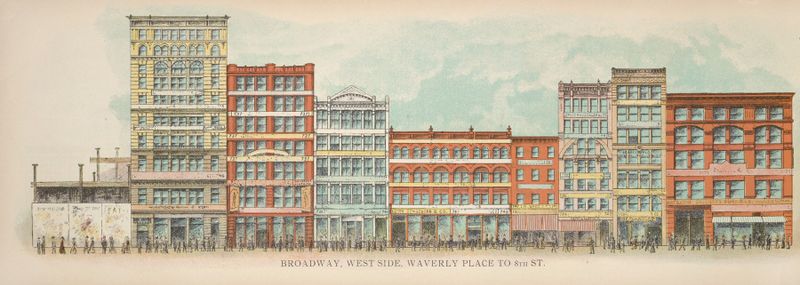
Broadway, West Side. Waverly Place to 8th St.
Mail & Express





