
Broadway, West Side. Grand to Broome St. — History & Facts
In this moment of chaotic beauty, the vibrant streets pulsate with a frenetic energy, capturing the essence of life in motion. Each figure, each colorful carriage, and every brimming storefront teeters on the brink of madness, reflecting the cacophony of urban existence. Focus on the swirling movement at the center of the canvas; notice how the figures burst forth in a rush of color and energy. Look to the left where the deep shadows of the building loom, contrasting sharply against the bright, lively hues of the pedestrians and horse-drawn carriages.
The artist’s use of bold brushstrokes creates a sense of immediacy, while the juxtaposition of warm yellows and cool blues invites the viewer to feel the pulse of the city. Within this whirlwind, the emotional tension of ambition and desperation emerges. The chaotic scene reveals a world where dreams collide with the harsh realities of city life. Each character, lost in their own narrative, embodies the spirit of the era — a world brimming with possibilities and yet fraught with the madness of competition and survival.
Small details, like a child reaching for a balloon or the weary expression of an overworked shopkeeper, deepen the connection to the viewer and highlight the contrasts between joy and struggle. Created in 1899, this piece reflects the transitional period of urban America, as the artist, part of the Mail & Express collective, sought to encapsulate the spirit of a rapidly evolving society. At this time, the hustle of the city was transforming, shaped by the optimism of the Gilded Age while grappling with the disparities it created. The artwork serves not just as a visual record but as a powerful commentary on the madness of progress and the price of ambition.
More Artworks by Mail & Express
Browse all →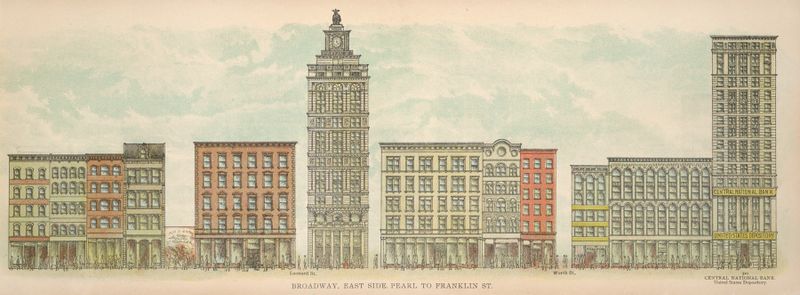
Broadway, East Side. Pearl to Franklin St.
Mail & Express

Broadway, East Side. 20th to 23rd St.
Mail & Express
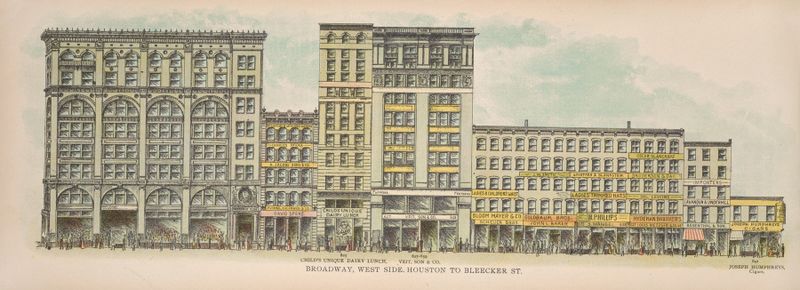
Broadway, West Side. Houston to Bleecker St.
Mail & Express

Broadway, East Side. Bowling Green to Hudson Bldg.
Mail & Express
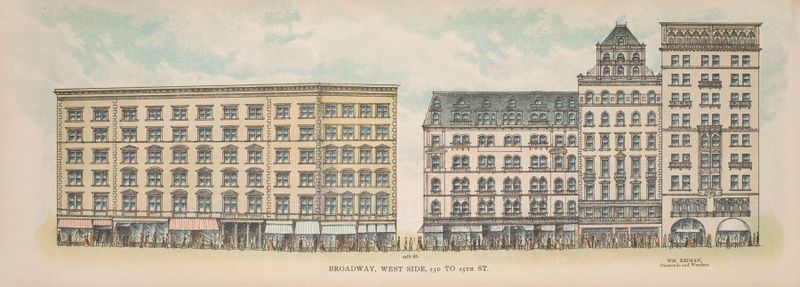
Broadway, West Side. 23rd to 25th St.
Mail & Express

Broadway, West Side. Trinity Church to Liberty St.
Mail & Express
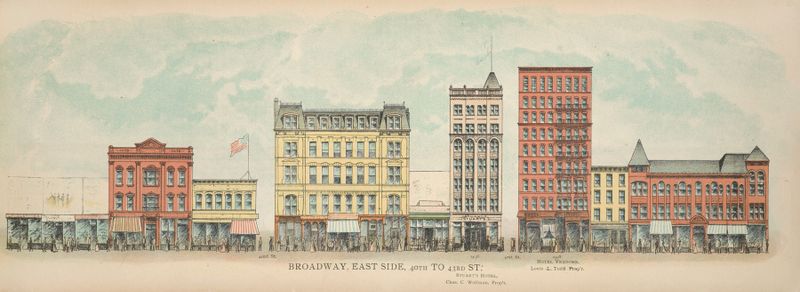
Broadway, East Side. 40th to 43rd St.
Mail & Express
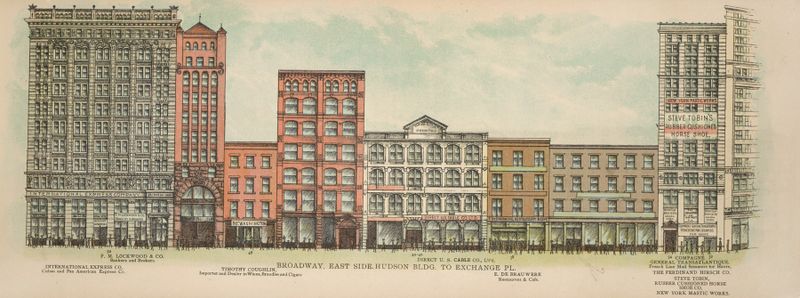
Broadway, East Side. Hudson Bldg. to Exchange Pl.
Mail & Express
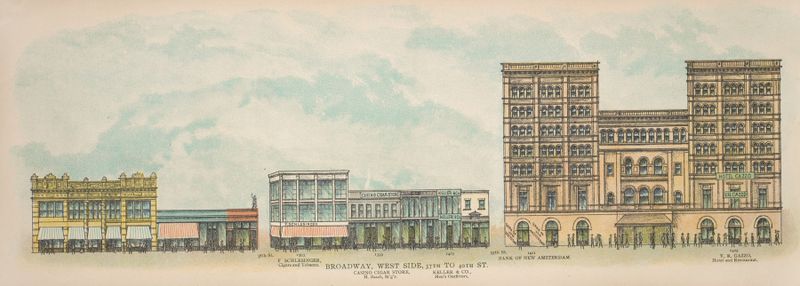
Broadway, West Side. 37th to 40th St.
Mail & Express
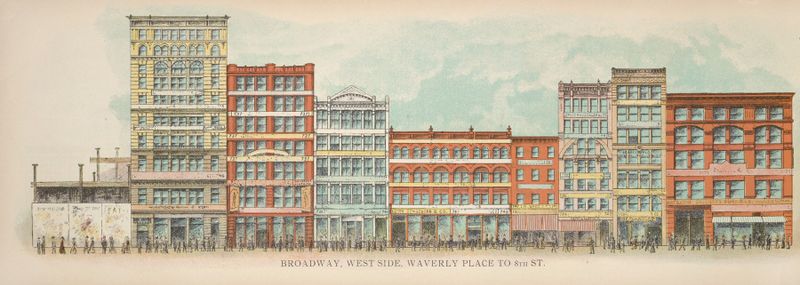
Broadway, West Side. Waverly Place to 8th St.
Mail & Express





