
Broadway, West Side. Prince to Houston St. — History & Facts
Who listens when art speaks of silence? In Broadway, West Side. Prince to Houston St., the melancholy of city life resounds, capturing the rhythm of an era marked by solitude amidst the throngs. Look to the bustling street, where the figures move yet seem remote, lost in their own thoughts. Notice how the muted palette of grays and browns envelops the scene, casting a somber hue over the pedestrians.
The stark contrast between the warm light spilling from the windows and the encroaching shadows conveys a palpable tension, as if the heart of the city beats beneath a veil of sorrow. Each character, though inherently part of the urban tapestry, appears isolated, their postures and expressions mirroring the weight of unspoken stories. Delve deeper into the details: the subtle gestures of a man tipping his hat, a couple huddled together yet turned away from each other, and the blurred edges of the surrounding buildings. These elements paint a poignant picture of connection and disconnection, reflecting the complexities of human interaction within the chaos of modernity.
The painting whispers of dreams deferred and the quiet yearning for something more, urging viewers to contemplate their own narratives within the bustling landscape. In 1899, the artist captured this scene during a transformative time in New York City, when urbanization was reshaping lives. Such changes brought about rapid social shifts and a rising sense of anonymity amidst the crowds. As art began to embrace modern themes, this work stands as a testament to the artist's engagement with the evolving cityscape, revealing the profound emotional undercurrents beneath its vibrant surface.
More Artworks by Mail & Express
Browse all →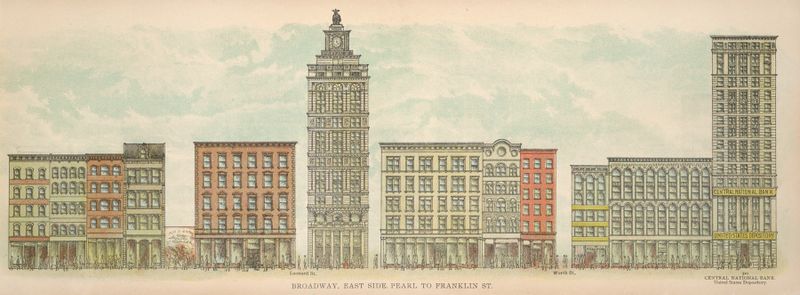
Broadway, East Side. Pearl to Franklin St.
Mail & Express

Broadway, East Side. 20th to 23rd St.
Mail & Express
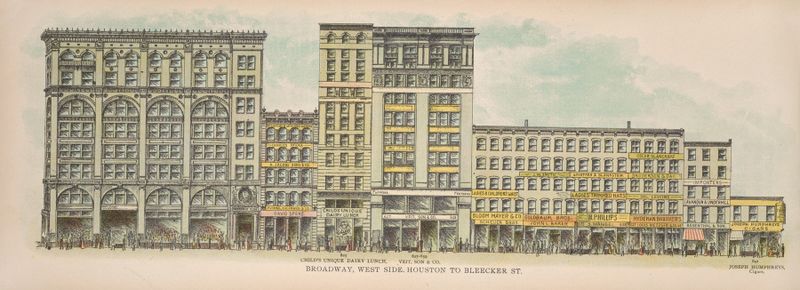
Broadway, West Side. Houston to Bleecker St.
Mail & Express

Broadway, East Side. Bowling Green to Hudson Bldg.
Mail & Express
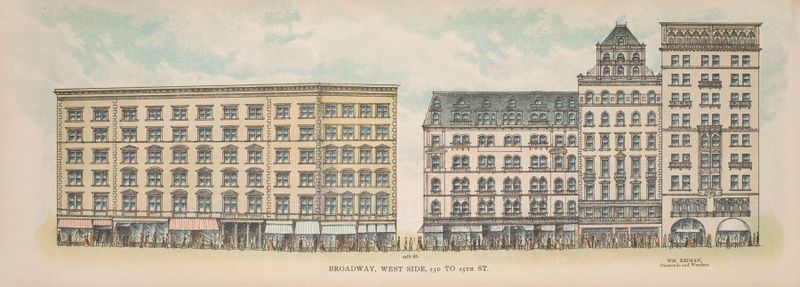
Broadway, West Side. 23rd to 25th St.
Mail & Express

Broadway, West Side. Trinity Church to Liberty St.
Mail & Express
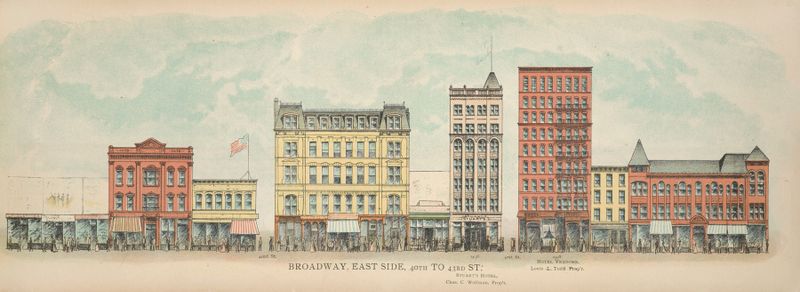
Broadway, East Side. 40th to 43rd St.
Mail & Express
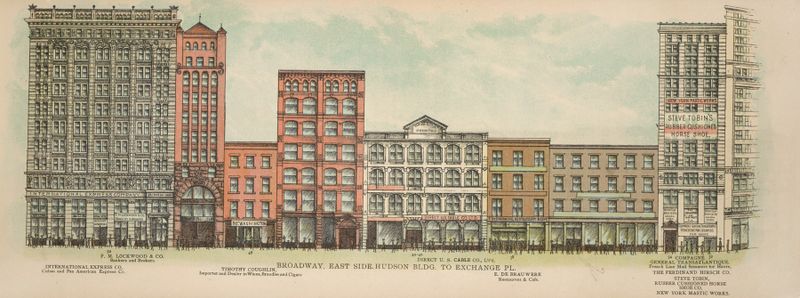
Broadway, East Side. Hudson Bldg. to Exchange Pl.
Mail & Express
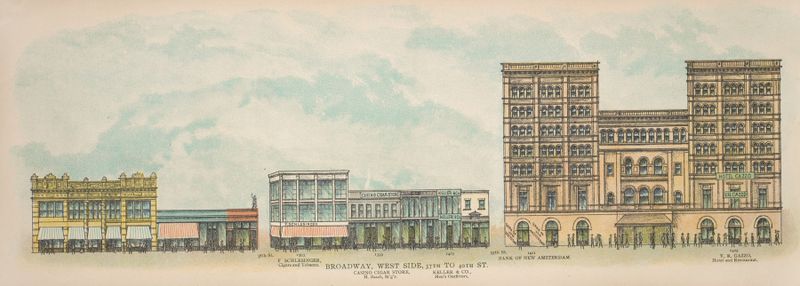
Broadway, West Side. 37th to 40th St.
Mail & Express
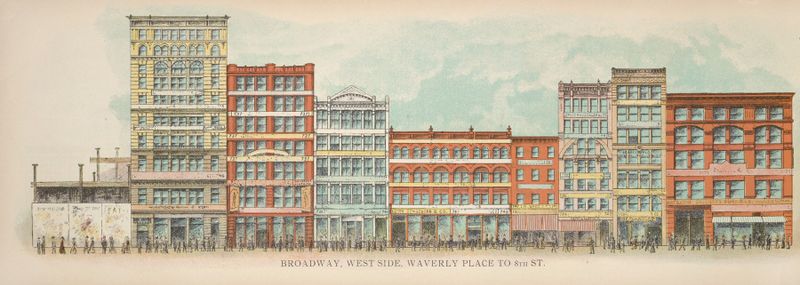
Broadway, West Side. Waverly Place to 8th St.
Mail & Express





