
Broadway, West Side. Thomas to Franklin St. — History & Facts
In a world of clashing energies and fervent movement, a single moment can evoke the sublime. The delicate balance of urban life, with its cacophony of sound and myriad of color, invites reflection on how we navigate our chaotic environments. Look to the forefront of the canvas, where the bustling streets of Broadway pulse with life. Notice the intricate brushstrokes that give form to figures rushing past, each one imbued with a sense of purpose.
The use of light creates a dynamic play between shadow and illumination, drawing your eye to the glimmers of sunlight reflecting off storefronts and the vibrant umbrellas shielding pedestrians from the elements. The rich palette of ochres and blues captures the essence of a bygone era, simultaneously grounded and fleeting. Yet, beneath this vibrant surface lies a deeper exploration of connection amid disconnection. The juxtaposition of grouped figures with solitary ones reflects the tensions of urban existence, where human lives intersect yet remain profoundly individual.
The chaotic street scene, while alive with motion, also hints at moments of isolation — a reminder that even in the midst of a bustling city, one can feel utterly alone, emphasizing the complexity of the urban experience. Created in 1899, this work emerged during a transformative period for the artist, who was navigating the rapid developments of New York City. The vibrancy of the streets reflected both the excitement and the anxiety of an ever-changing society. As the world of art began to embrace modernity, this piece stands as a testament to the intricacies of daily life, inviting viewers to explore the transcendence found in the rhythm of the city.
More Artworks by Mail & Express
Browse all →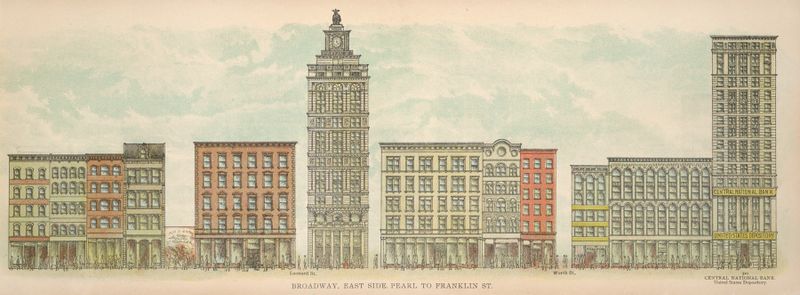
Broadway, East Side. Pearl to Franklin St.
Mail & Express

Broadway, East Side. 20th to 23rd St.
Mail & Express
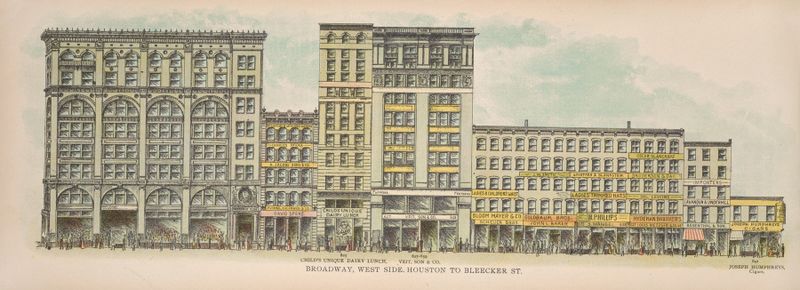
Broadway, West Side. Houston to Bleecker St.
Mail & Express

Broadway, East Side. Bowling Green to Hudson Bldg.
Mail & Express
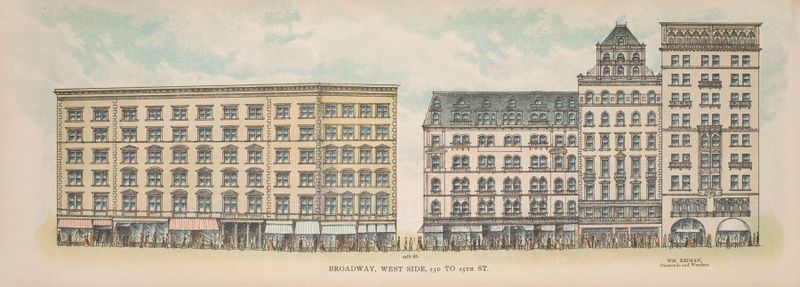
Broadway, West Side. 23rd to 25th St.
Mail & Express

Broadway, West Side. Trinity Church to Liberty St.
Mail & Express
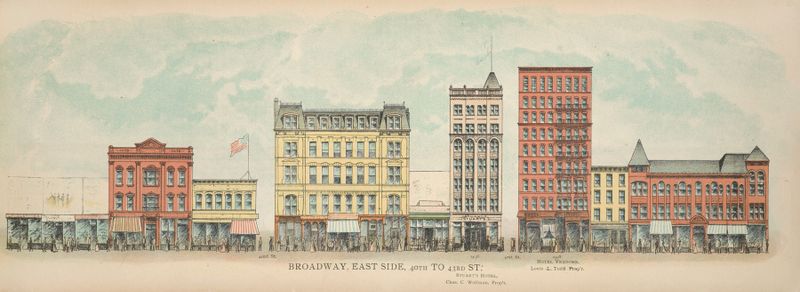
Broadway, East Side. 40th to 43rd St.
Mail & Express
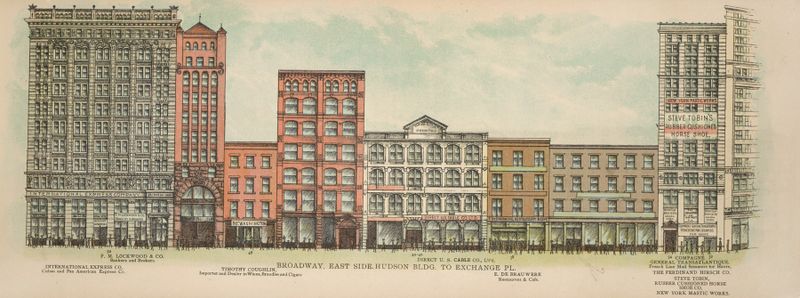
Broadway, East Side. Hudson Bldg. to Exchange Pl.
Mail & Express
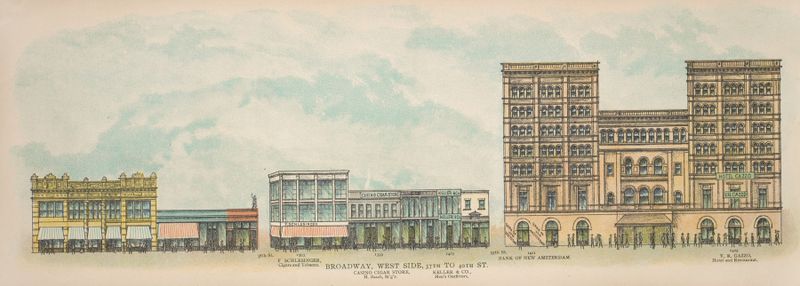
Broadway, West Side. 37th to 40th St.
Mail & Express
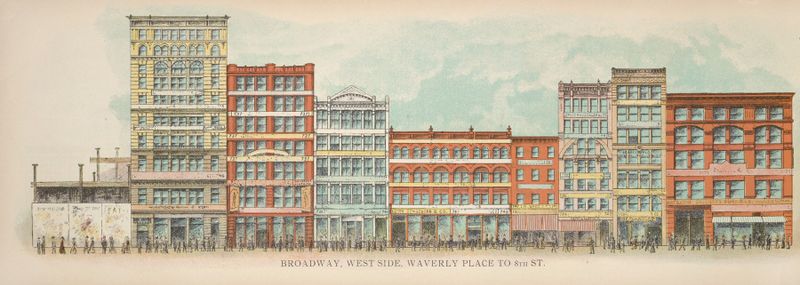
Broadway, West Side. Waverly Place to 8th St.
Mail & Express





