
Broadway, West Side. Walker to Howard St. — History & Facts
The haunting emptiness of the streets speaks volumes, whispering secrets of those who once danced through the bustling life of the city. In this snapshot of a moment frozen in time, the absence of human presence carries a weight heavier than the brick and mortar surrounding it. Look to the center of the canvas, where the cobblestone road stretches languidly, bordered by old tenement buildings that tower like sentinels. The subdued palette of muted grays and browns evokes a sense of nostalgia, while the soft play of light subtly reveals the glossy reflections of distant gas lamps.
Notice how the shadows gather in the corners, amplifying the feeling of abandonment and solitude, inviting the viewer to ponder the stories left untold. The composition speaks of contrasts: the stark emptiness against the grandeur of the architecture, the quietude amidst the remnants of vibrancy. Each element, from the lonely streetcar to the jagged rooftops, hints at a once-thriving community now shrouded in solitude. These details remind us of the passage of time, where every brick laid and window left ajar echoes with memories of laughter, life, and eventually, loss. In 1899, when this piece was created, the artist captured the essence of a city transitioning from a bustling hub to a quieter existence.
This period marked a significant shift in urban landscapes, as the rapid industrialization of America began to overshadow the communal spirit of its neighborhoods. The artwork reflects this transformation, serving as a poignant reminder of the ephemeral nature of city life and the stories that linger long after the crowds have dispersed.
More Artworks by Mail & Express
Browse all →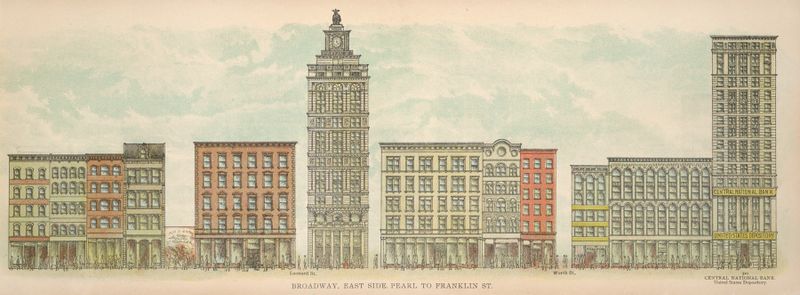
Broadway, East Side. Pearl to Franklin St.
Mail & Express

Broadway, East Side. 20th to 23rd St.
Mail & Express
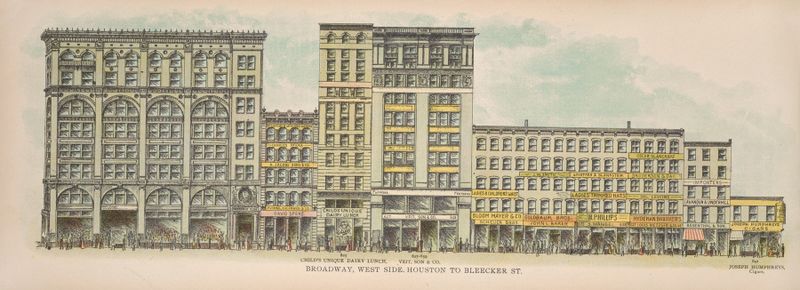
Broadway, West Side. Houston to Bleecker St.
Mail & Express

Broadway, East Side. Bowling Green to Hudson Bldg.
Mail & Express
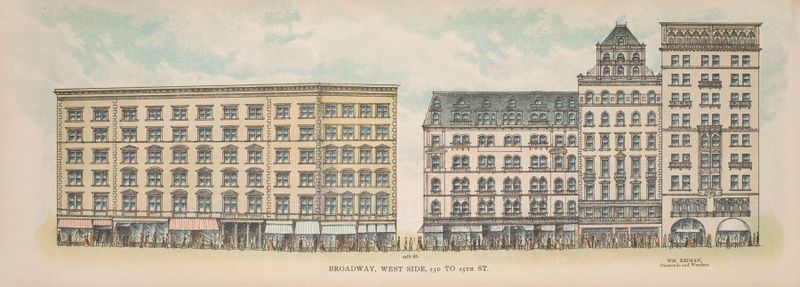
Broadway, West Side. 23rd to 25th St.
Mail & Express

Broadway, West Side. Trinity Church to Liberty St.
Mail & Express
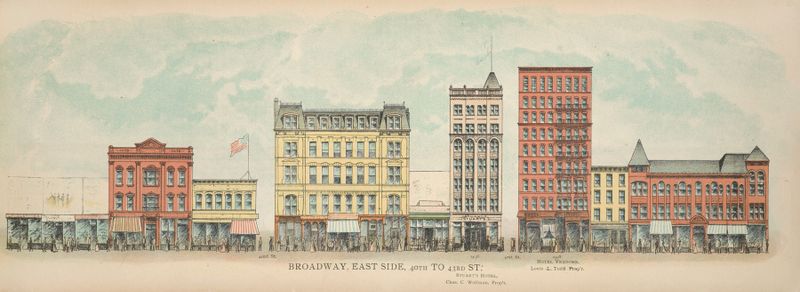
Broadway, East Side. 40th to 43rd St.
Mail & Express
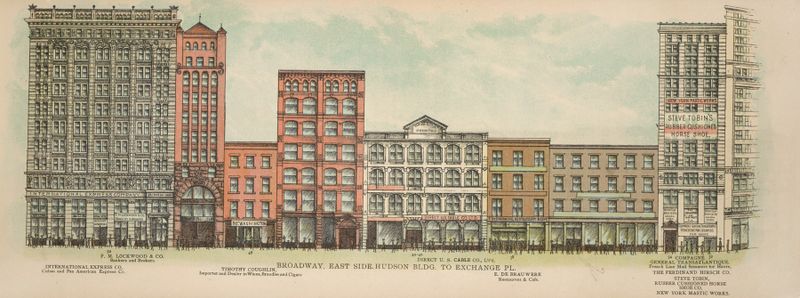
Broadway, East Side. Hudson Bldg. to Exchange Pl.
Mail & Express
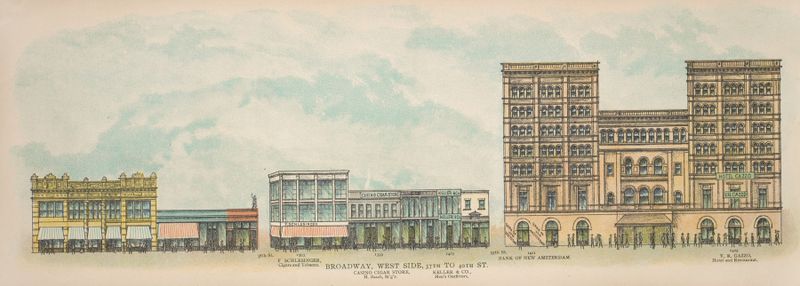
Broadway, West Side. 37th to 40th St.
Mail & Express
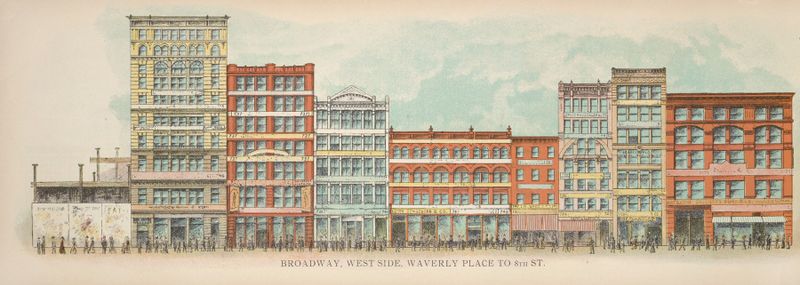
Broadway, West Side. Waverly Place to 8th St.
Mail & Express





