Busy Fisherfolk — History & Facts
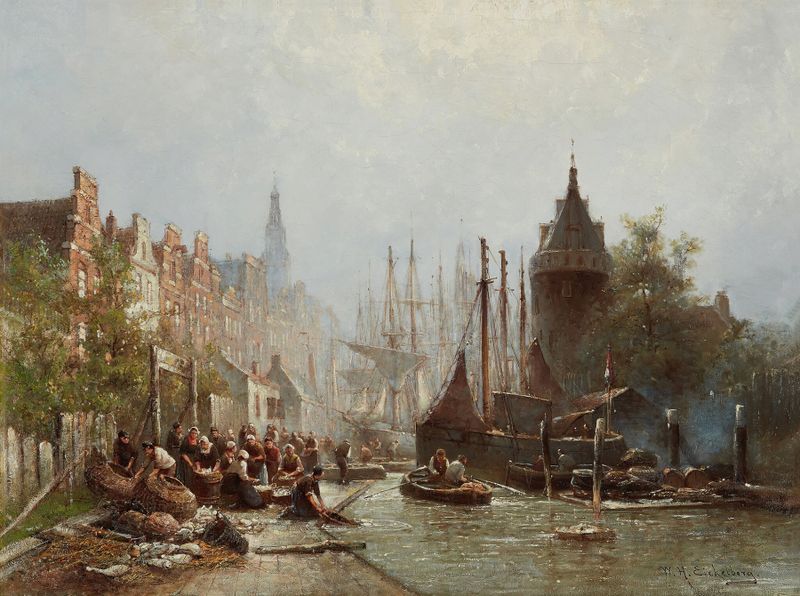
When did color learn to lie? In the vibrant tapestry of life, it often weaves a tale that reflects truth while masking deeper narratives, like the legacy of those who toil in silence. Look to the center, where the fishermen and their families are captured in a flurry of activity. The hues of deep blues and sun-kissed yellows dance across the canvas, contrasting the raw energy of the scene with the serene backdrop of a calm sea. Each brushstroke reveals an intricate web of gestures—the way a woman’s hand clutches a basket, the furrowed brow of a man casting his net.
The lively palette bursts with vitality, yet hints at an underlying struggle, as the weight of labor persists in the fading light. Peering closer, notice the juxtaposition of the joyous camaraderie against the solitude evoked by the water’s vastness. The tangled nets symbolize not just the catch of the day, but the tangled lives and stories of the community, interwoven with hopes and dreams. The subtlety of shadows cast by the figures introduces an emotional tension, where the promise of abundance through hard work coexists with the daunting unpredictability of nature. Willem Hendrik Eickelberg painted this work during an undefined period of his career, likely in the late 19th to early 20th century.
A time when Dutch realism was flourishing, Eickelberg focused on capturing the everyday lives of ordinary people, reflecting a shift in the art world towards depicting the humble dignity of labor. His commitment to portraying the essence of communal life speaks to a moment when society began to appreciate the beauty found in labor and legacy.