Busy Fisherfolk — History & Facts
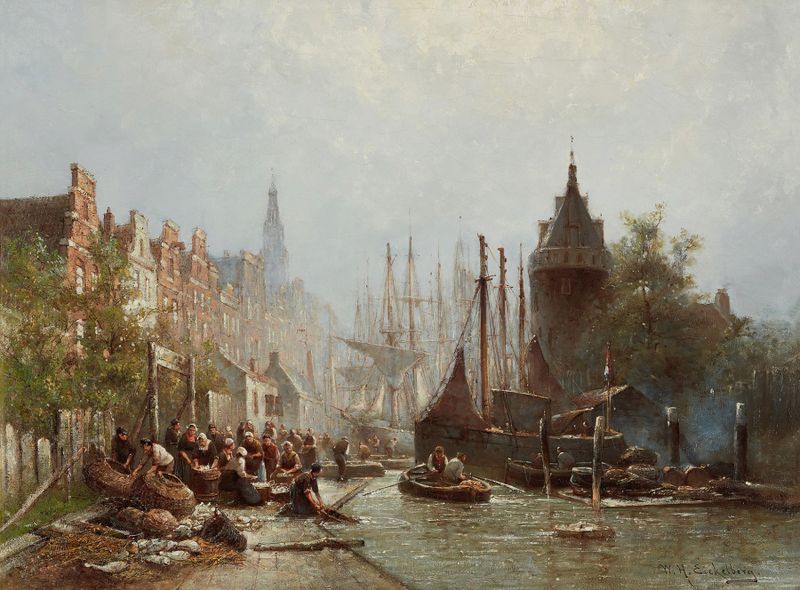
Is this a mirror — or a memory? The haunting weight of uncertainty lingers in the air, as if the canvas itself is caught between the past and the present, revealing truths we dare not confront. Focus on the vibrant hues that dance across the surface. The deep blues and greens evoke the ocean's depths, while earthy browns anchor the scene within the realm of human labor. Notice how the fishermen, rendered in painstaking detail, appear both dynamic and weary, their faces etched with lines that speak of toil and resilience.
The arrangement of figures creates a rhythm, leading the eye through the chaotic harmony of their work, where every brushstroke resonates with urgency. Yet, hidden beneath this lively tableau lies an undercurrent of tension. The shadows cast by the fishermen hint at looming challenges—the relentless tide of nature, the uncertainty of a good catch, and the silent fears that accompany their daily grind. Each gesture—the tug of a net, the glance exchanged—serves as a testament to their shared struggle against elements beyond their control.
Perhaps, in their hurried movements, one can glimpse an unspoken anxiety about the future, an echo of a world that shifts without warning. Willem Hendrik Eickelberg painted this piece during a period rich with the dialogues of realism in art, capturing the essence of everyday life. Active in the late 19th century, he sought to elevate the portrayal of humble laborers in a society experiencing profound change. Navigating the intersection of tradition and modernity, his work reflects both his own artistic journey and the broader social currents that influenced countless artists of his time.