
By the Mill Pond — History & Facts
When did color learn to lie? The vibrant hues of nature can charm the eye, yet they often conceal deeper truths beneath their seduction. Look to the left at the serene expanse of the mill pond, where reflections dance upon the water’s surface in a delicate interplay of blues and greens. The soft brushwork suggests movement, inviting the viewer to linger on the idyllic landscape. Notice how the gentle sunlight bathes the scene, illuminating the trees that frame the composition with their lush, textured leaves, while the quiet mill structure stands resolute in the background.
Each element is carefully crafted, encouraging the eye to explore the balance between tranquility and the underlying currents of emotion. Beyond the surface beauty, the painting captures the tension between illusion and reality. The idyllic scene offers an almost dreamlike quality, which contrasts with the potential for unseen turmoil, evident in the encroaching shadows beneath the trees. The mill, a symbol of industry, hints at the encroachment of progress on nature’s serene beauty.
Gude masterfully uses color to evoke a sense of nostalgia while inviting contemplation of the changing world. In 1850, Gude was in Norway, a time when artists were beginning to explore themes of nature with fresh perspectives, often influenced by Romanticism. His work emerged during a period of industrial change, where the natural world was both a sanctuary and a battleground against modernization. This backdrop informed his creation of By the Mill Pond, encapsulating a moment of beauty amid the looming transformations of the era.
More Artworks by Hans Gude
Browse all →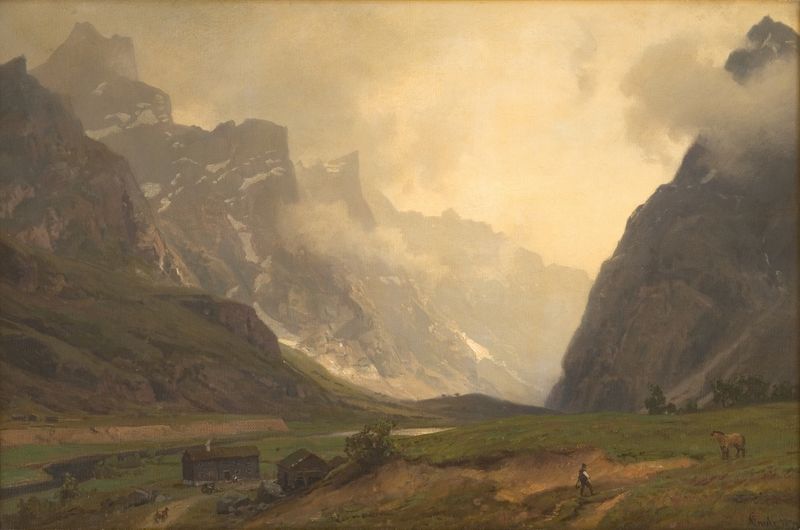
The Troll Peaks in Romsdalen, The Foot of Romsdalshorn to the Right
Hans Gude
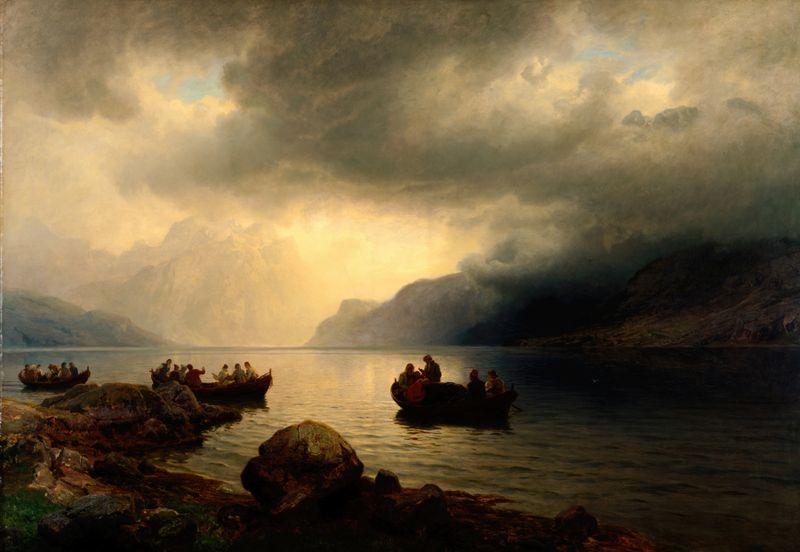
Funeral Procession on the Sogne Fjord
Hans Gude
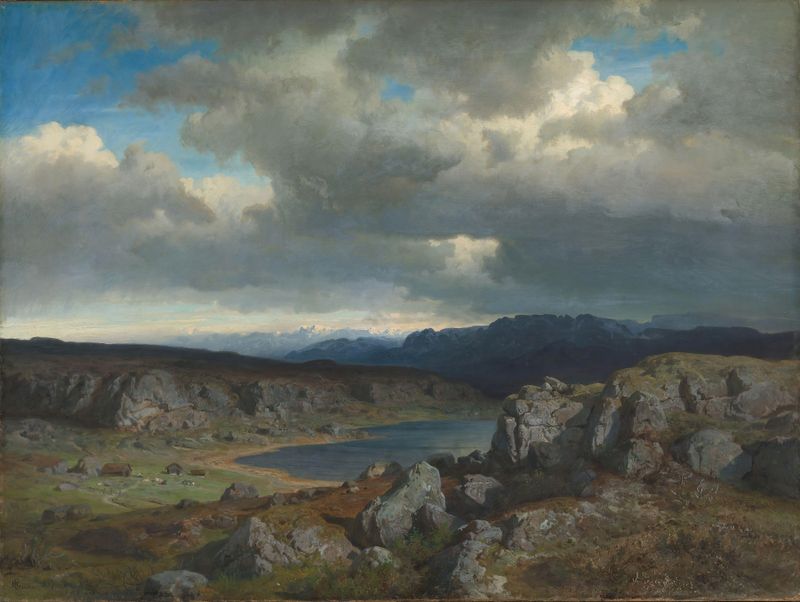
Norwegian Highlands
Hans Gude
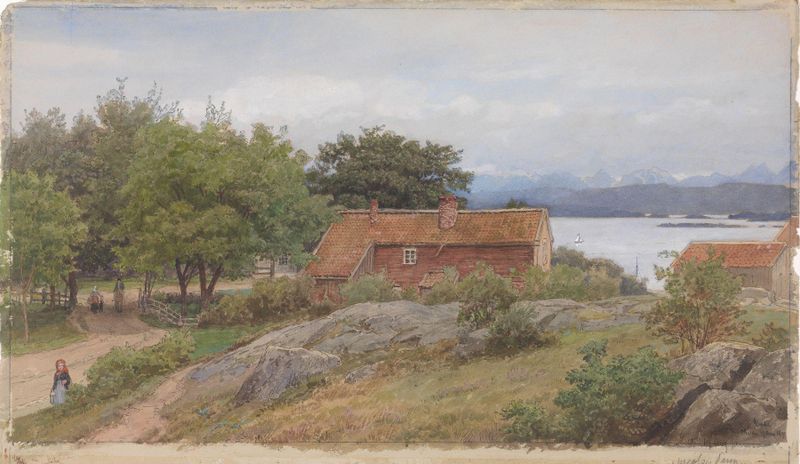
Landskap med bondegård ved Molde
Hans Gude
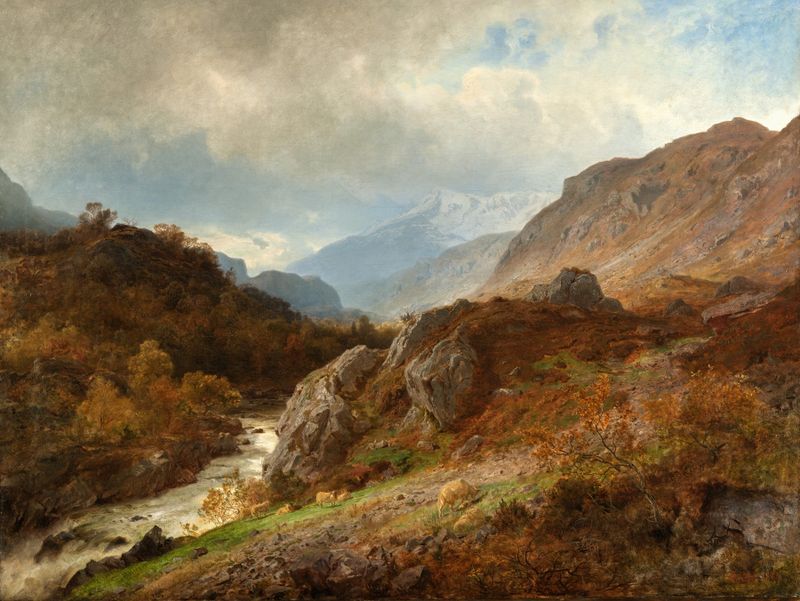
Mountain Landscape
Hans Gude
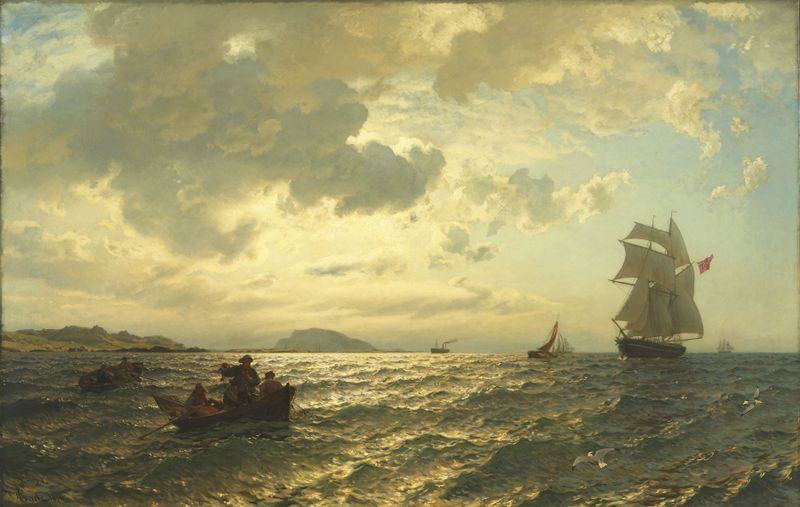
Fresh Breeze on the Norwegian Coast
Hans Gude
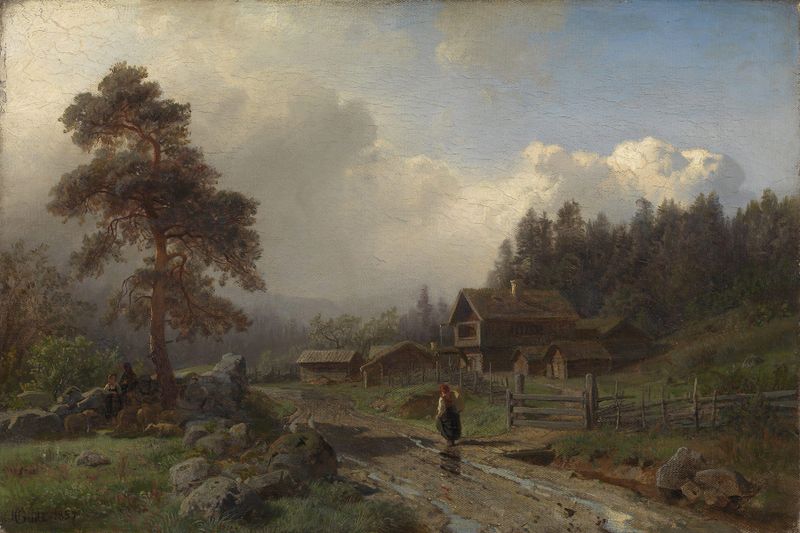
Norwegian Landscape in Rain
Hans Gude
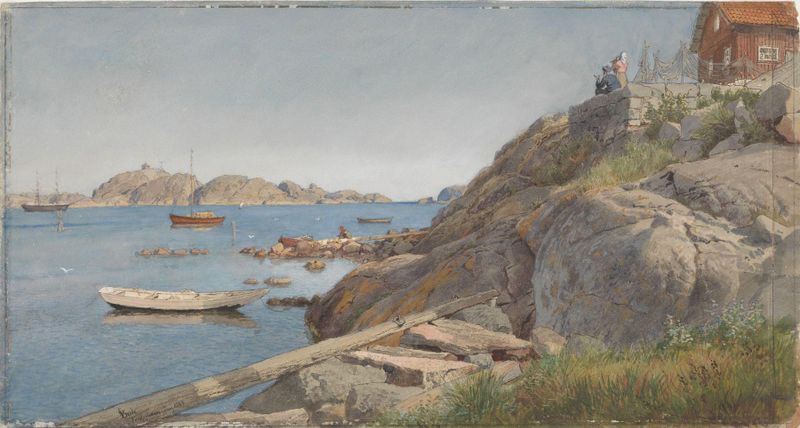
Landscape by Stavern
Hans Gude
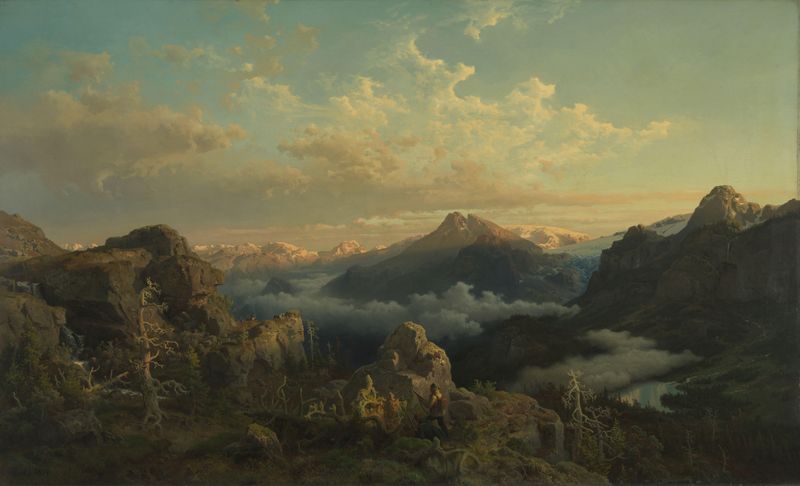
Norwegian Highlands in Sunrise
Hans Gude
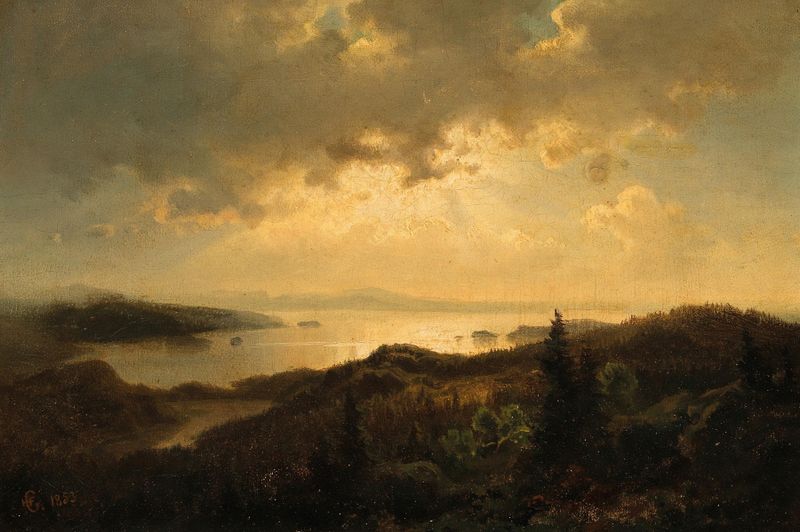
A Scene at Dusk in Norway
Hans Gude





