
Cairn in Snow — History & Facts
In the stillness of winter, loneliness invites contemplation, whispering to the heart amid the serene desolation of snow-covered landscapes. Look to the center of the composition: a solitary cairn, meticulously arranged stones rising from the blanket of white. Observe the way the soft light caresses the edges of each stone, illuminating their rough textures while casting delicate shadows that speak of time's passage. The palette of muted grays and blues creates a chill that envelops the viewer, evoking a profound sense of solitude, yet there is an undeniable beauty in this starkness. The contrast between the stark cairn and the infinite expanse of snow suggests themes of human persistence against nature's vastness.
Each rock symbolizes resilience, but also the weight of isolation, standing as a testament to the solitude of the human experience. The viewer may sense an invitation to reflect on their own loneliness or to find solace in the quiet strength of the cairn, hinting at the interplay between presence and absence in our lives. During the early 19th century, Friedrich painted in a time where Romanticism flourished, exploring themes of nature and human emotion. This work emerged amid his grappling with personal loss and existential questions, characteristic of his oeuvre, where he often sought to reflect deeper truths about humanity's place within the natural world.
It was a period marked by a growing appreciation for the sublime, and this painting encapsulates that spirit, balancing beauty and melancholy in a profound exploration of solitude.
More Artworks by Caspar David Friedrich
Browse all →
Wanderer above the Sea of Fog
Caspar David Friedrich
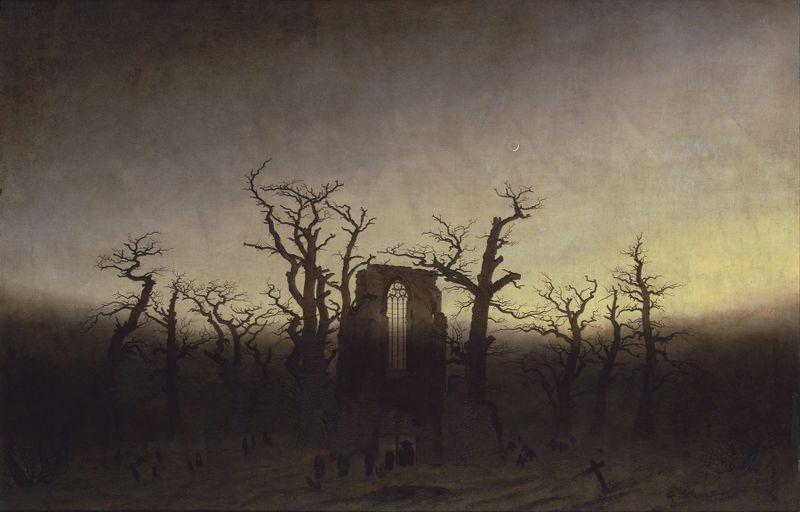
The Abbey in the Oakwood
Caspar David Friedrich
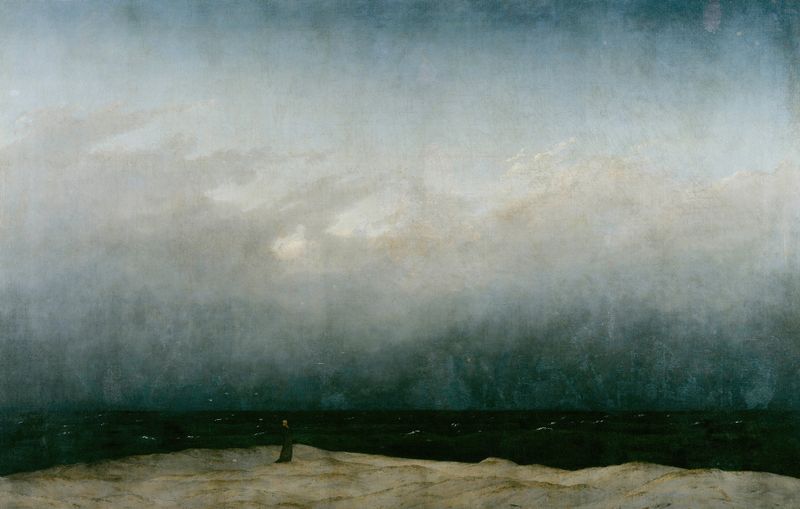
The Monk by the Sea
Caspar David Friedrich
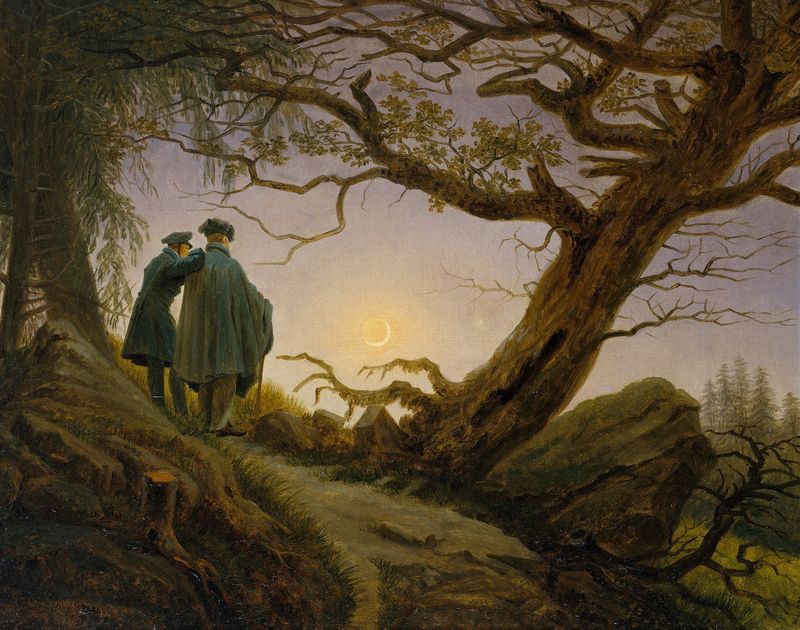
Two Men Contemplating the Moon
Caspar David Friedrich
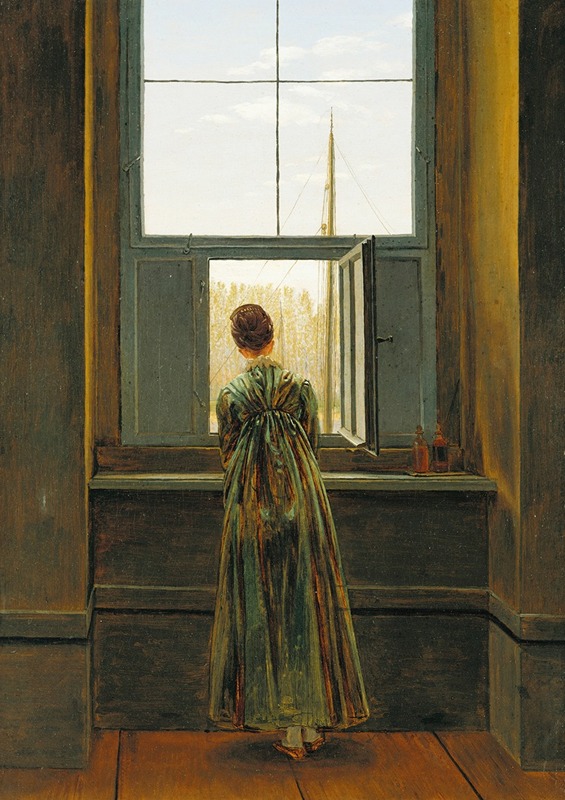
Woman at a Window
Caspar David Friedrich
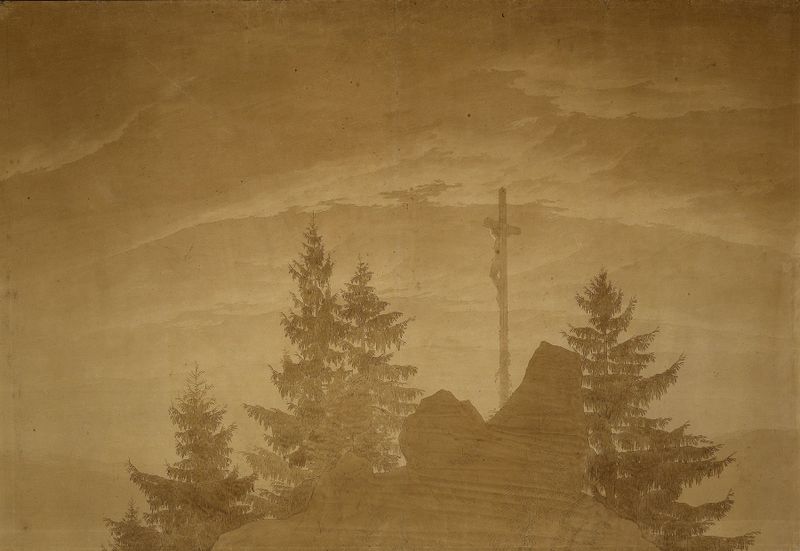
Cross in the Mountains
Caspar David Friedrich
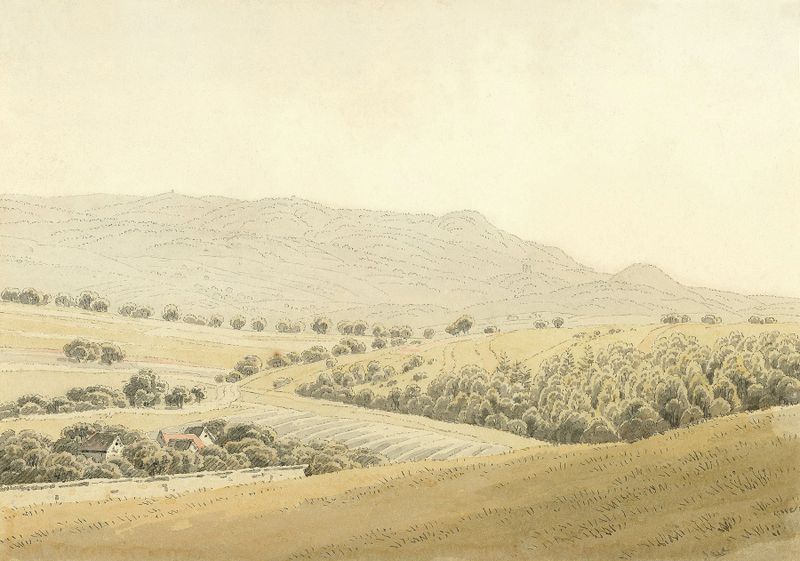
Mittelgebirgslandschaft
Caspar David Friedrich
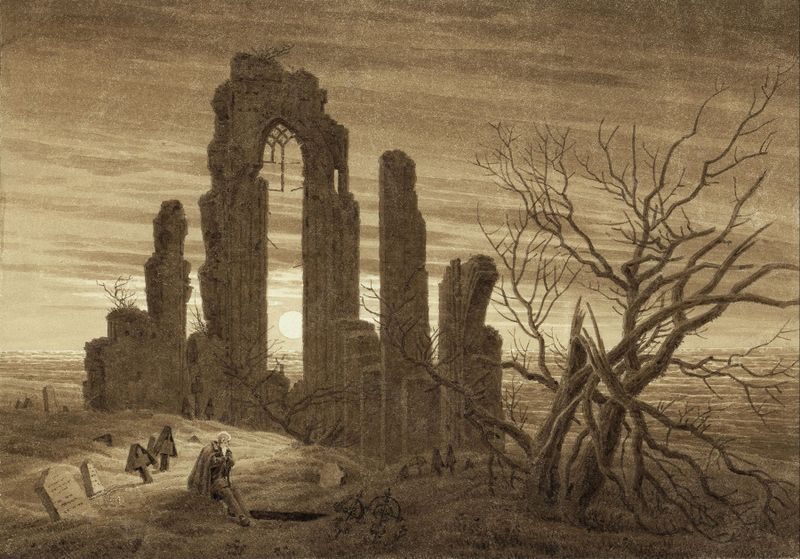
Winter – Night – Old Age and Death (from the times of day and ages of man cycle of 1803)
Caspar David Friedrich
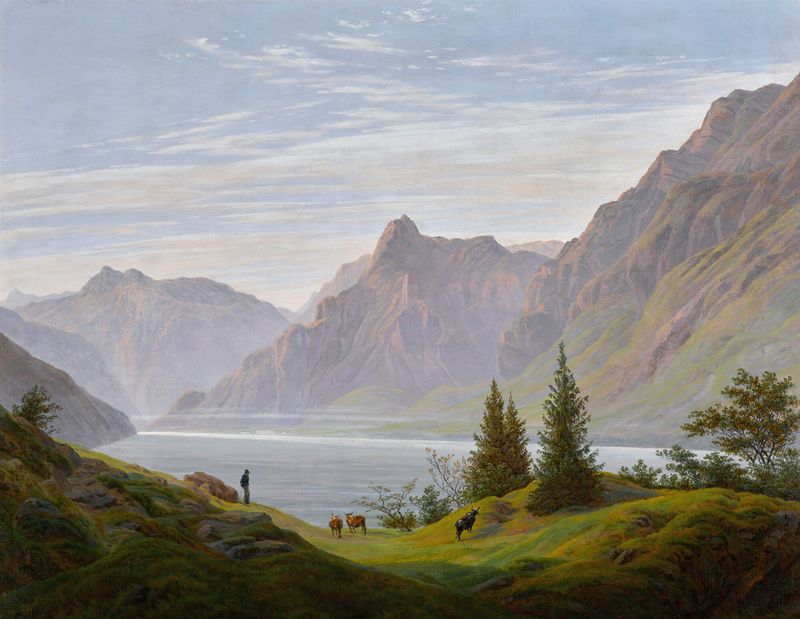
Landschaft mit gebirgsee, morgen
Caspar David Friedrich
Northern Sea in the Moonlight
Caspar David Friedrich





