Campagnalandschaft mit befestigter Stadt — History & Facts
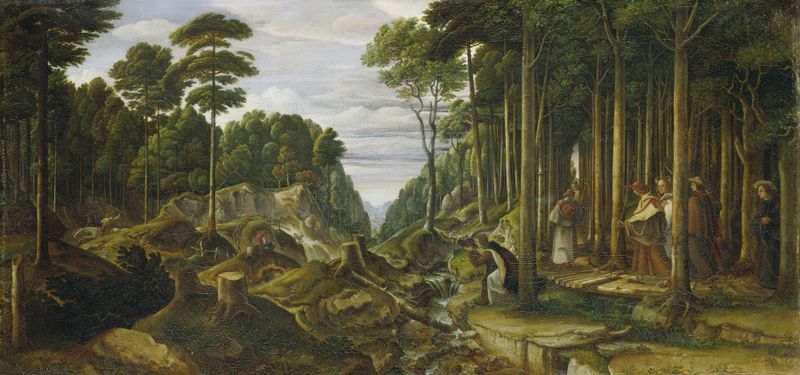
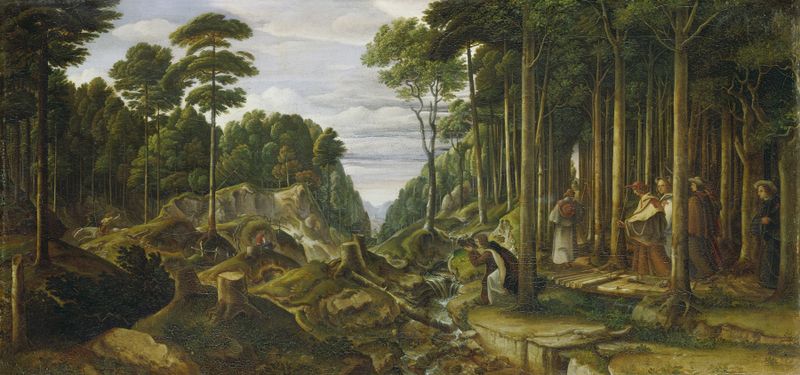
Could a single brushstroke hold eternity? In the serene embrace of Campagnalandschaft mit befestigter Stadt, nostalgia lingers like the scent of blooming wildflowers, inviting reflections on time and memory. Look to the horizon where the fortified city stands, a sentinel against the gentle undulations of the countryside. The artist employs a palette softened by warm earth tones, with golden yellows and muted greens harmonizing to create a tranquil yet vibrant landscape. Notice how the delicate interplay of light and shadow defines the fortifications, their sturdy walls contrasting with the ephemeral skies, suggesting resilience amid the passage of time. Beneath the surface, this painting captures the tension between permanence and transience.
The fortified city symbolizes human endeavor and endurance, while the surrounding fields evoke nostalgia for a simpler past, where the land remains fertile and alive. The distant mountains provide a sense of scale, reminding viewers of nature's timelessness while the architecture speaks to a fleeting human legacy. Together, these elements weave a narrative of longing and hope. In 1830, Olivier was immersed in a transitional period of European art, shifting from Romanticism to a more subdued realism.
Living in Germany, he was influenced by both the burgeoning appreciation for landscape painting and the socio-political changes sweeping across Europe. This work reflects not just his technical skill but also a broader cultural meditation on the relationship between humanity and nature, capturing a moment of quiet introspection amid a world in flux.