Procession of Pilgrims in the Forest — History & Facts
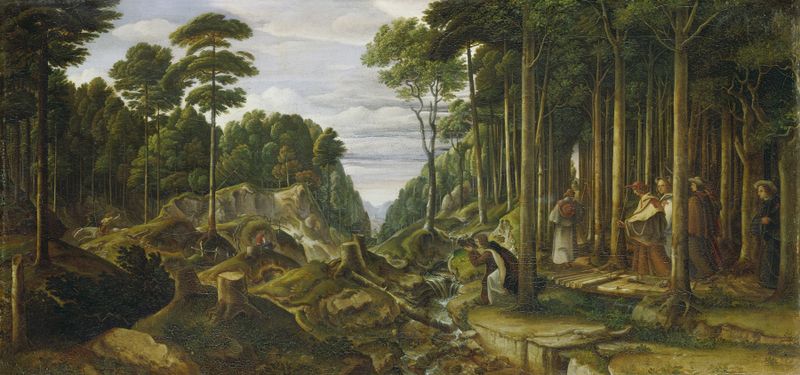
A winding path cuts through the dense forest, shadows weaving among ancient trees. A group of pilgrims, faces etched with trepidation, moves cautiously, drawn together by an unseen force. The air is thick with an unsettling silence, punctuated only by the rustle of leaves and the distant call of an owl, amplifying an undercurrent of unease that envelops them. Focus on the figures at the forefront, their postures tense, as they huddle together against the encroaching darkness.
Notice how the dim light filters through the thick canopy, casting haunting patterns on their garments—pale hues contrasting sharply with the deep greens and browns of the forest. The use of chiaroscuro emphasizes both the physical and emotional weight of their journey, guiding the viewer's eyes toward their anxious expressions. The interplay of light and shadow here speaks volumes about the tension between hope and fear. While the pilgrims search for spiritual solace, the surrounding gloom hints at the dread of the unknown that lies ahead.
Each figure appears to embody a different aspect of this emotional struggle—some bearing a quiet resignation, others wearing palpable fear, reflecting the collective anxiety of their quest. This visual dichotomy invites deeper contemplation about faith, uncertainty, and the journey through both the physical and spiritual wilderness. In 1814, Olivier painted this work during a time of personal and artistic transition for himself. Settled in the Netherlands after years of travel, he was exploring themes of spirituality and the natural world, amidst movements in Romanticism where nature often symbolized the sublime and the fearful.
This piece stands as a testament to both his evolving style and the broader dialogues of the era regarding humanity's relationship with the unseen.