
Capriccio with Classical Ruins and Buildings — History & Facts
In the mid-18th century, the Venetian painter Canaletto became renowned for his precise cityscapes, yet Capriccio with Classical Ruins and Buildings stands apart for its deliberate play with fantasy. Unlike his celebrated views of Venice, this work belongs to the genre of "capriccio," where artists combined real and imagined architecture to conjure a world that never existed. The painting’s allure lies in its invented landscape: a dreamlike assembly of ancient ruins and elegant buildings, assembled with the same clarity and sunlight as his real-life vedute.
Collectors of the Grand Tour era, hungry for souvenirs of Italy’s past glories, eagerly sought such compositions as reminders of their travels and aspirations. In this capriccio, Canaletto selects a moment of tranquil harmony, where crumbling columns and arches rise beside stately Renaissance facades. Figures wander among the ruins—some pausing in conversation, others dwarfed by the massive stones—inviting the viewer to reflect on the passage of time and the endurance of culture. The scattered fragments of antiquity, rendered with meticulous detail, symbolize both the grandeur and the decay of ancient Rome, while the lively staffage (the small human figures) injects a sense of daily life continuing amidst history’s remnants.
The golden light unifies the disparate elements, much as Giovanni Paolo Panini did in his own capricci, yet Canaletto’s touch remains more restrained, focusing on architectural clarity over theatrical flourish. The precise origins of this painting are uncertain, as with many capricci, but it likely emerged from Canaletto’s later years, when he catered to the English market and adapted his style to changing tastes. Works like this were prized by British aristocrats, who displayed them in country houses as tokens of their continental education. Over the centuries, Capriccio with Classical Ruins and Buildings has passed through private collections and, like many of Canaletto’s capricci, its attribution has occasionally sparked debate among scholars due to the popularity of his nephew, Bernardo Bellotto, who painted in a similar style.
Today, the painting stands as a testament to 18th-century Europe’s fascination with antiquity and the imaginative power of the artist’s eye.
More Artworks by Canaletto

The Grand Canal, Venice, looking north-west from the Ca' Corner to the Ca' Contarini degli Scrigni, with the campanile of Santa Maria della Carità
Canaletto

Venice, Bacino di San Marco on Ascension Day
Canaletto

Windsor Castle
Canaletto

The Grand Canal looking North-East from the Palazzo Dolfin-Manin to the Rialto Bridge
Canaletto

Venice: The Campo SS. Giovanni e Paolo
Canaletto

Venice: The Grand Canal from the Rialto to the Palazzo Foscari
Canaletto
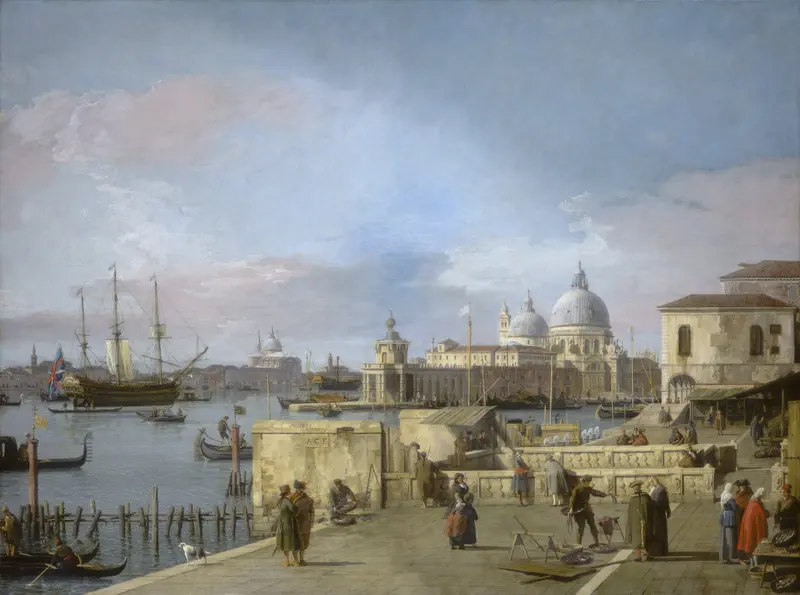
Venice: The Molo towards the Dogana and Santa Maria della Salute
Canaletto

Venice: The Piazzetta
Canaletto
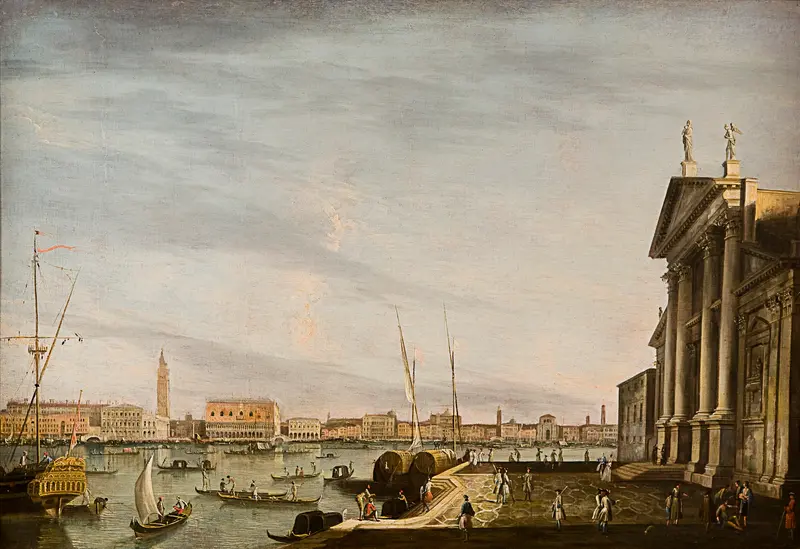
Venice, View of San Giorgio Maggiore
Canaletto

London: The Thames from Somerset House Terrace towards Westminster
Canaletto


