
Caprice of a triumphal arch and soldiers — History & Facts
What first draws the eye in Caprice of a triumphal arch and soldiers is the grandeur of the imagined architecture, a fantasy of stone and shadow that towers over the small, lively figures below. The painter, Adriaen van der Cabel, sets the scene with a monumental arch, its columns and cornices softened by creeping foliage and the play of sunlight. The real drama, though, is in the way light slices across the façade, plunging the left half into cool shadow while the right opens up to a sunlit landscape.
Soldiers gather at the base, their red and ochre uniforms catching the light, their postures relaxed and conversational rather than martial. The arch itself is not just a backdrop but a stage, framing the human stories and hinting at a world where the ruins of antiquity are both playground and witness. This kind of architectural caprice—where fantasy triumphal arches rise in invented landscapes—was a favorite of seventeenth-century painters, especially those who traveled between the Netherlands and Italy. In van der Cabel’s time, such scenes were prized by collectors eager to display their taste for both classical learning and the picturesque.
The date, mid-seventeenth century, places this work in a period when Dutch and Flemish artists were fascinated by the ruins and imagined glories of Rome, but also by the everyday life that unfolded around them. History has kept few traces of the journey this particular painting has taken, but its presence in the Sotheby’s collection today is a reminder of how these caprices still invite us to wander, not just through painted arches, but through the layered dreams of a distant age.
More Artworks by Adriaen van der Cabel
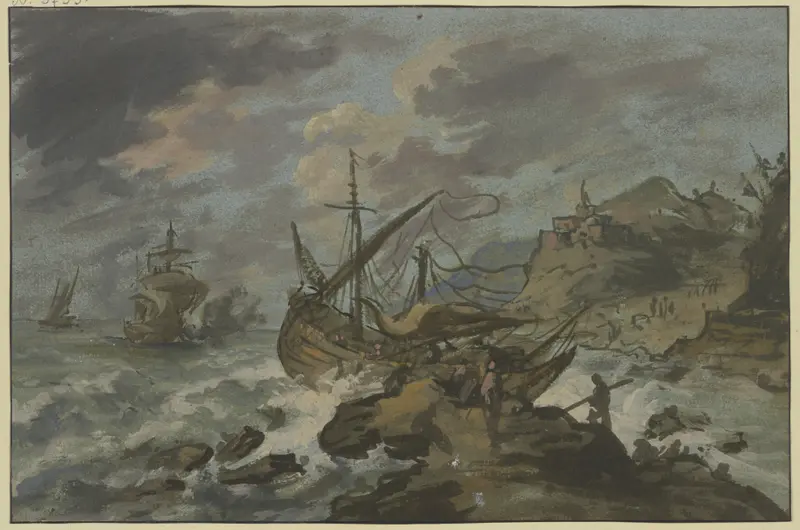
Seesturm an felsiger Küste, vorne ein gestrandetes Schiff
Adriaen van der Cabel
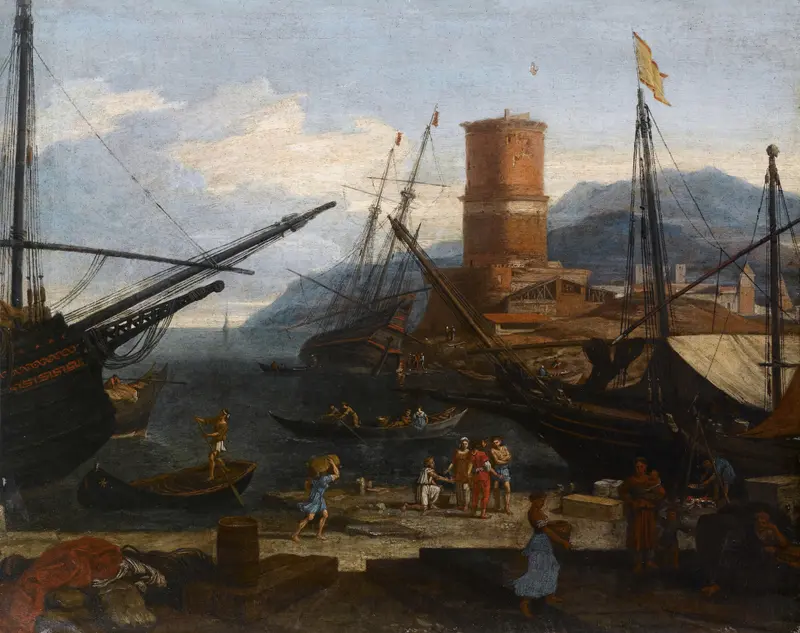
View of a southern port
Adriaen van der Cabel
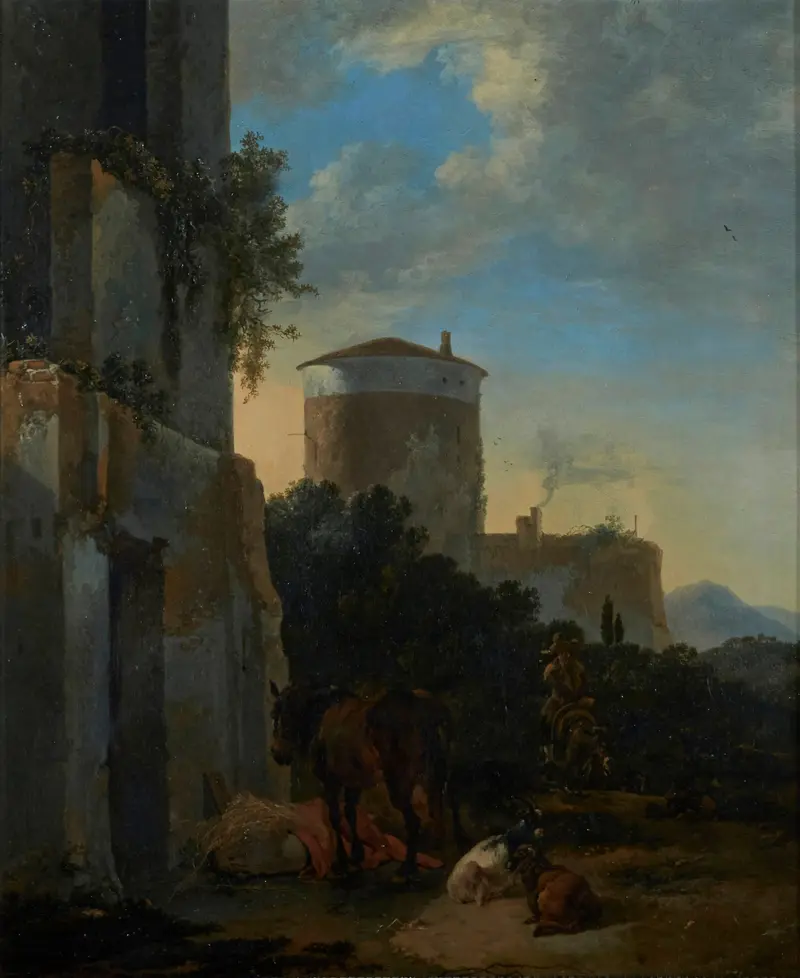
An italianate village street with a horse, goats, and man on a donkey
Adriaen van der Cabel
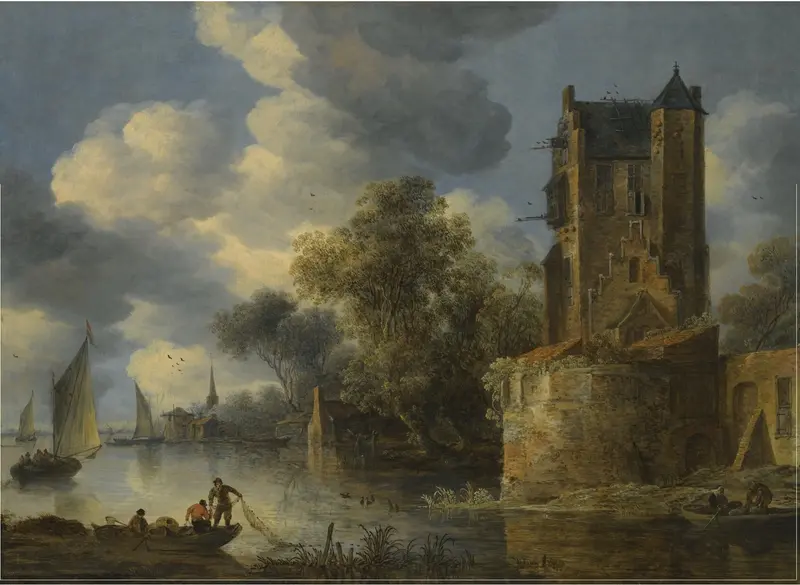
River Landscape with a Bastion
Adriaen van der Cabel
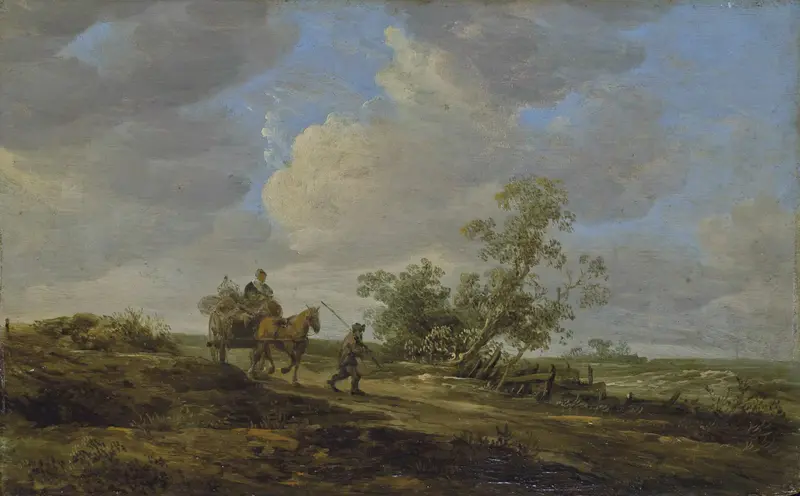
Farmer's cart on a road
Adriaen van der Cabel
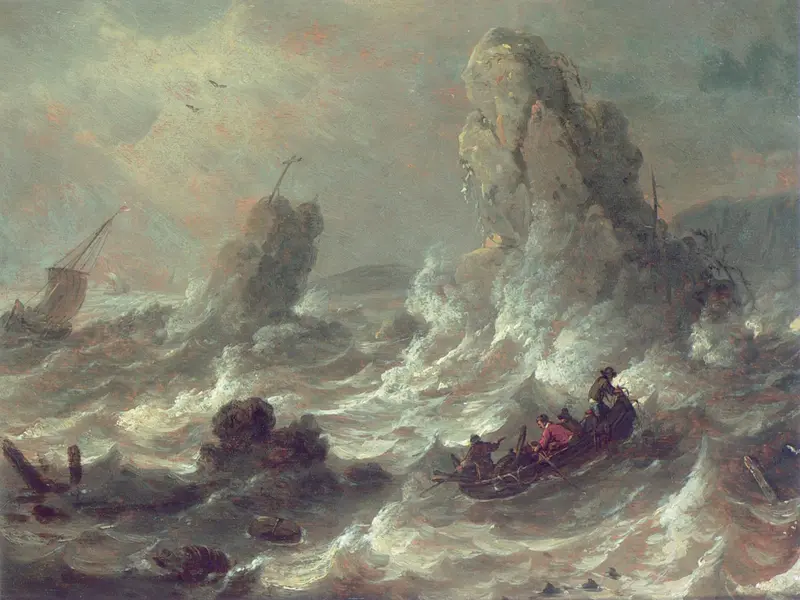
Stormy sea with some boats nearby cliffs
Adriaen van der Cabel
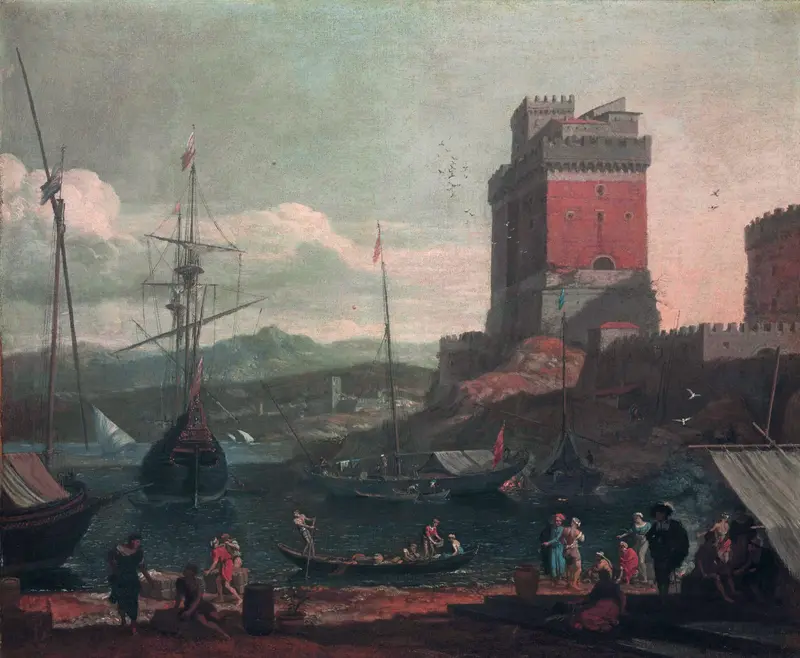
View of a Mediterranean harbor
Adriaen van der Cabel
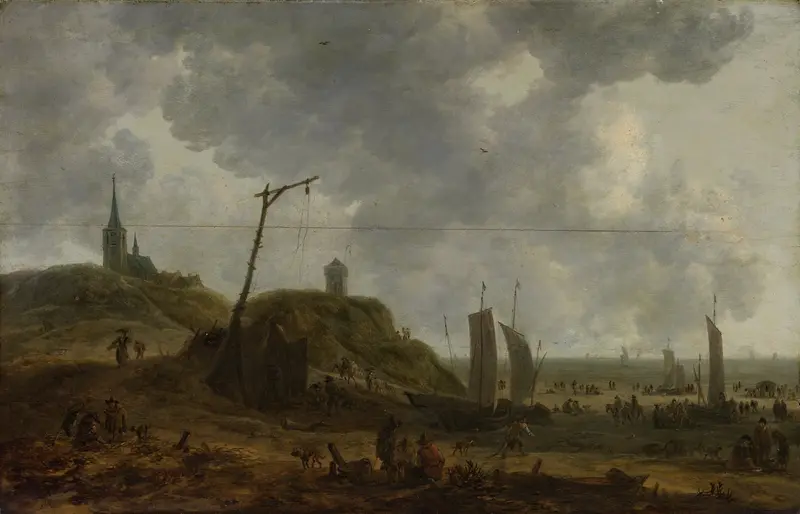
Beach at Katwijk
Adriaen van der Cabel
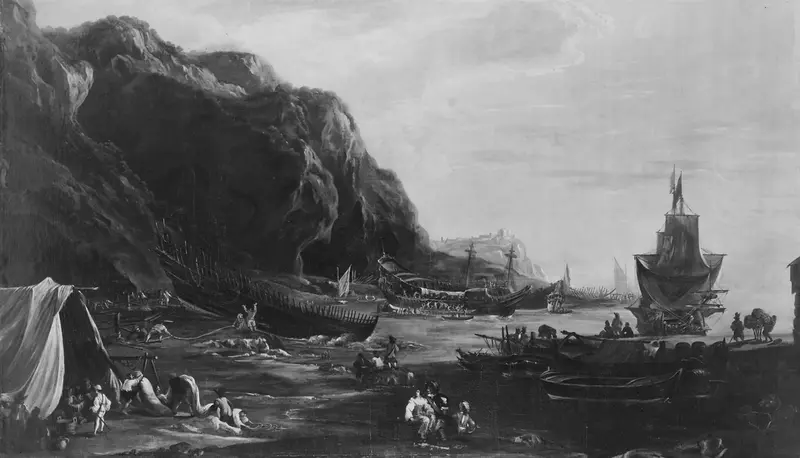
Adriaen van der Kabel Küstenlandschaft mit Hafenplatz
Adriaen van der Cabel
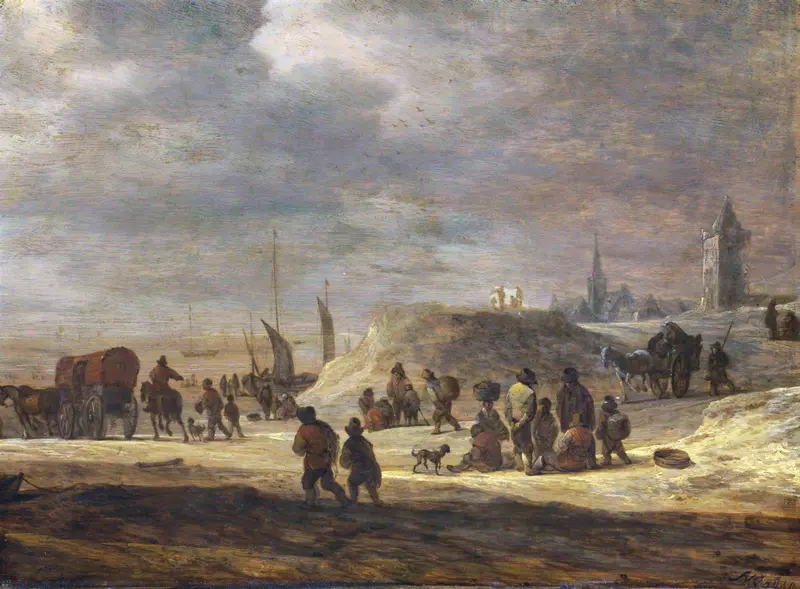
Fishermen and peasants on a beach with a village beyond
Adriaen van der Cabel





