
Capture of the Tripoli by the Enterprise — History & Facts
Is this a mirror — or a memory? The intricate rendering of Capture of the Tripoli by the Enterprise invites us to reflect on the delicate interplay between past and present, stirring a sense of hope for a brighter future amid tumultuous events. Look to the center of the canvas where the ship, majestic and defiant, stands against a backdrop of swirling clouds and tumultuous waves. The vibrant blues and whites of the water contrast starkly with the earthy tones of the ship, lending a sense of dynamic movement. Birch's meticulous attention to the ship's details—the fluttering flags, the rigging, and the glinting sails—draws the viewer immediately into the heart of this momentous naval clash.
The interplay of light and shadow enhances the drama, illuminating the ship while leaving the surrounding elements in a darker, almost foreboding hue. Upon closer inspection, one can discern deeper emotional layers: the hope embodied in the steadfast ship, juxtaposed with the chaotic sea, hints at resilience amidst adversity. The tumultuous skies, filled with racing clouds, mirror the uncertainty of war, yet the vessel remains resolute, symbolizing perseverance and courage. Birch captures the fleeting nature of time—this event, while rooted in history, resonates with contemporary struggles, reminding us of the cyclical nature of conflict and the hope that persists within it. Painted between 1806 and 1812, this work emerged during a period of intense naval conflict between the United States and North African states, known as the Barbary Wars.
Birch, an American artist, sought to depict the valor of American naval forces during a time of establishing national identity and military prowess. The painting reflects not only Birch’s technical skill but also the prevalent desire among Americans to commemorate their struggles and triumphs on the international stage.
More Artworks by Thomas Birch
Browse all →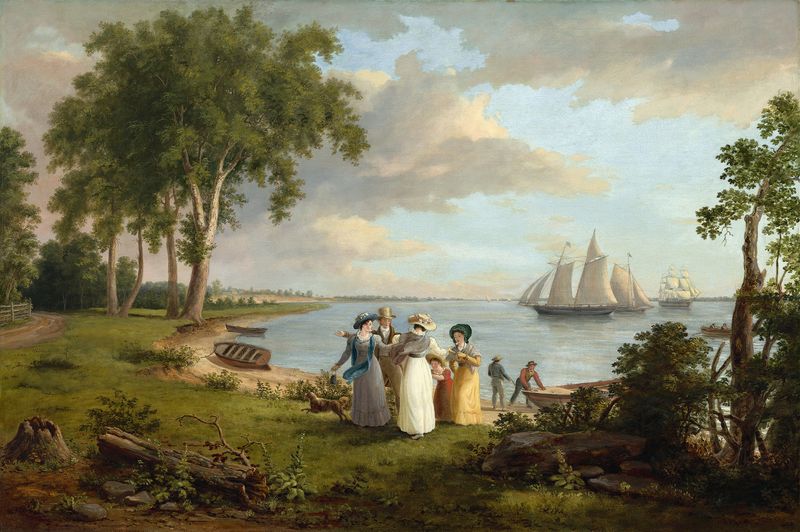
View of the Delaware near Philadelphia
Thomas Birch
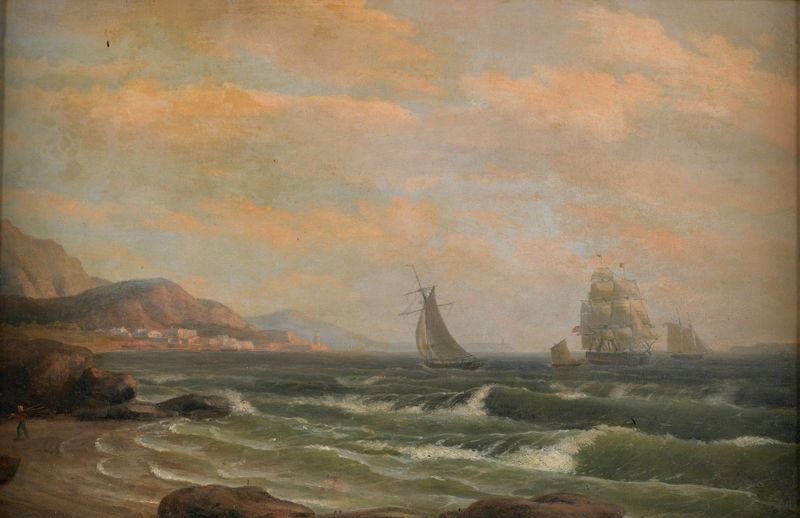
American Frigate in the Bay of St. Helena
Thomas Birch
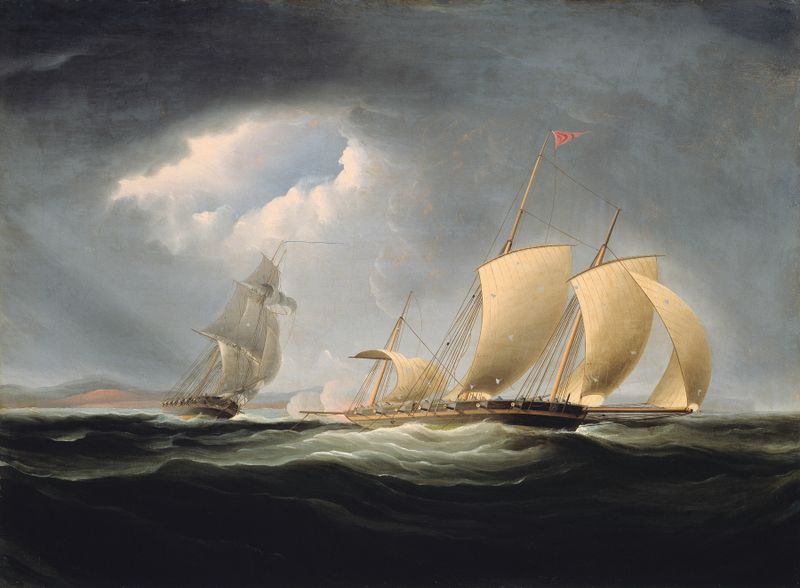
Capture of the Tripoli by the Enterprise
Thomas Birch

Southeast View of ‘Sedgeley Park,’ the Country Seat of James Cowles Fisher, Esq.
Thomas Birch

Shipwreck near a Rocky Coast
Thomas Birch
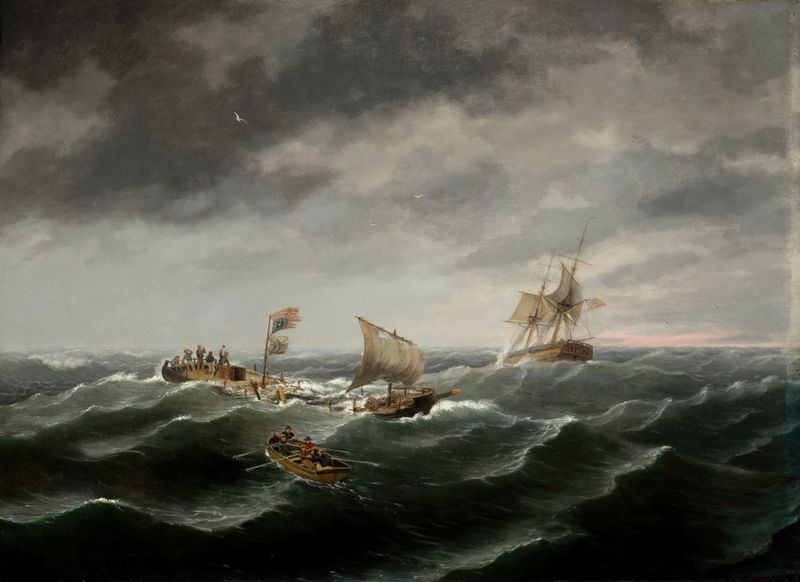
Loss of the Schooner ‘John S. Spence’ of Norfolk, Virginia, 2d view-Rescue of the Survivors
Thomas Birch

Philadelphia Harbor
Thomas Birch

U.S. Frigate President
Thomas Birch
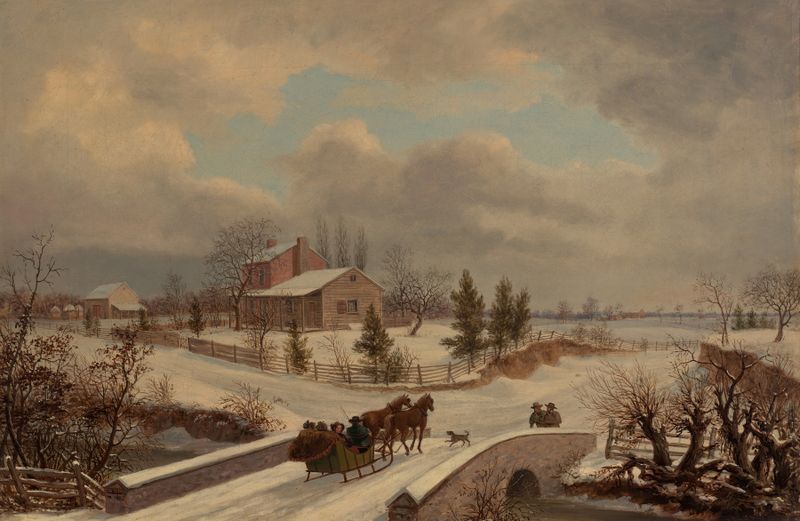
Pennsylvania Winter Scene
Thomas Birch
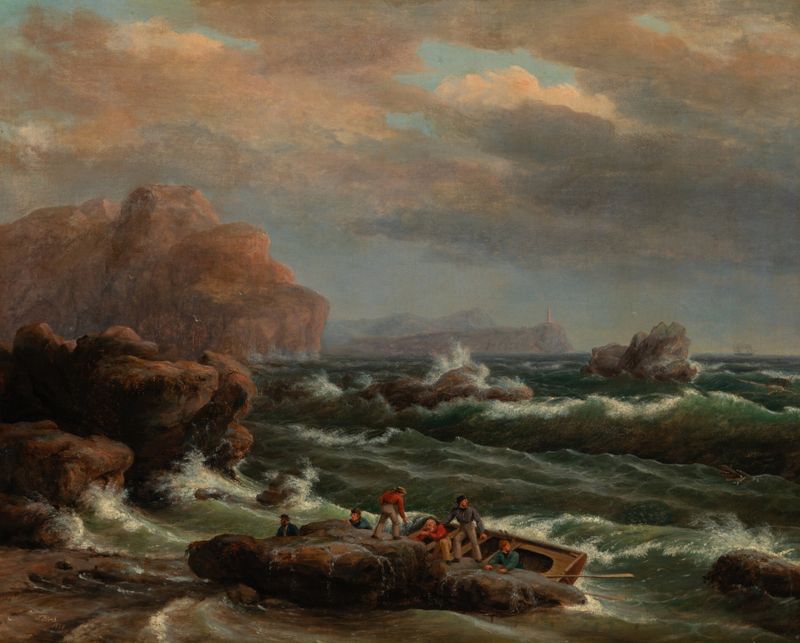
Pulling to Shore
Thomas Birch





