
Carthorse — History & Facts
A single carthorse stands at uneasy rest, its body angled into the picture as if caught mid-task, the harness and shaft still pressing against its side. The animal’s mane is tousled, its head turned just enough to reveal the tension in its jaw and the gentle weariness in its eye. Light washes across the horse’s broad back, picking out the muscular forms and the sheen of sweat, while the background dissolves into loose, almost abstract strokes—there is no stable, no cart, only the suggestion of ground and air.
This is not a portrait of an animal at leisure, but a moment suspended between labor and movement, where the viewer is invited to sense the weight of the day in every brushstroke. Painted in 1844, Carthorse belongs to a time when the industrial and urban worlds were reshaping European life, yet the daily reality of animal labor remained everywhere visible. Artists like Adolph von Menzel—whose career would later be marked by grand historical canvases—often turned their attention in these early years to the ordinary, the overlooked, the working creatures that powered city and countryside alike. The choice to isolate the horse, to let it fill the frame, speaks to a growing Romantic fascination with individuality and the dignity of work.
History has kept few traces of this specific painting’s journey, but its presence in a modern collection allows us to stand before it and consider how, even in a seemingly simple study, the world of 1844 pulses through the tension of muscle, leather, and light.
More Artworks by Adolph von Menzel
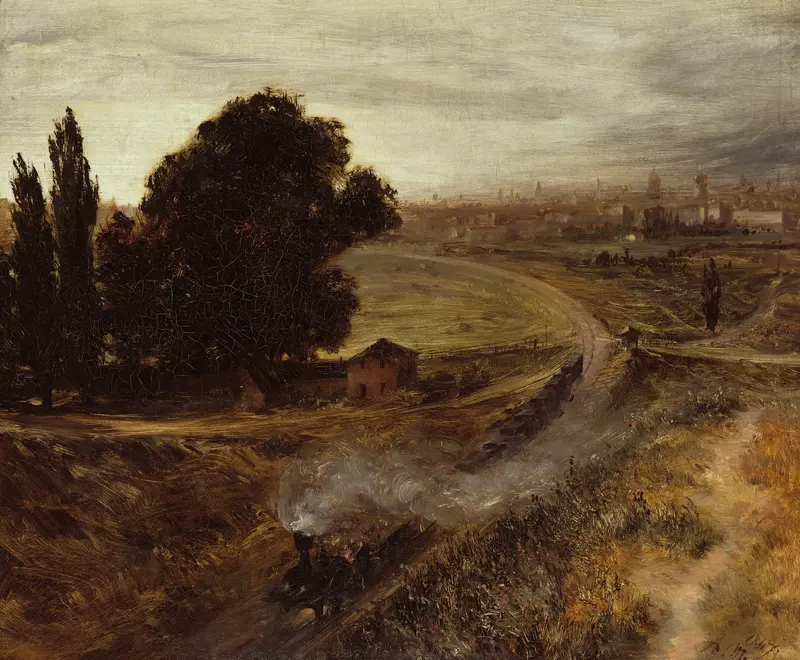
The Berlin-Potsdam Railway
Adolph von Menzel
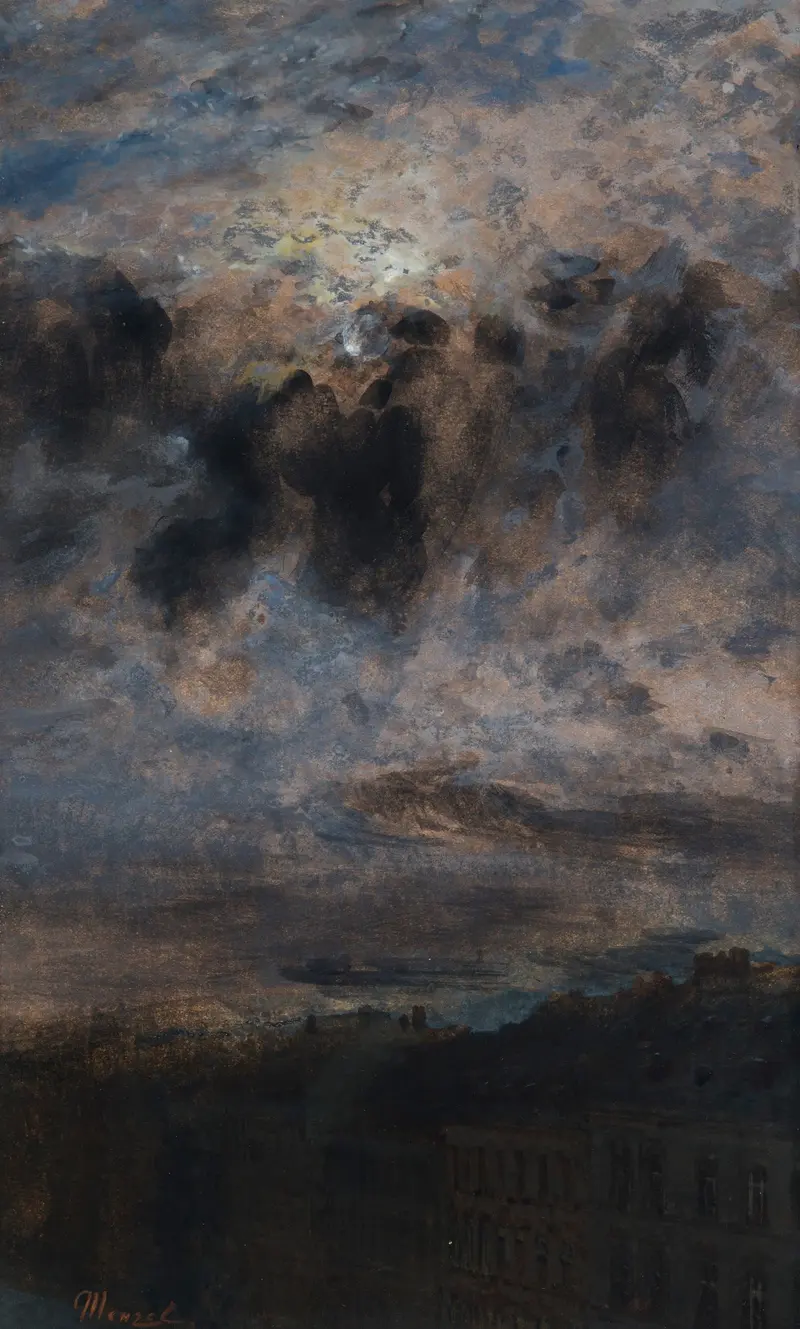
Mondschein über den Dächern von Berlin
Adolph von Menzel
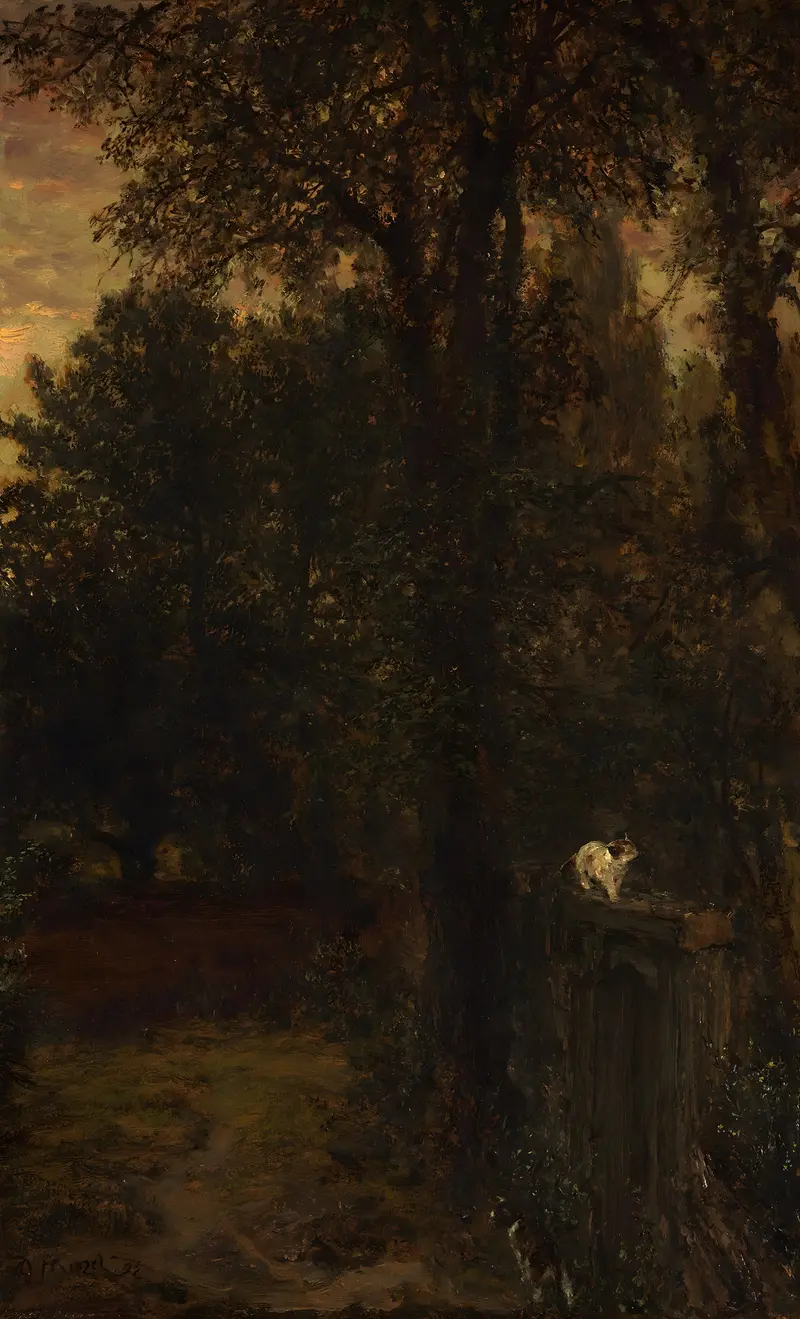
Landscape
Adolph von Menzel
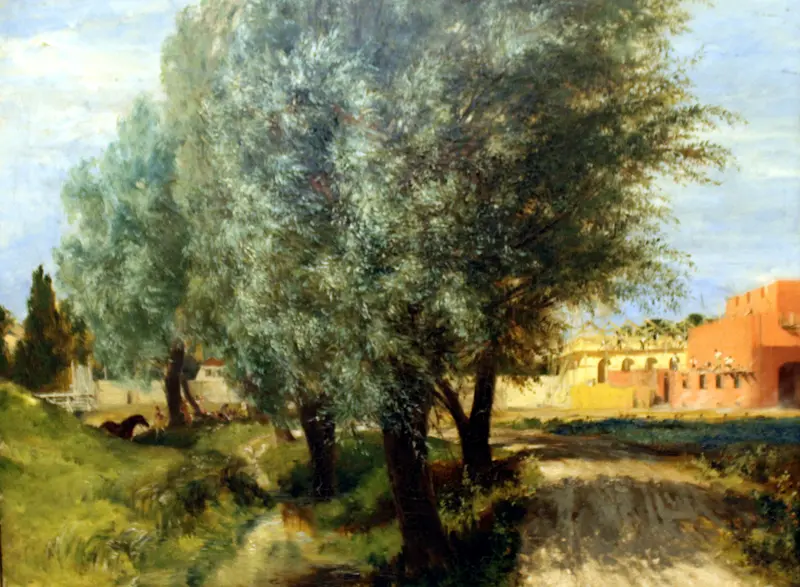
Building Site with Willows
Adolph von Menzel
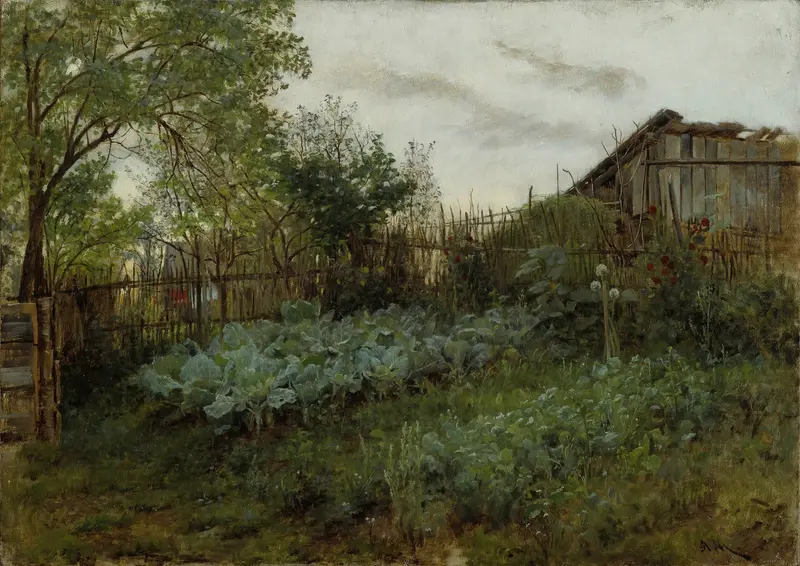
The Back Garden
Adolph von Menzel
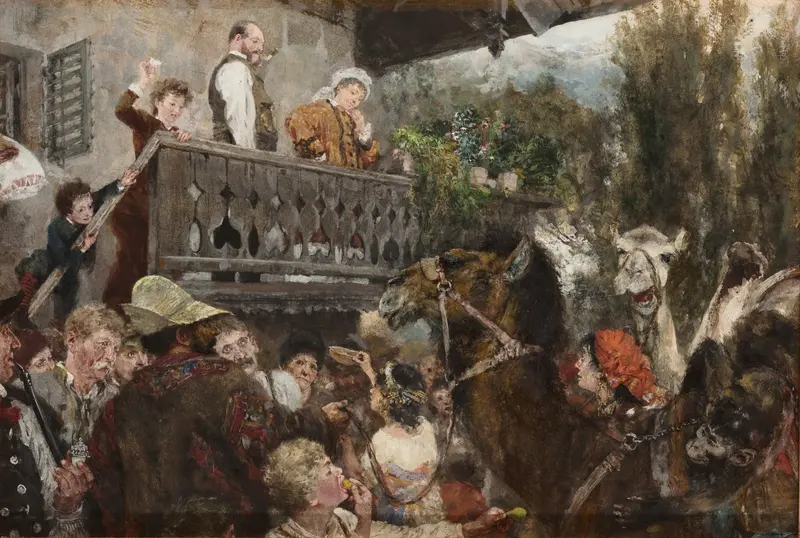
The wandering circus (Camel drivers in Partenkirchen)
Adolph von Menzel
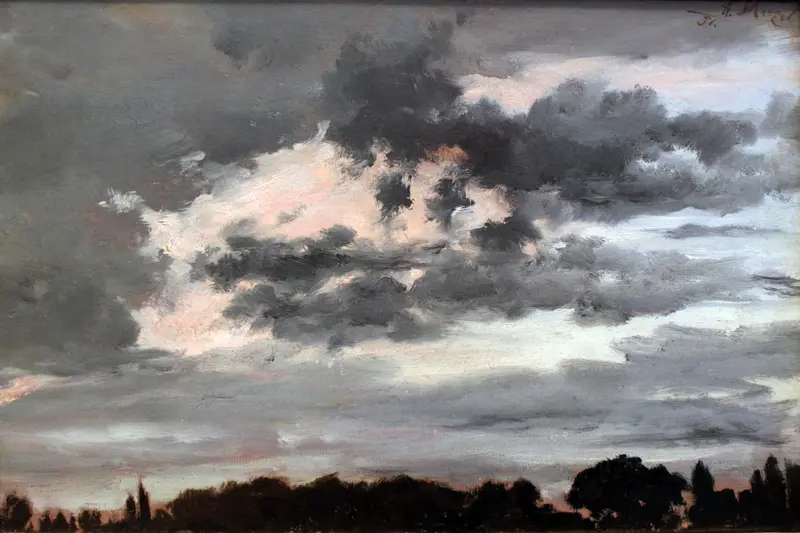
Cloud Study
Adolph von Menzel
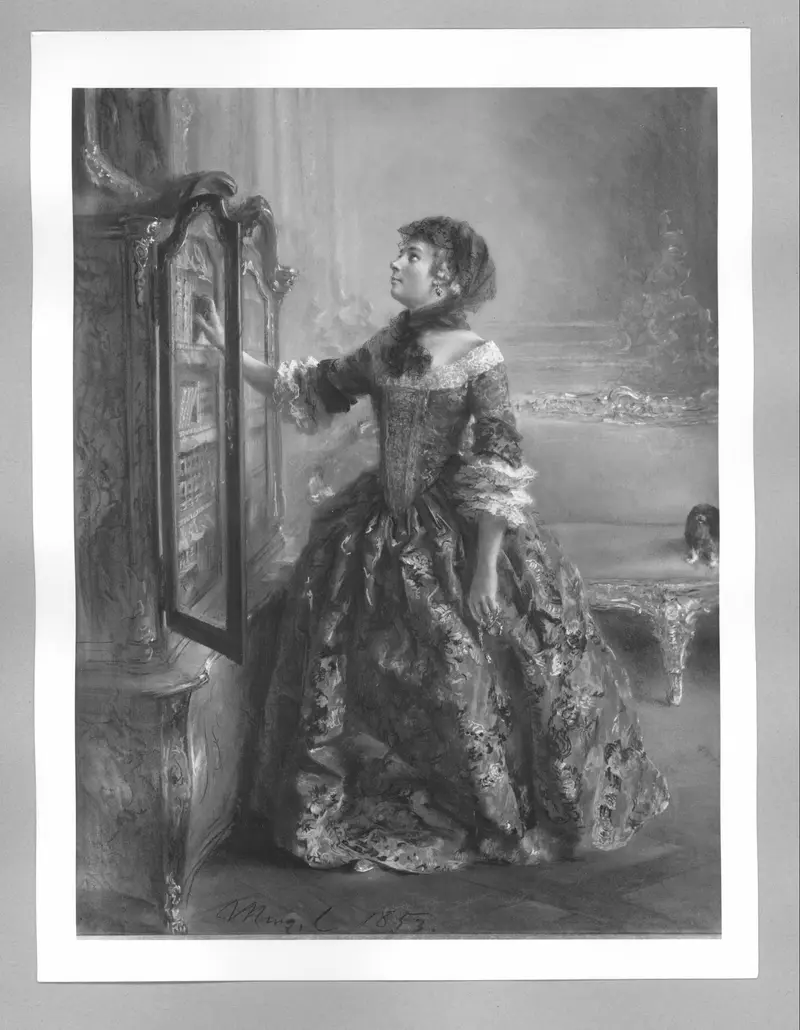
Adolf Friedrich Erdmann Menzel Dame in Rokoko Kostüm vor einem Bücherschrank (Prinzessin Amalie von Hohenzollern) 2320 Führermuseum
Adolph von Menzel
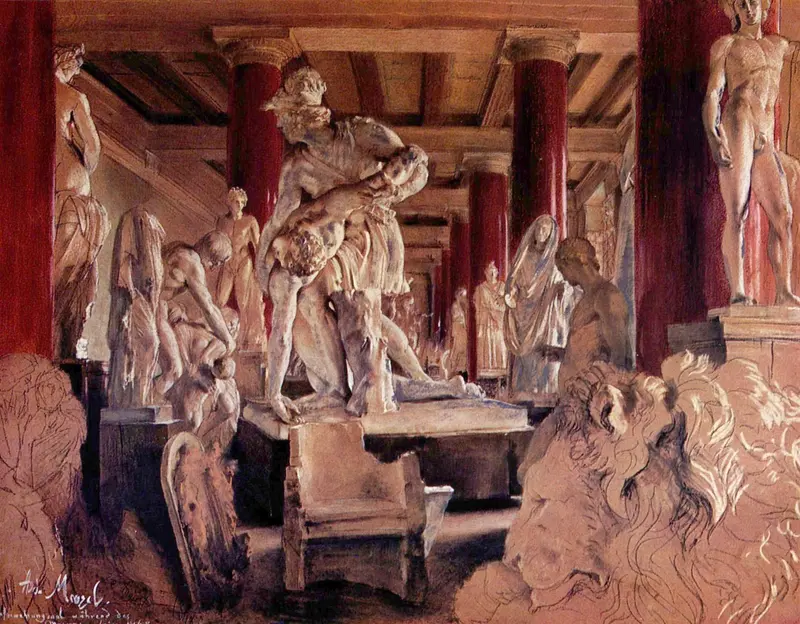
Aufbewahrungssaal während des Museumsumbaus Adolf Friedrich Erdmann von Menzel (Alte Nationalgalerie, Berlin)
Adolph von Menzel
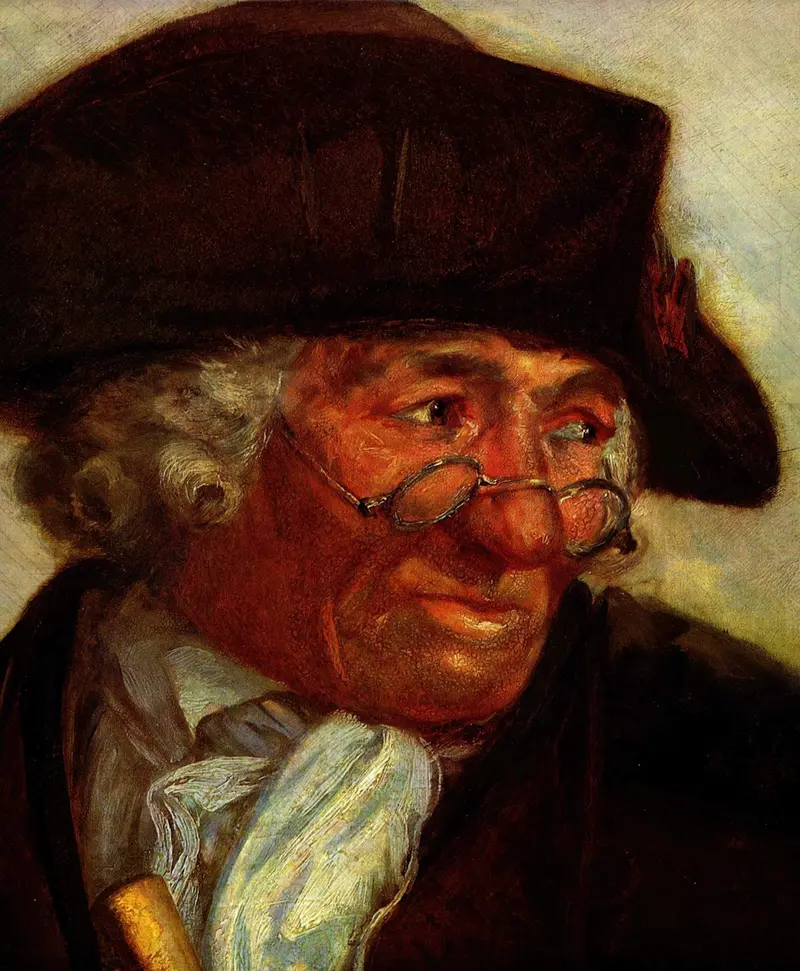
Chodowiecki on the Jannowitz Bridge
Adolph von Menzel





