Castelmare (Castellamare) — History & Facts
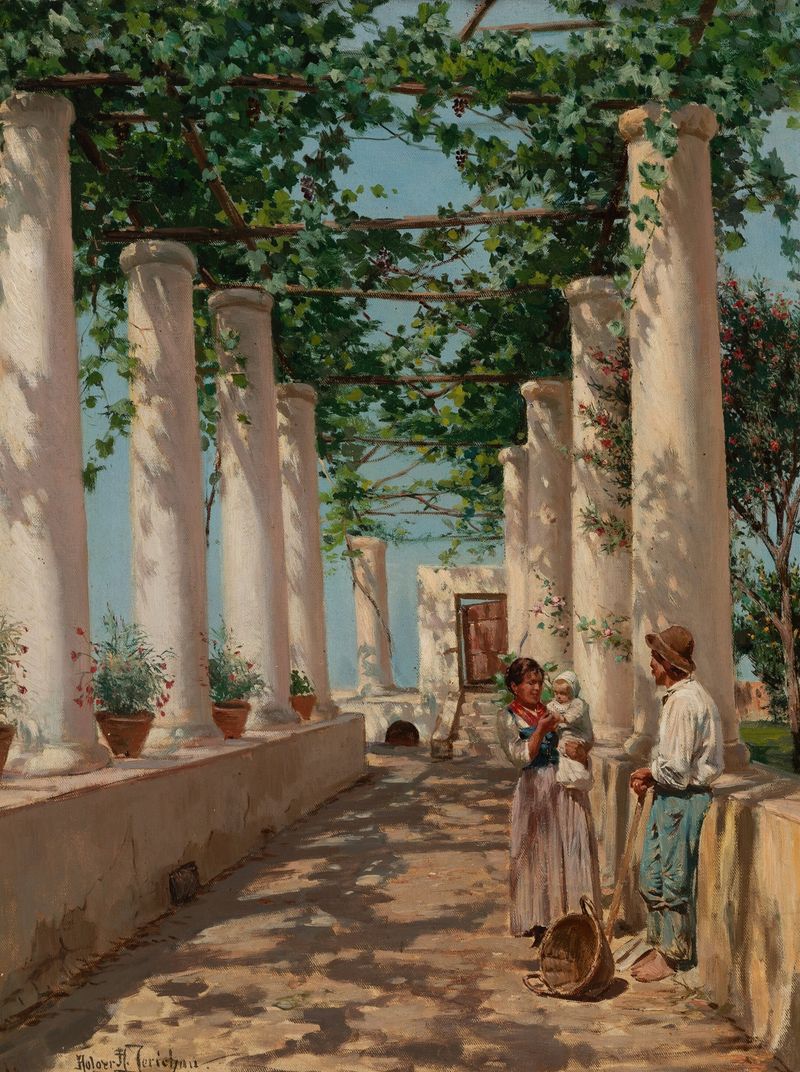
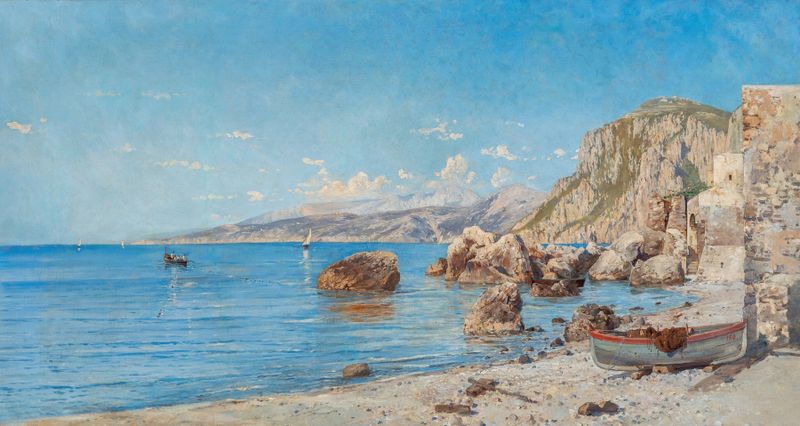
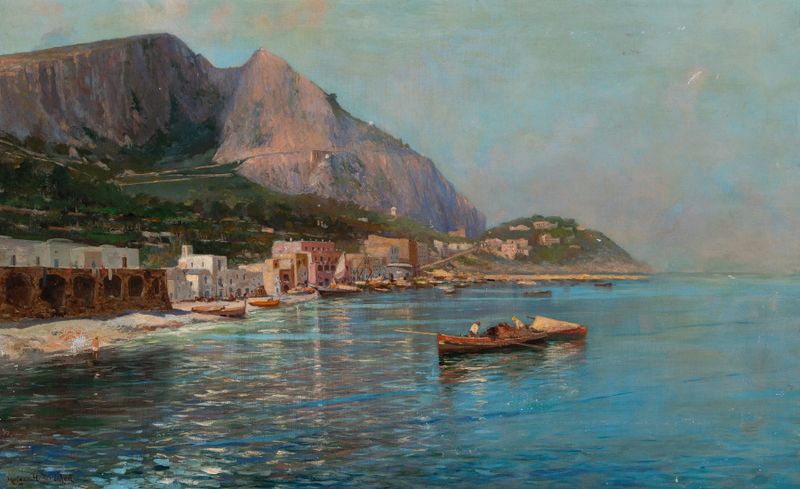
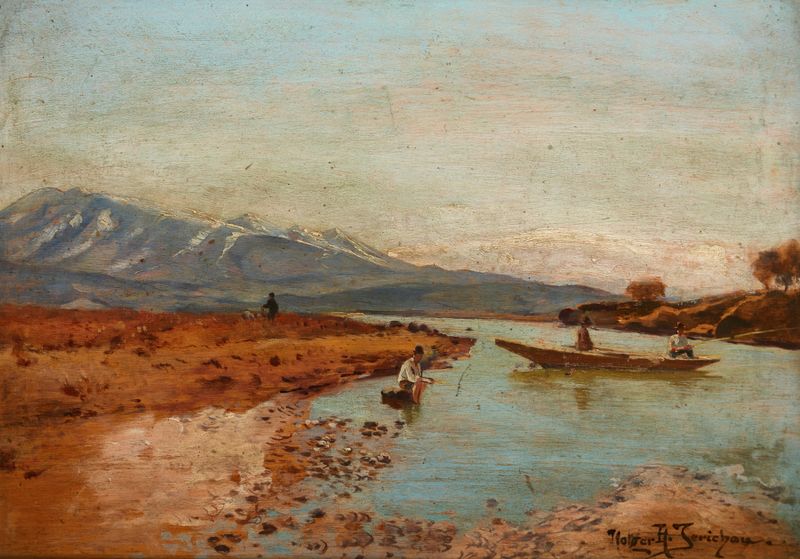
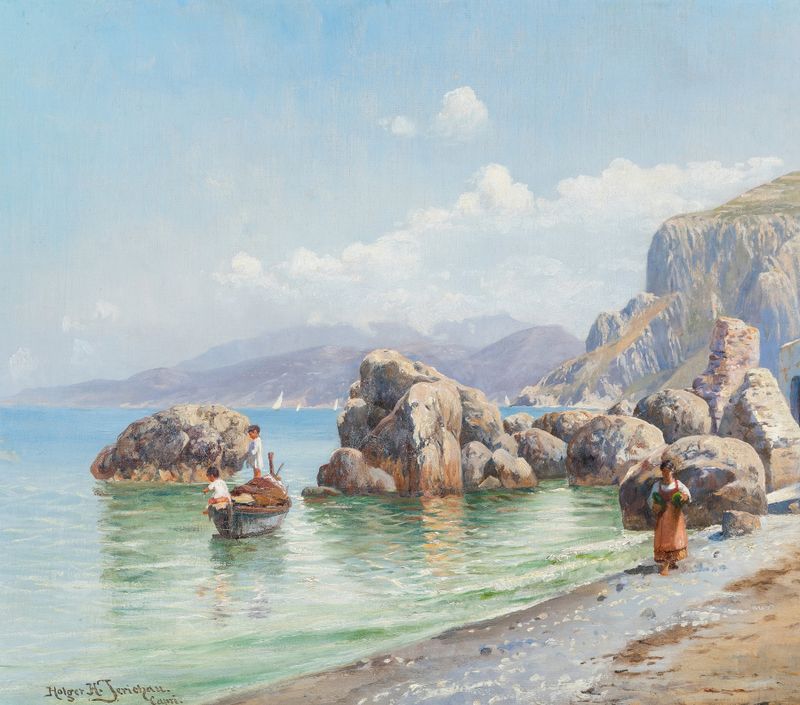
In a world filled with noise, how often do we confront our own emptiness? Focus on the vast expanse of the canvas, where muted tones of blue and grey create a haunting atmosphere. The horizon stretches endlessly, blurring the line between sea and sky, inviting the viewer to explore the depths of solitude. Notice the almost palpable stillness, where the gentle lapping of water against the shore feels like a whisper, amplifying the profound sense of isolation that envelops the scene. Hidden within the landscape are layers of emotional tension.
The solitary figure standing at the water’s edge embodies a profound yearning, caught between the physical world and the vast unknown. The intricate brushwork captures not only the textures of the rocky shore but also the individual’s introspection. Each stroke seems to echo the inner dialogue of human experience, where the emptiness of the surroundings mirrors the void within. In 1898, Holger Hvitfeldt Jerichau created Castelmare during a period marked by personal and artistic exploration.
Living and working in a time when realism was giving way to more expressive styles, he sought to capture the subtleties of human emotion through landscape. This painting reflects a moment of contemplation in his life, one where the intersection of solitude and nature became his canvas for expressing deeper truths about existence itself.