Marina Piccola, Capri — History & Facts
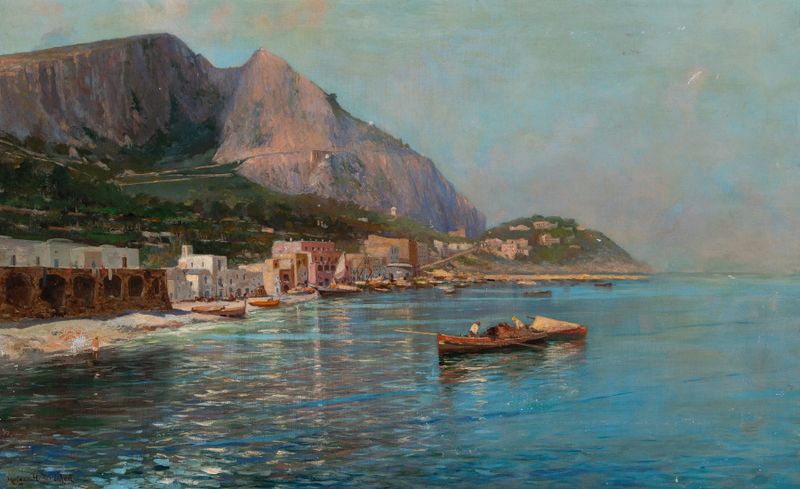
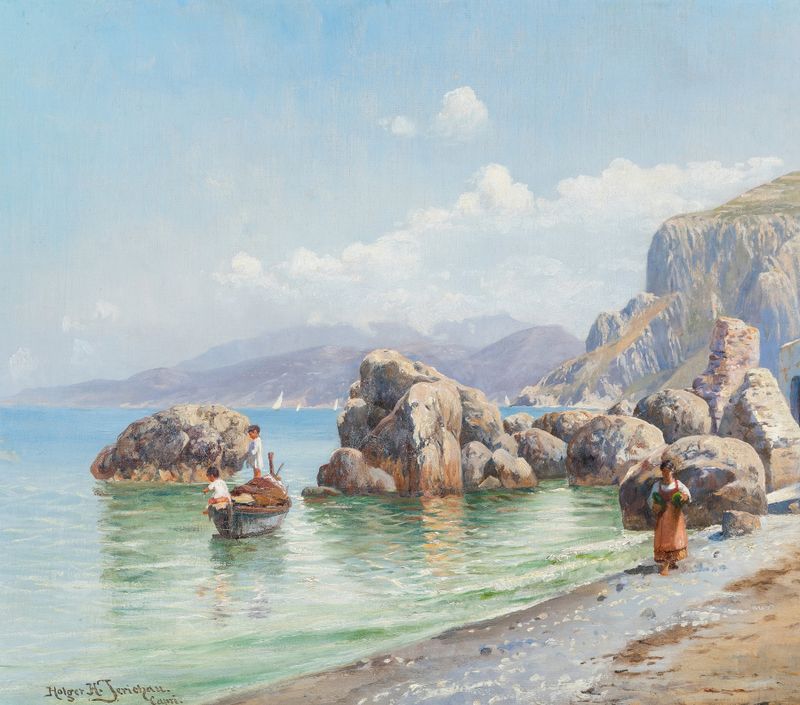
In the stillness of solitude, how do we find beauty amid isolation? Look to the vibrant blues of the sea that stretch across the canvas, drawing the viewer’s gaze into the heart of Marina Piccola, Capri. The soft, warm hues of the rocky cliffs cradle the water, creating a striking contrast that evokes the tumult of loneliness. Notice how the gentle ripples of the waves are rendered with delicate brush strokes, each whispering a story—a longing perhaps—while the distant figures on the shore appear small and insignificant against the grandeur of nature, suggesting the weight of solitude. Deeper insights emerge when one contemplates the juxtaposition of the serene landscape with the figures that seem disconnected from their surroundings.
The shadows cast by the cliffs hint at the emotional weight each character carries, while the light spilling over the water reflects hope amidst despair. This interplay of light and dark captures the essence of yearning—a reminder that even in solitude, grace can be found if one dares to look closer. The artist painted this piece during a time when he was exploring themes of identity and human emotion in his work. While the exact date remains unknown, it is believed that he created this work in the late 19th century, a period marked by great change in the art world, with movements emphasizing the emotional and the individual.
Jerichau's exploration of these themes resonates through every stroke, encapsulating a moment of both beauty and profound loneliness in Marina Piccola, Capri.