Theme from Norway — History & Facts
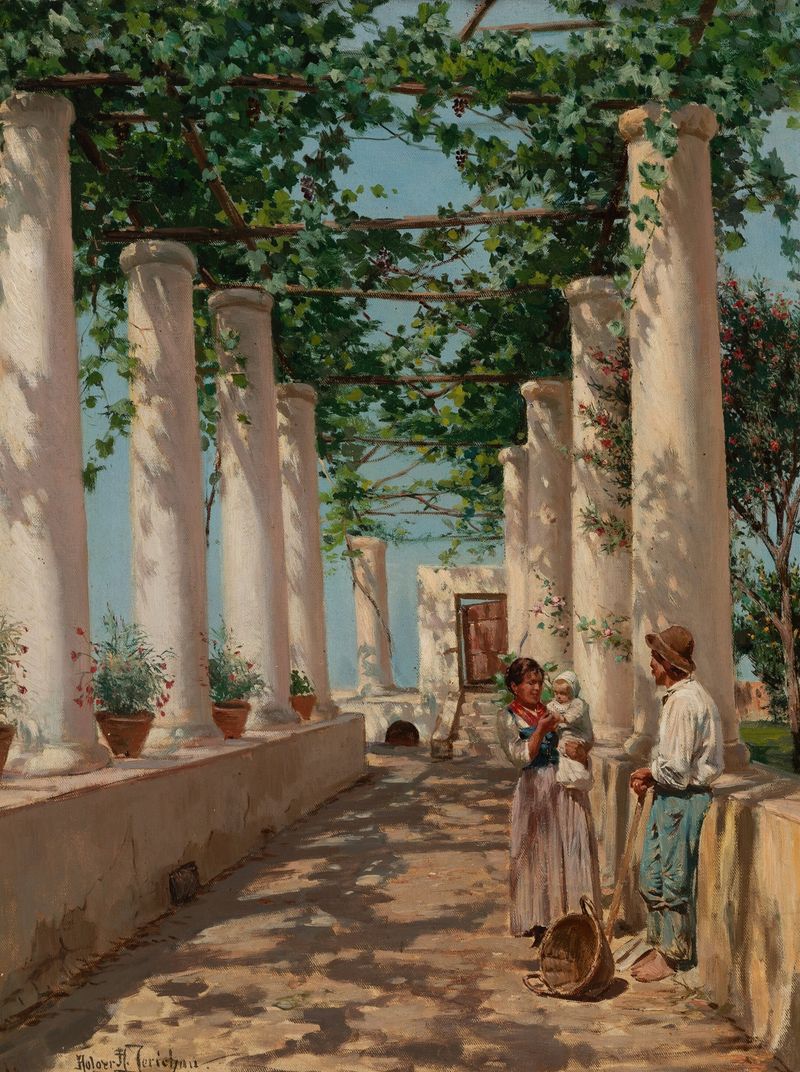
The interplay of muted tones and vibrant hues in art often evokes an awakening, a moment where one confronts the layers beneath the surface. Observe the central figure, capturing your attention with her serene expression and flowing attire. Look closely at the rich greens and blues that surround her, suggesting a lush Norwegian landscape. Notice how the brushstrokes create a sense of movement in the fabric, allowing the viewer to feel the cool breeze that seems to ripple through the canvas.
The light dances across her form, highlighting delicate details—her hair, adorned with a simple floral crown, glistens softly, drawing you deeper into her quiet world. Beneath the calm surface, a quiet tension exists. The figure’s gaze, slightly averted, hints at introspection or longing, suggesting a yearning for connection or understanding of her surroundings. The lush landscape, while beautiful, also feels somewhat isolating, evoking both the allure and solitude of the natural world.
Jerichau’s use of color not only enhances the beauty but also suggests an emotional depth—a contrast between the vibrancy of life and the silence of contemplation. Holger Hvitfeldt Jerichau created this piece in 1899, during a period marked by the rise of Symbolism in art. Living in Denmark, he was part of a movement exploring themes of nature and human emotion. His experiences and the changing art landscape influenced his work, as he sought to capture not just the physical form but also the profound emotions intertwined with the natural world.