View of the marina grande, Capri — History & Facts
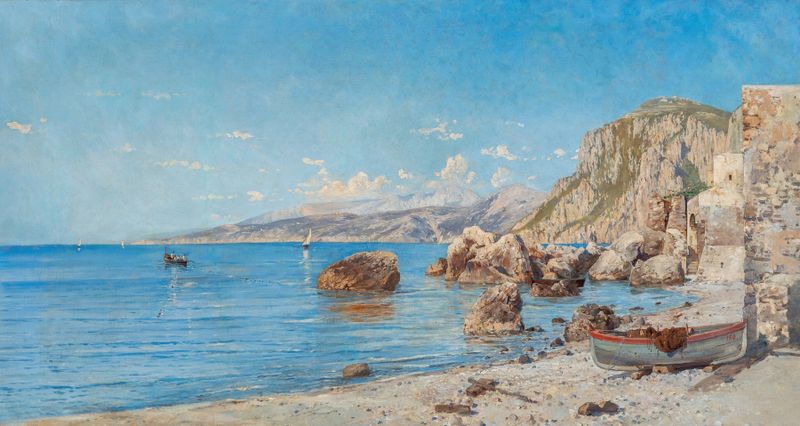
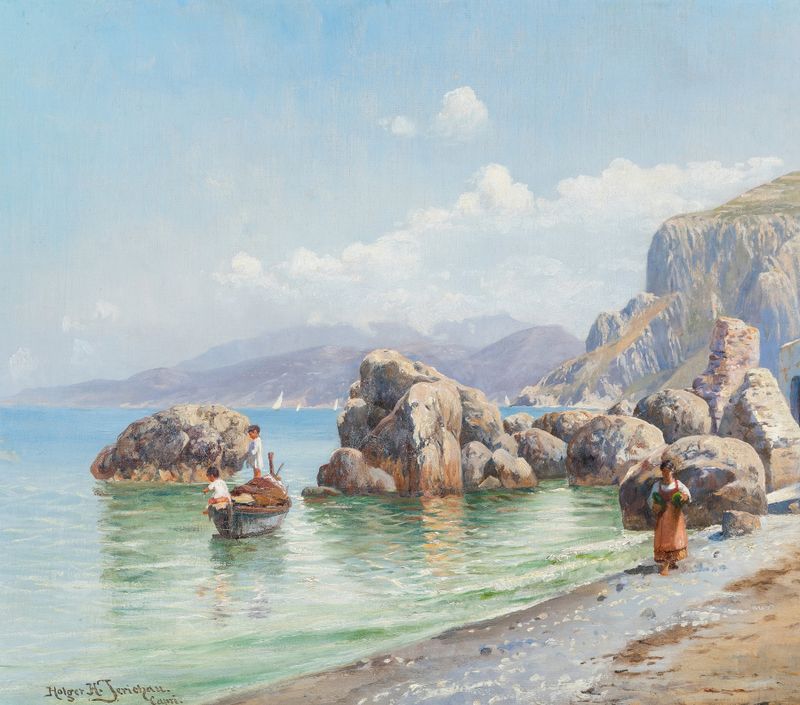
What secret hides in the quiet of the canvas? A beckoning stillness envelops the viewer, inviting contemplation and a sense of transcendence. Look to the left at the soft, rolling hills that cradle the harbor, where the gentle undulations of green contrast with the azure waters below. The artist employs a delicate palette, with pastel blues and greens blending seamlessly, creating an ethereal quality that draws the eye into the distance. Notice how the light dances on the surface of the water, illuminating the small boats that float like dreams caught in a moment of serenity.
This interplay of light and shadow enhances the tranquil atmosphere, inviting viewers to linger. Yet beyond its picturesque beauty lies a deeper emotional tension. The serene landscape seems to whisper of isolation, evoking a longing for connection amid the tranquility. The solitary boats, gently swaying, symbolize freedom and adventure, while the distant cliffs loom as silent witnesses to the passage of time.
This juxtaposition between the vibrant life on the water and the stillness of the land reflects the complexities of existence — a balance between solitude and the call of the world. During the time he created this piece, Holger Hvitfeldt Jerichau was immersed in the charm of the Italian coast, likely influenced by the artistic movements of the late 19th century that celebrated natural beauty and emotional depth. His experiences in Capri, a hub for artists and thinkers, provided a fertile ground for inspiration, allowing him to blend the visual language of Romanticism with his unique perspective on the landscape.