Castle on Cliff, with a Stormy Sea, and Shipwreck at Base of Cliff — History & Analysis
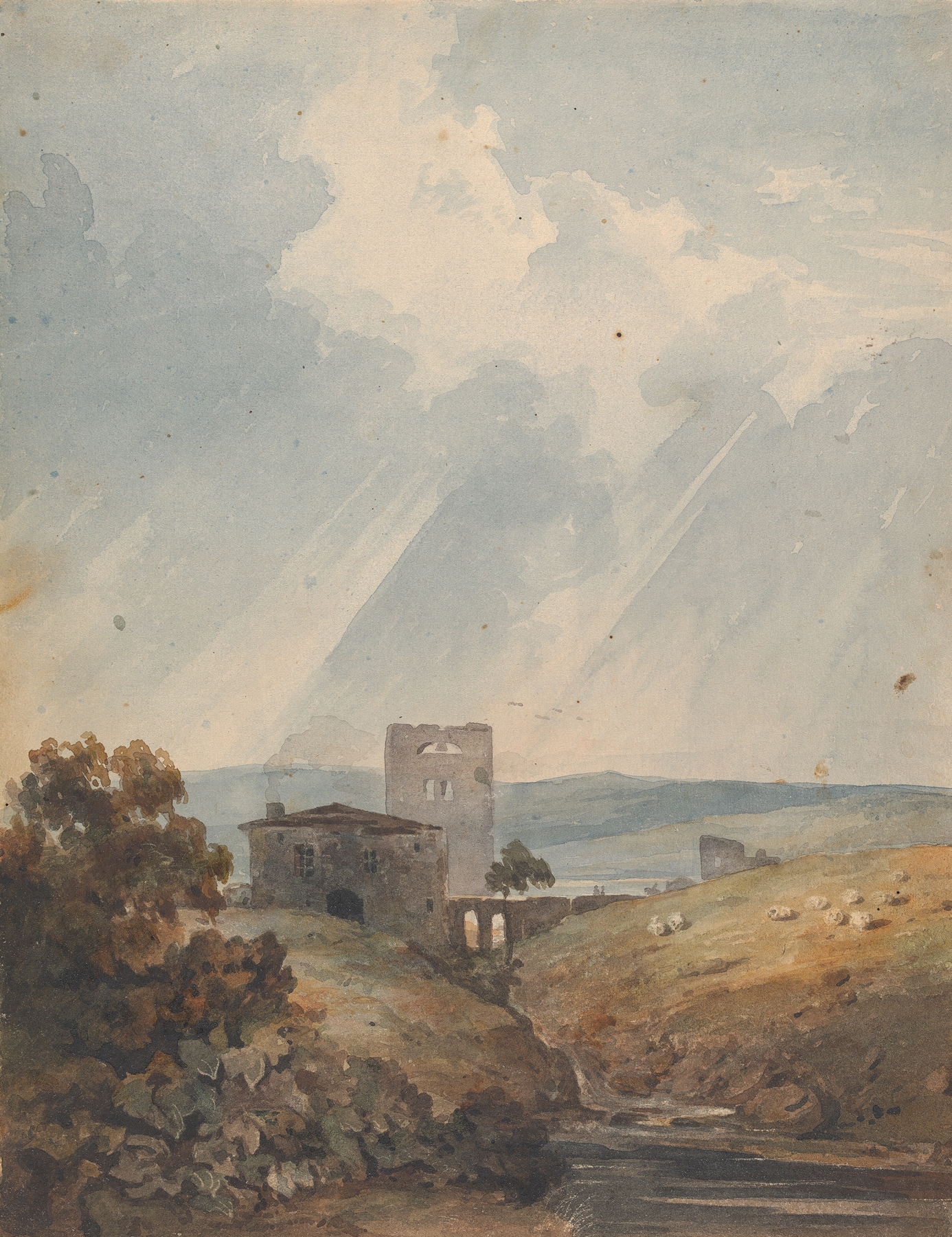
Who listens when art speaks of silence? In the tumult of life, our deepest desires often manifest in the quiet moments of reflection, just as they do in the vivid strokes of a master’s brush. Look to the left, where a craggy cliff rises sharply, its formidable presence dominating the canvas. Notice how the artist employs dark, tempestuous blues and grays to evoke the fury of the stormy sea below, contrasting dramatically with the ethereal, almost ghostly light illuminating the castle perched atop the cliff.
The shipwreck nestled at the base, rendered in unsettling detail, draws the eye—a poignant reminder of ambition met with nature's wrath. Beneath the surface, this piece resonates with themes of aspiration and peril. The castle symbolizes lofty dreams, standing resilient yet vulnerable against the cataclysmic backdrop of the storm. The shipwreck serves as a stark cautionary tale, illustrating the thin line between desire and disaster.
Together, they evoke a tension between hope and despair, inviting viewers to contemplate the cost of their own ambitions. In 1814, during a period of artistic exploration and romanticism, Castle on Cliff, with a Stormy Sea, and Shipwreck at Base of Cliff emerged from the brush of Thomas Sully, who was establishing his reputation in America. At this time, he was influenced by European styles while adapting to the American landscape, reflecting both personal and societal aspirations amidst a rapidly changing world.