
Channel section in Murano — History & Facts
Who listens when art speaks of silence? In Channel section in Murano, an ethereal realm unfolds where the murmurs of water and the whispers of light converge in a delicate dance of reflection and stillness. Look closely at the lower right, where the deep hues of the water mirror the fragmented shapes above. The brushstrokes here are both fluid and precise, drawing you into the scene’s tranquil embrace. Notice how the soft blue and green tones create a harmonious interplay, accentuating the architectural forms that rise beside the channel.
Light spills gently over surfaces, casting a spell that invites contemplation, while shadows deepen the sense of mystery that envelops the work. Delve deeper, and you’ll uncover the subtle contrasts that pulse beneath the surface: the interplay of natural and manmade elements, the serenity of the water against the rigid lines of the buildings. These contrasts evoke a tension between permanence and transience, as if time holds its breath in this fleeting moment. The reflective qualities of the water serve not only as a visual device but also as a metaphor for introspection, urging the viewer to consider their own place within this serene tableau. Created in 1851, this piece emerged during a time of artistic exploration in Europe, as the Romantic movement began to yield to a more restrained, yet emotionally resonant, style.
Reiffenstein, working in Murano—a center of glass-making and artistic endeavor—captured not just a scene but the essence of a moment wrestling with the passage of time, drawing inspiration from both the beauty of the landscape and the intricate relationship between nature and craft.
More Artworks by Carl Theodor Reiffenstein
Browse all →
Landschaft bei heranziehendem Gewitter
Carl Theodor Reiffenstein
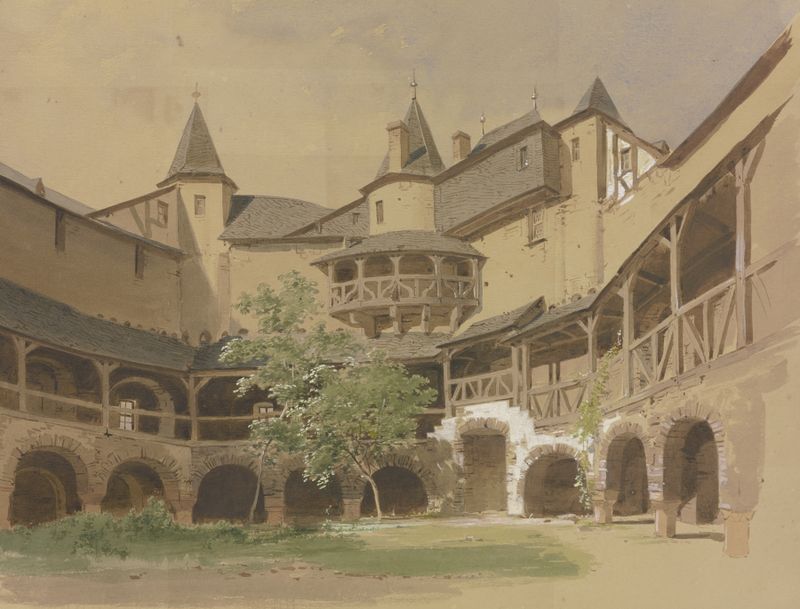
Burg Pfalzgrafenstein bei Kaub
Carl Theodor Reiffenstein

The Ahr Valley near Altenahr, September 1, 1858
Carl Theodor Reiffenstein
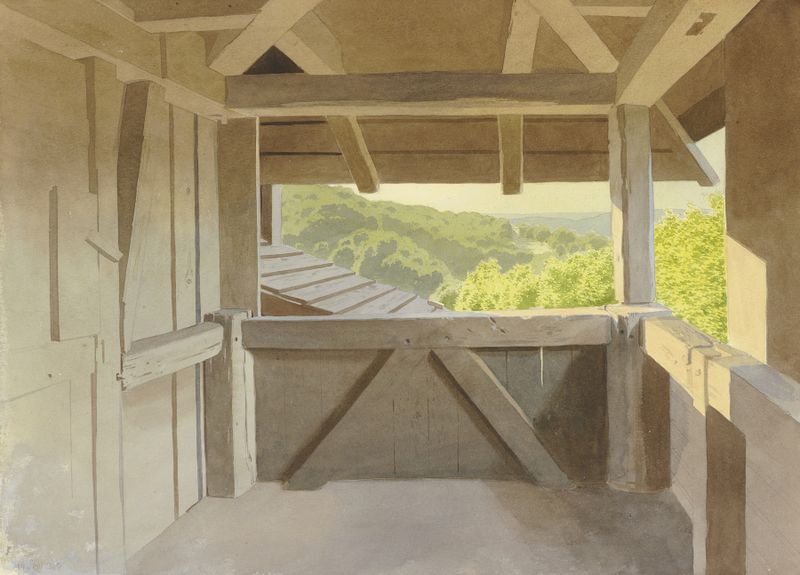
Ausblick aus dem Hochsitz am Wasenmerk bei Braunfels über die umgebende Waldlandschaft, September 19, 1860
Carl Theodor Reiffenstein
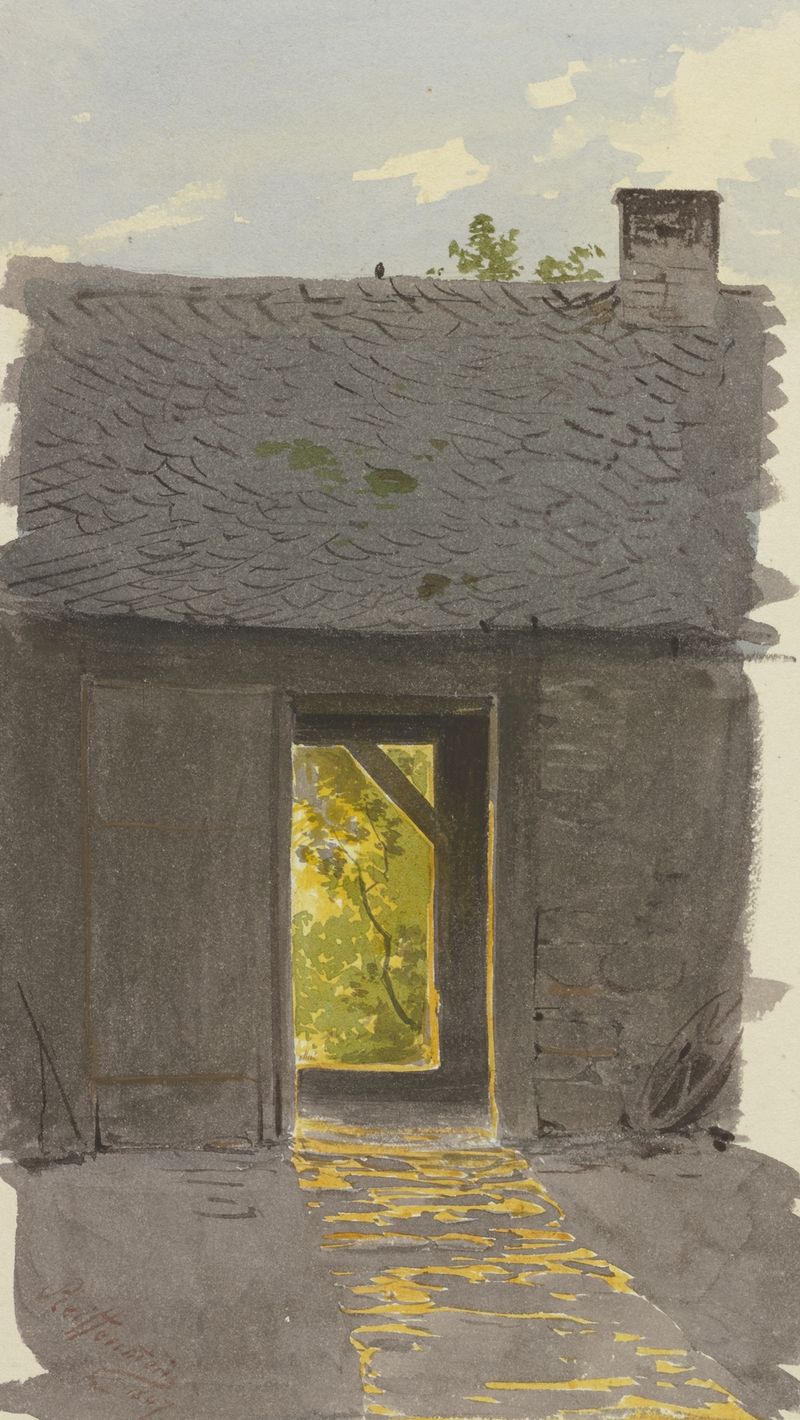
Blick durch die geöffneten Türen einer Scheune im Abendlicht
Carl Theodor Reiffenstein
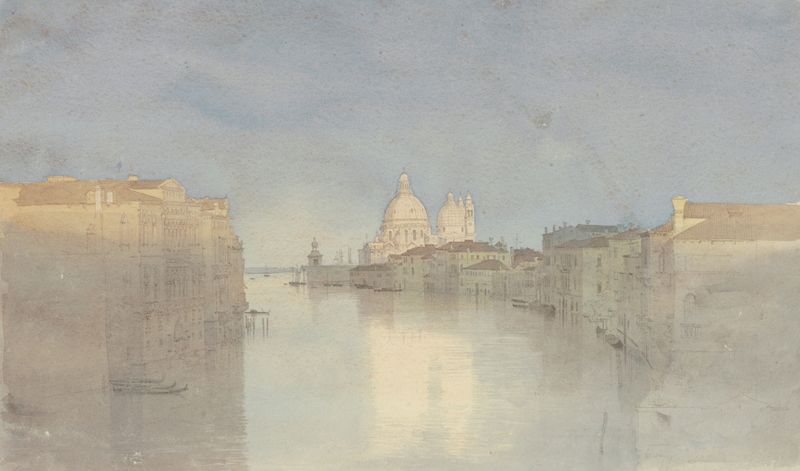
Abendstimmung am Canale grande, im Hintergrund S. Maria della Salute
Carl Theodor Reiffenstein
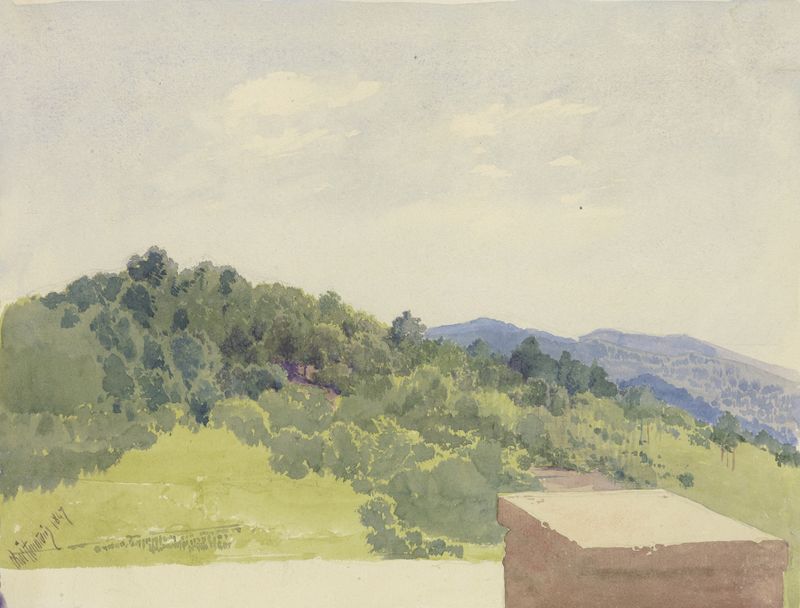
Berglandschaft, von einer Burganlage aus betrachtet
Carl Theodor Reiffenstein
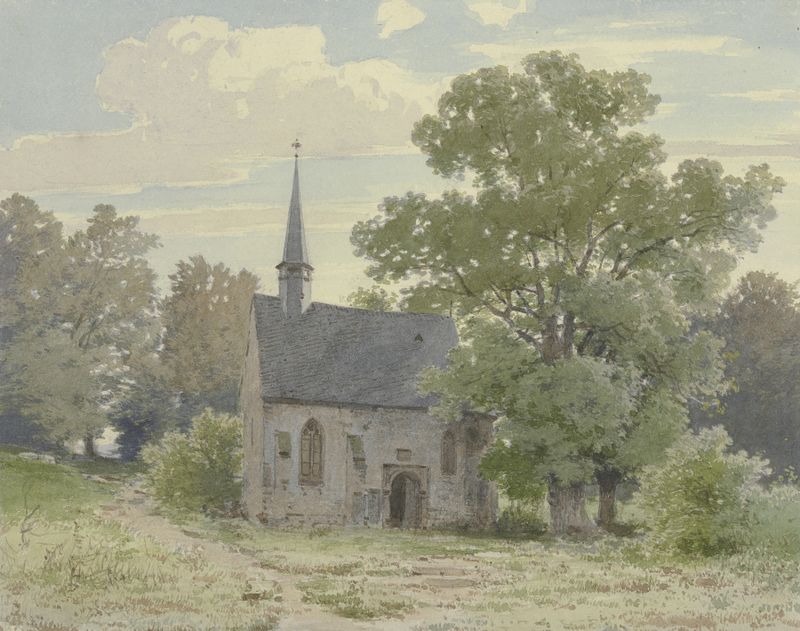
Chapel near Ockstadt
Carl Theodor Reiffenstein

Channel in Venice
Carl Theodor Reiffenstein
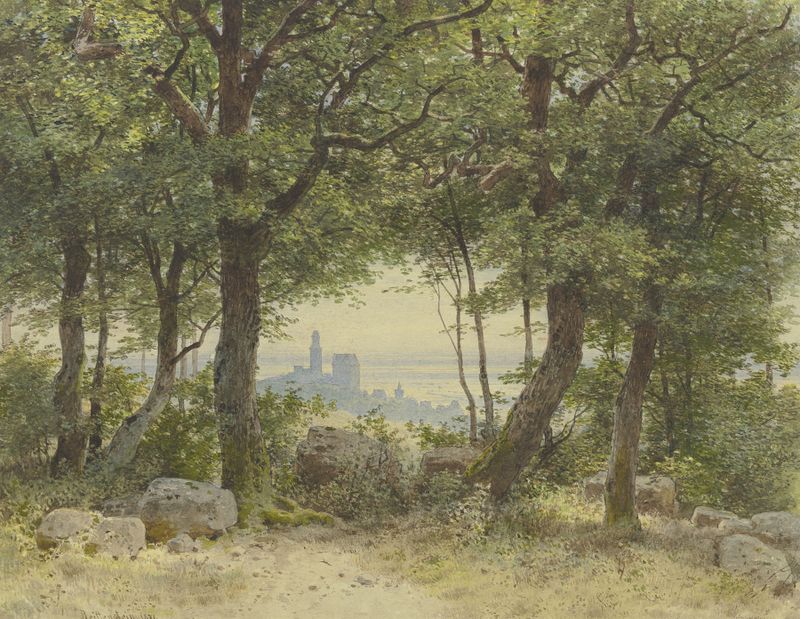
Ansicht von Kronberg mit weitem Blick in die Ferne vom Ausgang des Falkensteiner Waldes gesehen
Carl Theodor Reiffenstein





