
Chateau De Thorigny (Manche) — History & Facts
Can beauty exist without sorrow? In Chateau De Thorigny (Manche), the answer unfolds with every brushstroke, revealing a harmony that dances delicately between joy and melancholy. Focus on the intricate details of the chateau's facade, where the soft hues of ochre and gold blend seamlessly with the cool shadows cast by the surrounding trees. Notice how the artist masterfully captures the gentle play of light, particularly in the sunbeams that filter through the foliage, creating a dappled effect that embraces the architecture. Your gaze is drawn to the ornate windows, hinting at life within—a life perhaps filled with laughter and tears, each frame inviting contemplation. As you explore the canvas, consider the juxtaposition of the serene landscape and the imposing structure.
The vibrant greenery surrounding the chateau contrasts with its solid, unyielding form, suggesting a tension between nature’s ephemerality and human permanence. The nearly idyllic scenery evokes nostalgia, stirring thoughts of what has been lost and what remains—a poignant reminder that beauty often carries the weight of history and emotion. Victor Petit painted this masterpiece in 1860, during a period marked by significant changes in France’s political and social landscape. As the nation was grappling with the consequences of the revolution and the rise of the Second Empire, Petit sought solace in the tranquil beauty of the countryside.
Immersed in the Romantic movement, he embraced the interplay of nature and architecture, capturing the essence of a moment that would resonate through time.
More Artworks by Victor Petit
Browse all →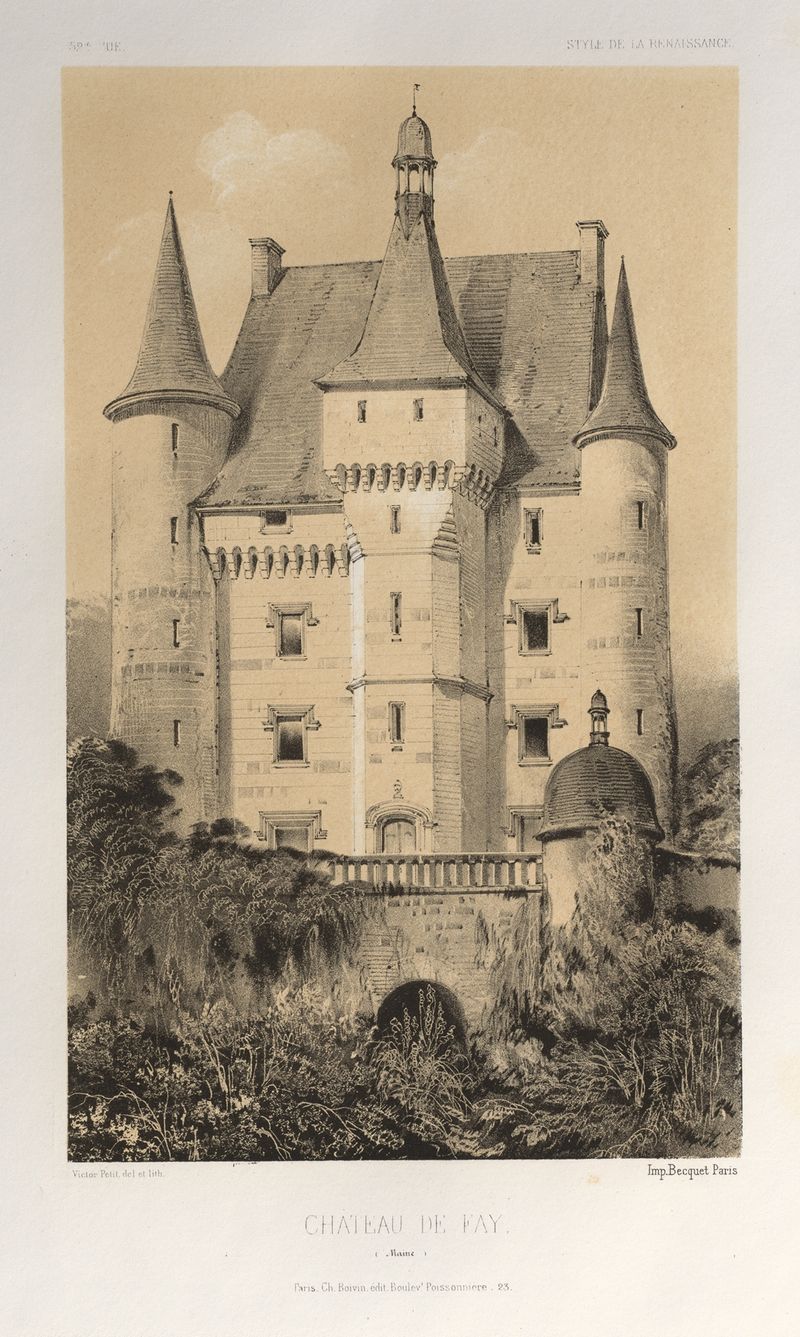
Château De Fay (Maine)
Victor Petit
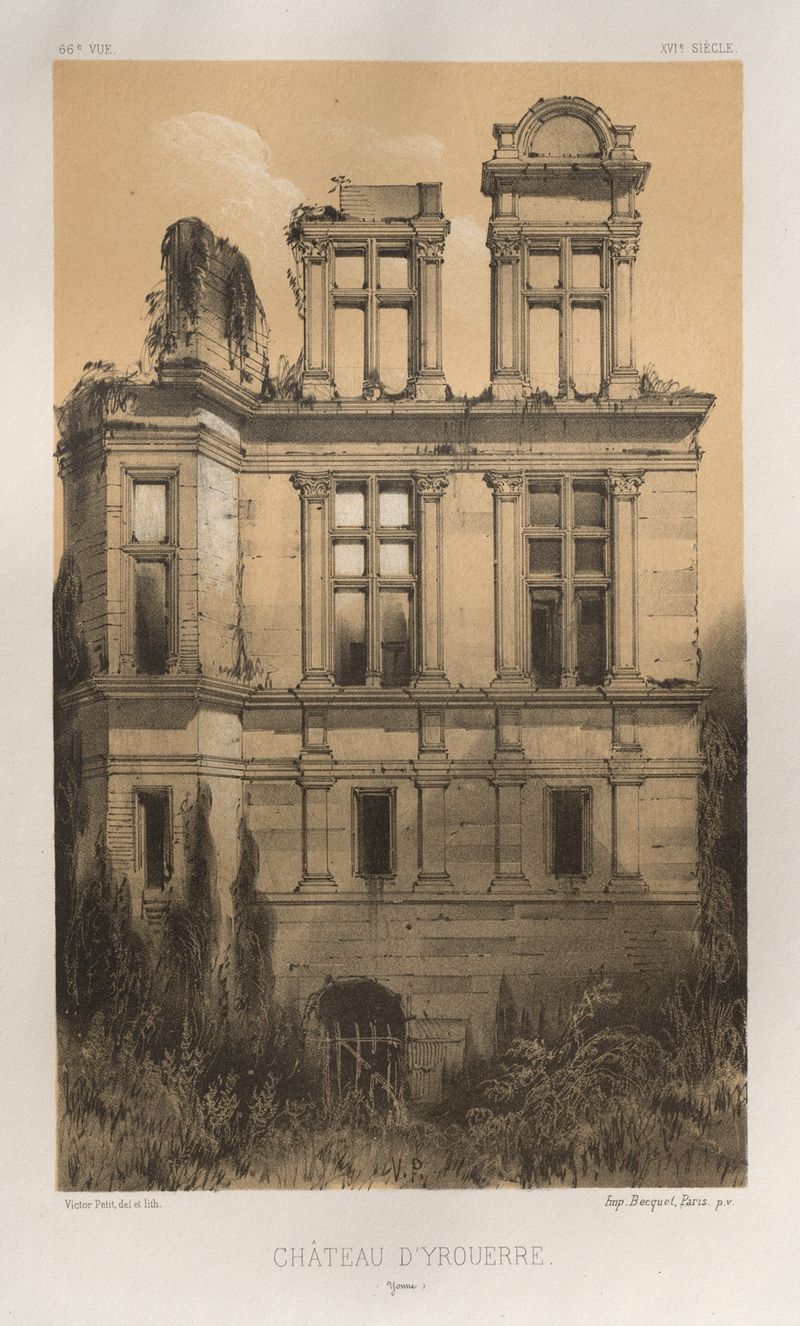
Château D’Yrouerre (Yonne)
Victor Petit
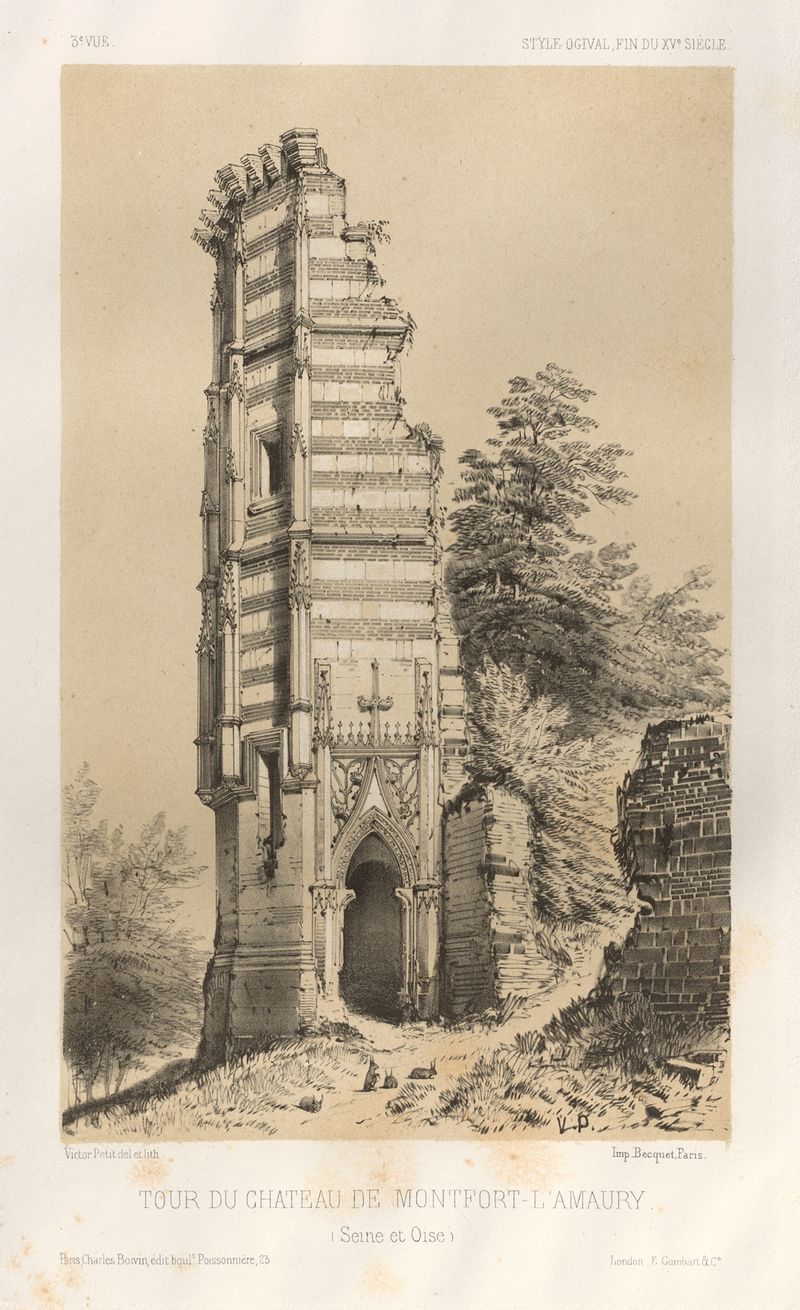
Tour du chateau de Montfort-l’Amaury (Seine-et-Oise)
Victor Petit

Tour Du Port De Marseille (Bouches Du Rhône)
Victor Petit
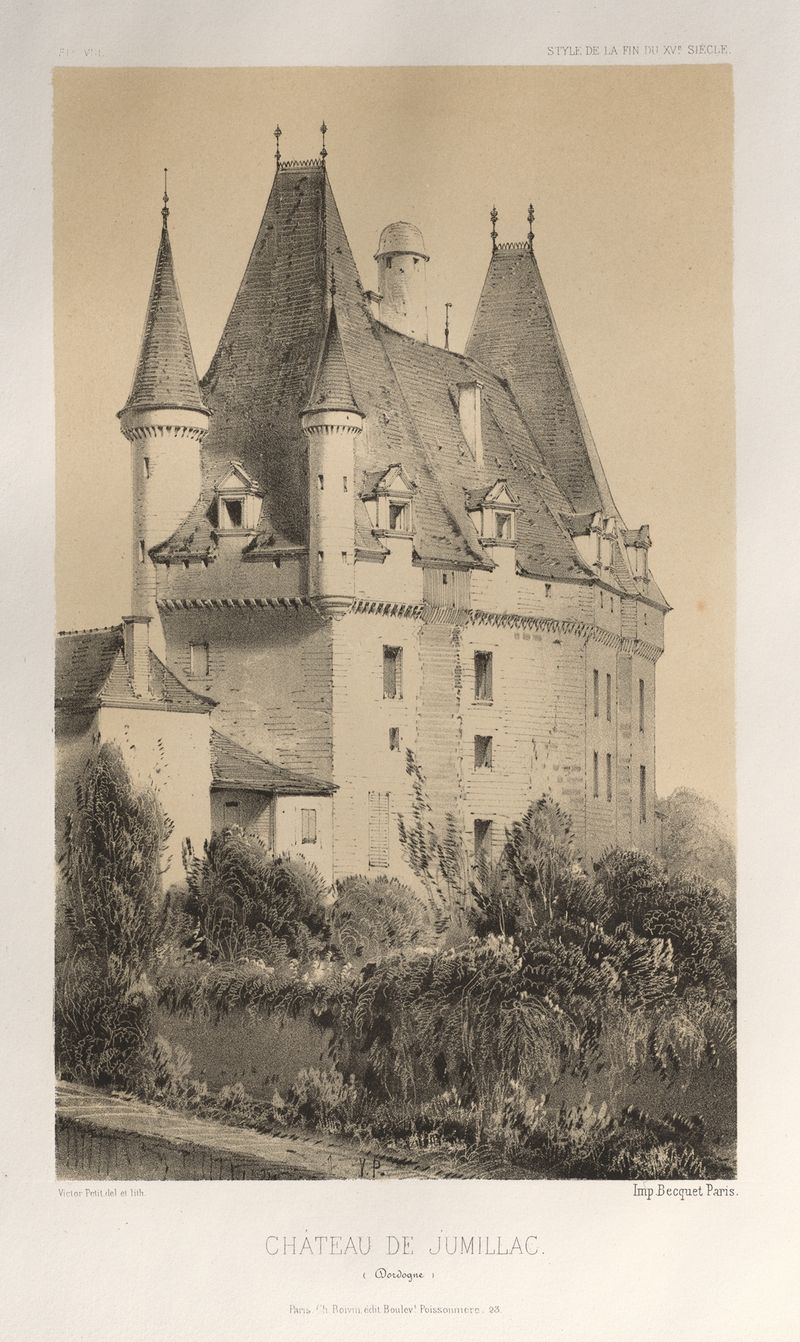
Château De Jumillac (Dordogne)
Victor Petit

Château de Tévray (Eure)
Victor Petit

Galerie Du Château De Jouancy (Saone et Loire)
Victor Petit

Château De Mello (Oise)
Victor Petit
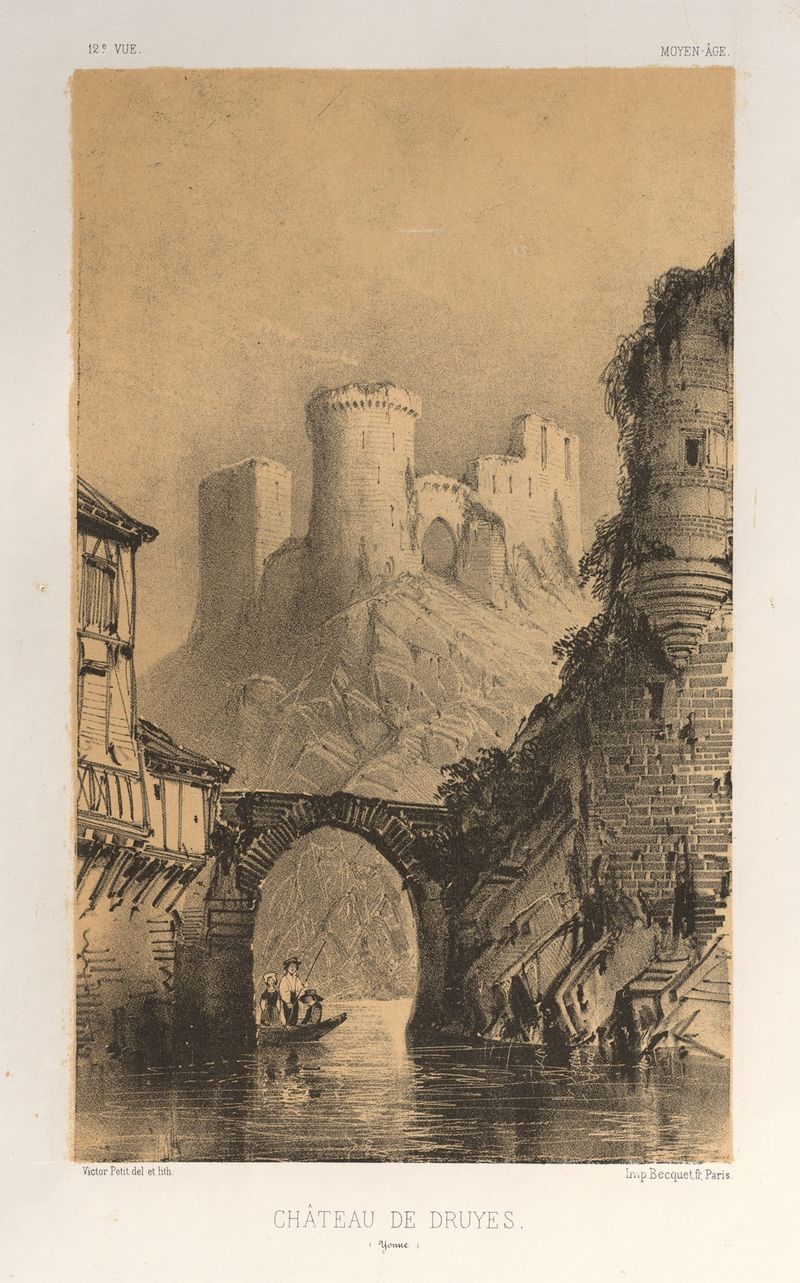
Chateau De Druyes (Yonne)
Victor Petit

Le ChasteLet-Neuf (Corrèze)
Victor Petit
More Architecture Art
Browse all →
The statue of Liberty
Frédéric Auguste Bartholdi

View of Houses in Delft, Known as ‘The Little Street’
Johannes Vermeer

View of Houses in Delft, Known as ‘The Little Street’
Johannes Vermeer

The Cathedral in Rouen. The portal, Grey Weather
Claude Monet

The yellow house
Vincent van Gogh

The Church in Auvers-sur-Oise, View from the Chevet
Vincent van Gogh