Chelsea Embankment, Plane Trees — History & Facts
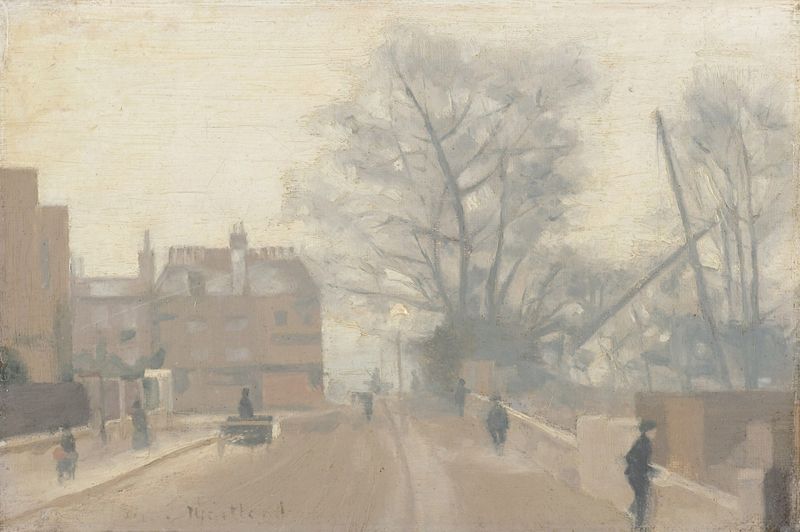
In the delicate strokes of Chelsea Embankment, Plane Trees, the artist captures a moment suspended in the fragile dance between nature and memory, inviting contemplation on transience and permanence. Look carefully at the canvas, where light filters softly through the leaves of the plane trees. Notice how the gentle dappling of sunlight creates a patchwork of shadows on the ground, guiding your gaze towards the serene scene unfolding along the riverbank. The muted palette of greens, browns, and soft blues evokes a sense of calm, while the brushwork conveys a tender intimacy, bridging the gap between the observer and the experience of the landscape. Tension simmers beneath the tranquility of this setting.
The juxtaposition of the sturdy trees against the ephemeral reflections in the water speaks to the fragility of life, echoing the sentiment that all things are fleeting. The scene hints at the constant ebb and flow of time, inviting the viewer to ponder what is lost in the relentless march of life. Every brushstroke breathes a longing for permanence in an impermanent world, suggesting that beauty exists even in its inevitable decline. In 1908, Paul Fordyce Maitland painted this work while navigating the complexities of his artistic identity in an era marked by rapid change.
Living in England, he was influenced by the Impressionist movement, yet sought to carve his own path. The early 20th century was a time of innovation in the art world, and this piece reflects his engagement with the evolving landscape of modernity, as well as his introspective take on the essence of nature and memory.