The Lady’s Mile, Kensington Gardens — History & Facts
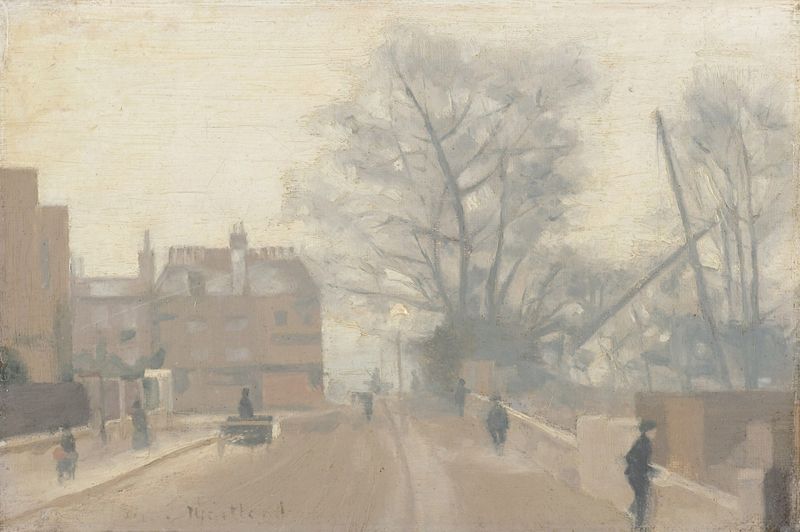
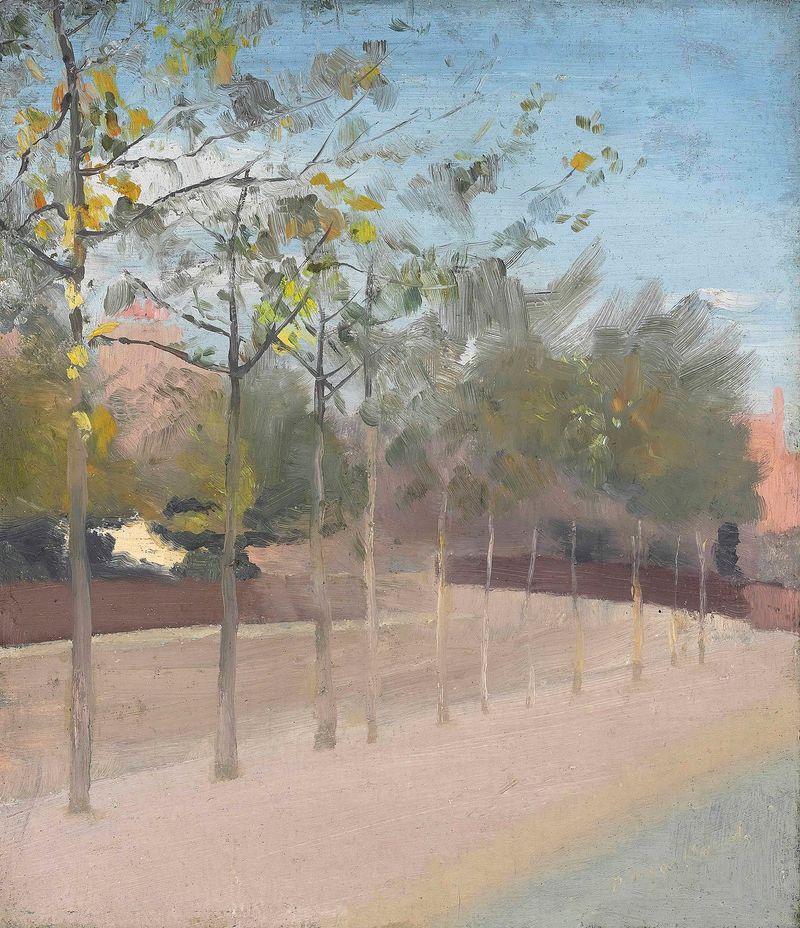
A soft breeze flutters through the trees, carrying whispers of laughter from a nearby gathering. In the middle of Kensington Gardens, a lady strides gracefully along a winding path, her elegant dress flowing with each step. The dappled sunlight dances on her face, casting a gentle glow that hints at a moment suspended in time. Look to the right at the lush greenery that frames the lady's journey, meticulously painted leaf by leaf.
Her form is striking, drawing the eye with the vivid contrast of her attire against the rich earth tones of the garden. Notice how the light falls upon her delicate features, illuminating her serene expression while shadows playfully linger in the background. The composition invites the viewer to trace her path, evoking a sense of movement and depth. The juxtaposition of isolation and connection is palpable; although she walks alone, the surrounding nature seems to embrace her, bridging the gap between solitude and companionship.
The tranquil scene becomes a meditation on fleeting moments, where time feels both infinite and ephemeral. The presence of the garden, a symbol of growth and life, contrasts with the stillness of the moment captured, emphasizing the passage of time. Paul Fordyce Maitland created The Lady’s Mile during a period marked by the burgeoning interest in plein air painting and the exploration of natural landscapes in the late 19th century. While specific dates for this work remain elusive, Maitland's artistic career unfolded against the backdrop of a rapidly changing Victorian society, where the allure of nature and leisure became central themes in both art and life.