Hyde Park Gate — History & Facts
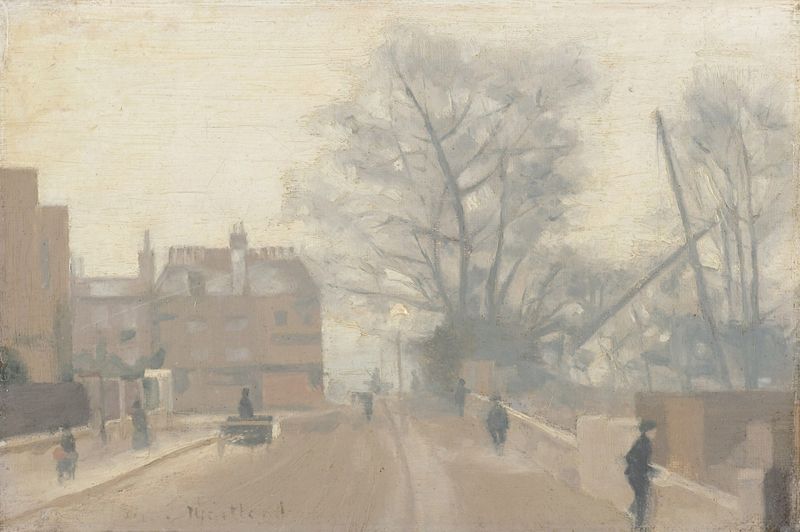
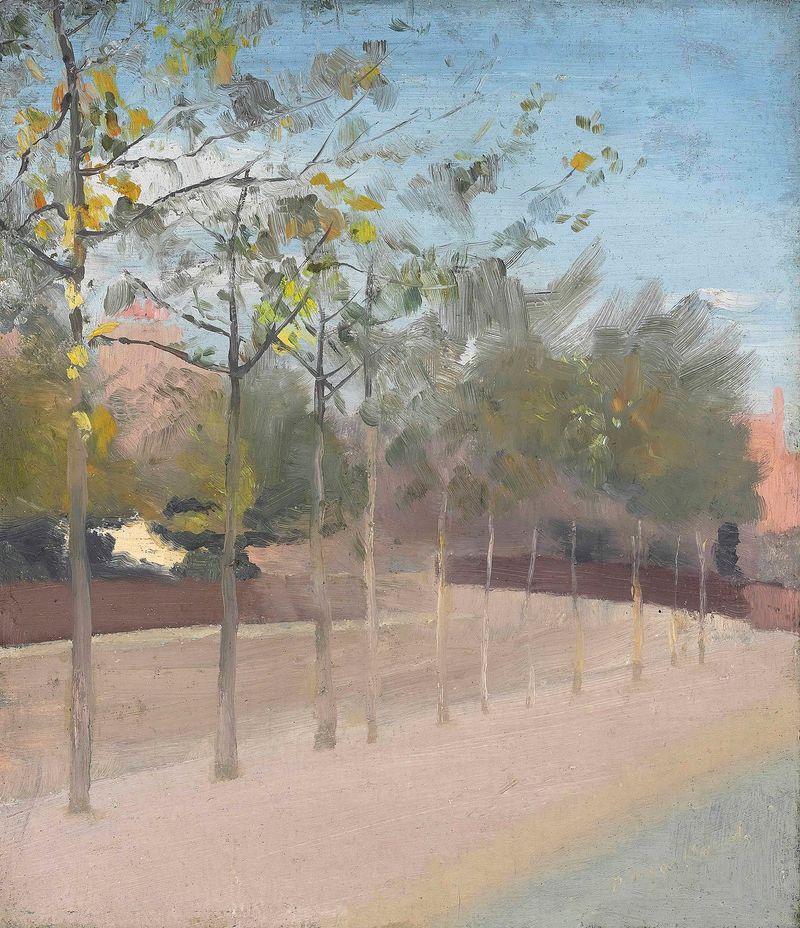
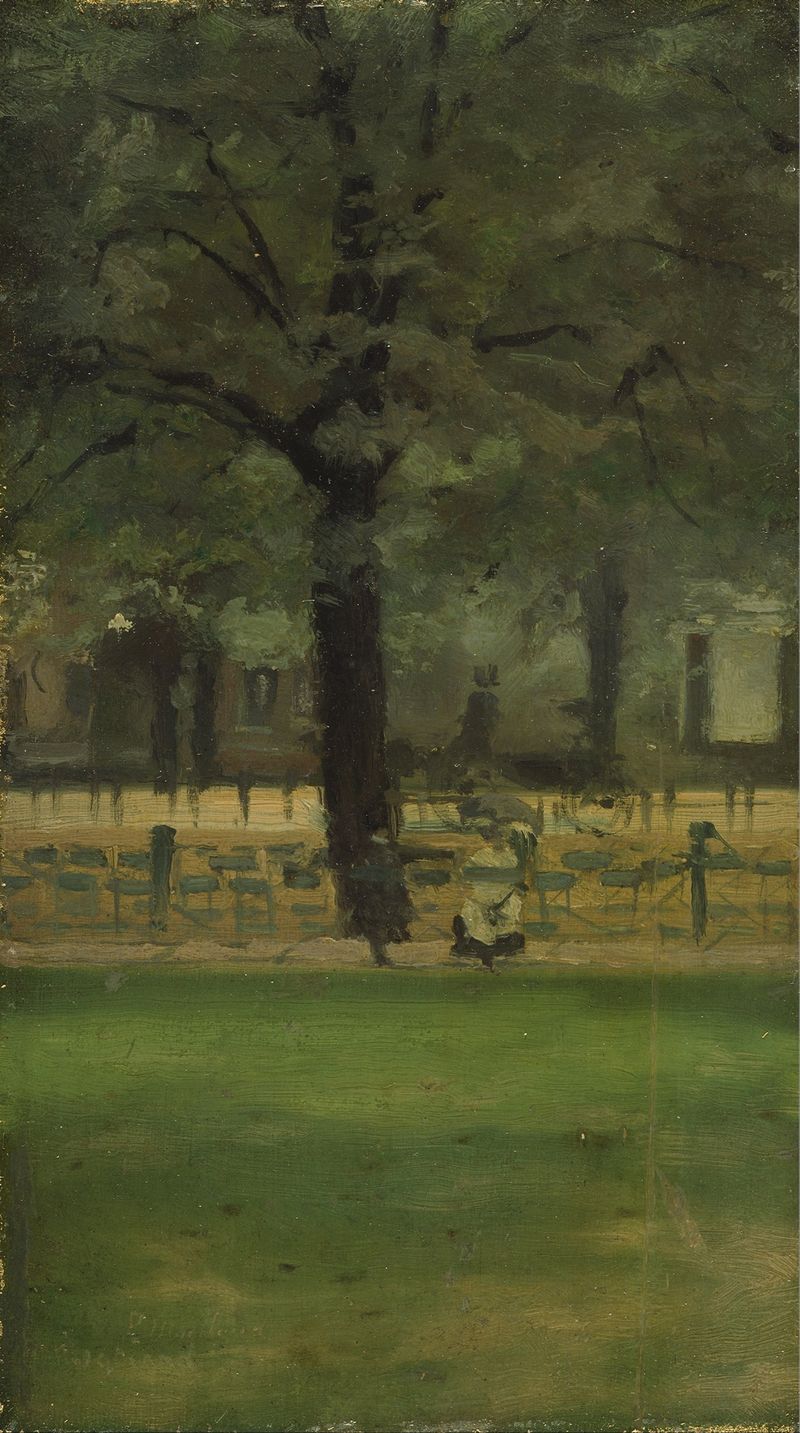
Can beauty exist without sorrow? In Hyde Park Gate, the tension between yearning and tranquility resonates deeply, inviting introspection. Look to the center of the composition, where the soft waves of the trees sway gently, their leaves dancing in the golden hue of late afternoon light. Notice how the warm, muted greens contrast with the cool shadows cast by the intricate wrought iron gate, creating a palpable sense of depth. The path leads the viewer's gaze towards an unseen destination, evoking a longing for what lies beyond the frame.
The delicate brushwork captures the essence of the fleeting moment, inviting a pause to absorb the whispered stories of the park. In the background, subtle layers reveal an emotional complexity. The gate, ornate yet closed, symbolizes both protection and exclusion, hinting at longing for connection. The interplay of light and shadow suggests the transience of time, reminding us that beauty is often tinged with melancholy.
The gentle curve of the path and the layered foliage evoke the passage of life, where joy and sorrow intermingle, each moment fleeting yet significant. Created during a time of evolving artistic expression in the early 20th century, the artist found himself in an era rich with change. While specific details about the date of this work remain elusive, Maitland's focus on light, nature, and composition aligns with the movement towards impressionism and the exploration of emotional resonance in art. His keen observation of the everyday world reflects a growing interest in the interplay between environment and feeling, marking a significant moment in the history of landscape painting.