Cheyne Walk in Winter — History & Facts
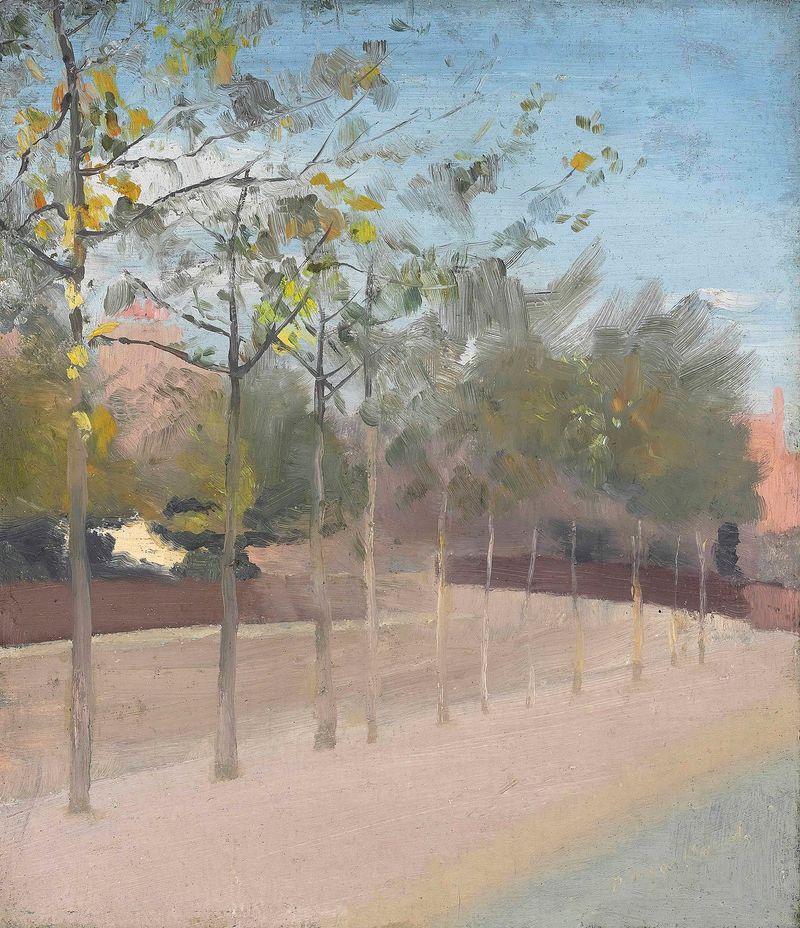
In the depths of winter’s grasp, the void of life whispers through the stillness, inviting contemplation and reflection. Look to the foreground where the delicate brushstrokes create a textured sweep of snow, soft yet unyielding. The path winding through the scene beckons the viewer’s eye, leading towards the distant horizon, where muted tones of gray and ochre blend seamlessly into a wintry sky. Notice how the light filters through skeletal trees, casting intricate shadows that dance upon the ground, infusing the landscape with a ghostly elegance.
Each detail, from the frost-kissed branches to the quiet, solitary figures in the distance, reveals an intimate interplay between stillness and the subtle movement of life. Amid this serene winter scene lies the tension of isolation, encapsulated in the solitary figure trudging through the snow. The contrast between the warmth of the ochres in the buildings and the coldness of the landscape signifies a yearning for connection amidst desolation. Elements of void are prevalent, suggesting that while beauty exists in the scene, it is laced with an underlying melancholy—an invitation to reflect on the transient nature of life and the bittersweetness of beauty itself. In 1890, Paul Fordyce Maitland was immersed in the late Victorian art scene in England, which was marked by a fascination with realism and the exploration of everyday life.
During this period, he developed a unique style that melded impressionistic techniques with an emotional depth that resonated with contemporary themes of solitude and introspection. The creation of this piece coincided with a time of personal and artistic exploration, shaped by a society grappling with change and the complexities of the human experience.