
Chief’s House, Wrangell — History & Facts
What if silence could speak through light? In Chief’s House, Wrangell, the stillness captures both absence and presence, inviting reflection on the void left behind in the wake of humanity’s passage. Look to the center, where the weathered wooden structure stands resolutely against the backdrop of a muted sky. Notice how the gentle hues of gray and brown envelop the scene, allowing the play of light and shadow to breathe life into the house’s every crevice. The artist's adept use of soft, natural tones evokes a sense of nostalgia, while the precise yet unadorned brushwork draws the viewer’s gaze toward the intricacies of texture in the wood, hinting at stories untold. Delve deeper and observe the tension between the architectural solidity of the chief’s house and the ethereal quality of the surrounding landscape.
The emptiness that permeates the scene speaks volumes—one can almost hear the echoes of laughter, conversations, and traditions that once thrived within those walls. The absence of figures transforms the artwork into a poignant meditation on cultural loss and the passage of time, inviting a profound sense of empathy for what has been erased. In the 19th century, Theodore J. Richardson created this piece during a period of significant change for Indigenous communities in Alaska.
Capturing the essence of a place that was both home and community, he sought to document the cultural heritage of the Tlingit people amidst increasing outside influences. His work reflects broader themes of identity and landscape, situating it within the context of an era where art served as a testament to vanishing histories.
More Artworks by Theodore J. Richardson
Browse all →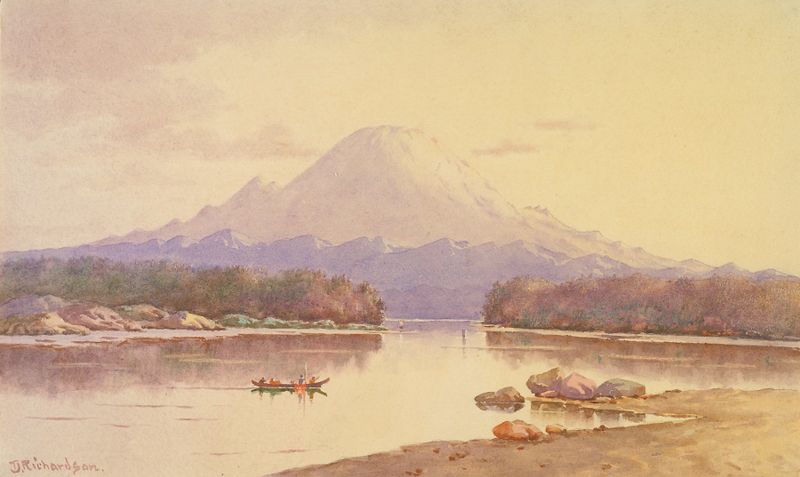
Mount Rainier
Theodore J. Richardson
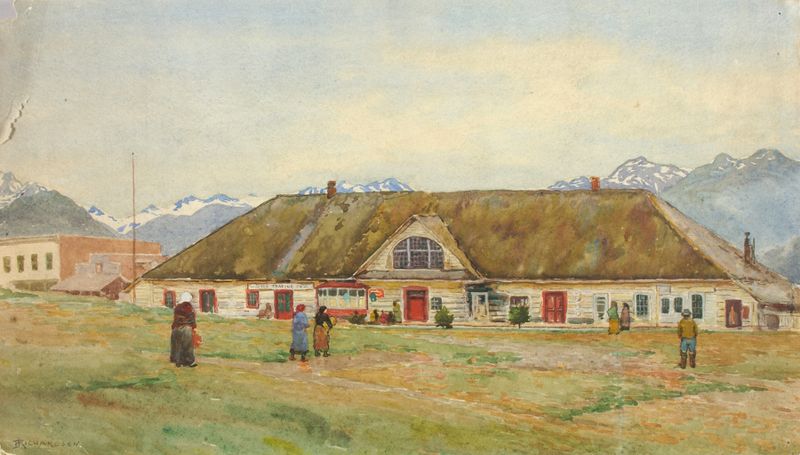
Old Russian Trading Post, Sitka
Theodore J. Richardson

The Ranch Native Village, Sitka, 1884
Theodore J. Richardson

Rear View Of Greek Church, Sitka, 1888
Theodore J. Richardson
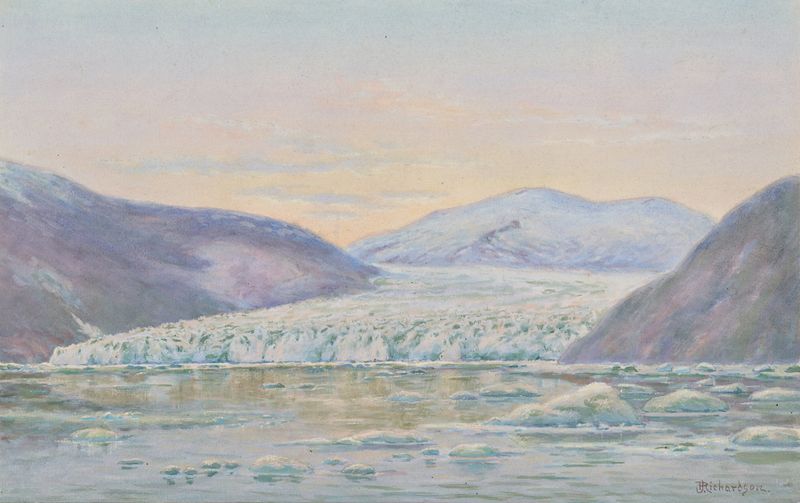
Taku Glacier, Evening
Theodore J. Richardson

St. Elias Alps
Theodore J. Richardson

Drying Blankets Over Canoes
Theodore J. Richardson

In The Old Quarter, Sitka, 1900
Theodore J. Richardson
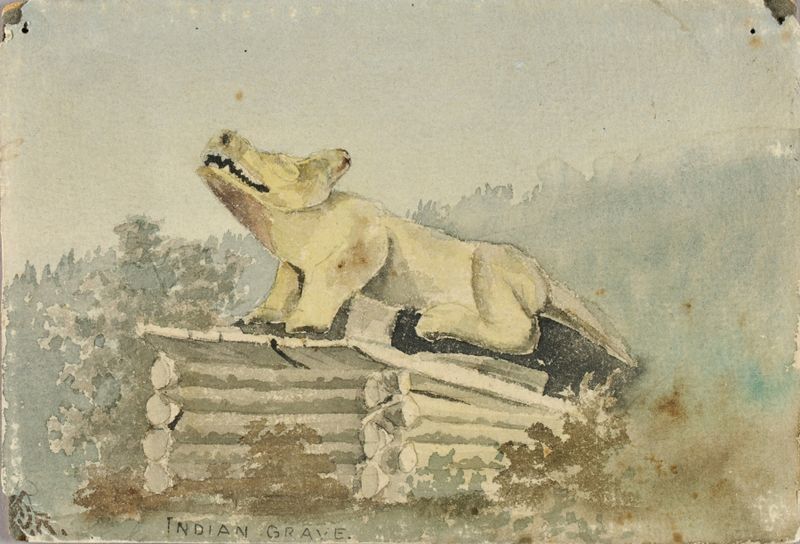
Indian Grave. Wolf Totem Over Medicine Man Grave, Wrangell
Theodore J. Richardson
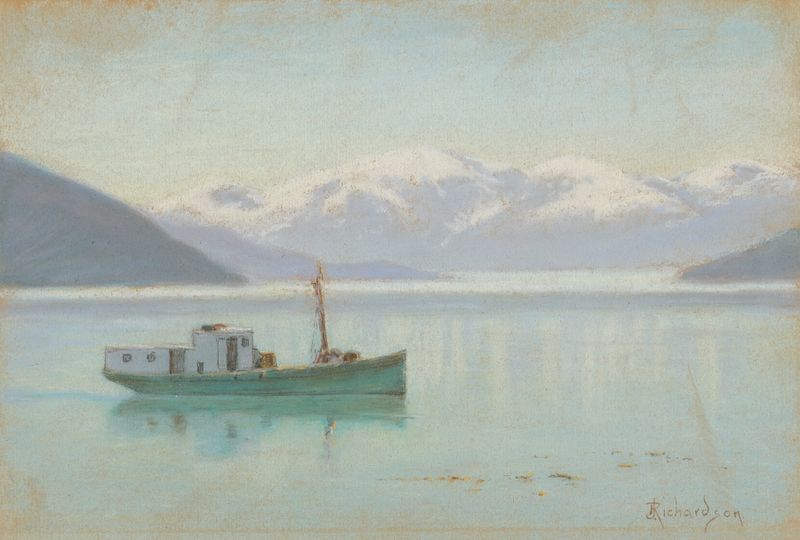
Jack Mantle’s Boat
Theodore J. Richardson
More Architecture Art
Browse all →
The statue of Liberty
Frédéric Auguste Bartholdi

View of Houses in Delft, Known as ‘The Little Street’
Johannes Vermeer

View of Houses in Delft, Known as ‘The Little Street’
Johannes Vermeer

The Cathedral in Rouen. The portal, Grey Weather
Claude Monet

The yellow house
Vincent van Gogh

The Church in Auvers-sur-Oise, View from the Chevet
Vincent van Gogh