
Chinon — History & Facts
In the quiet isolation of longing, desire weaves through the very fabric of creation, whispering secrets of the heart. Look to the shimmering horizon where the soft hues of twilight blend seamlessly into the tranquil waters. The muted blues and warm oranges of the sky reflect upon the river, creating a mesmerizing interplay that draws the eye. Notice how the brushstrokes convey both texture and fluidity, capturing the moment as light dances on the surface.
The gentle undulation of the landscape invites the viewer into a moment suspended between reality and reverie, as if the world holds its breath in anticipation. Delve deeper into the subtleties of the painting: the solitary boat gliding across the water, a metaphor for solitude and yearning. Its presence accentuates the vastness of the scene, embodying the tension between human desire and nature’s expansive tranquility. The distant castle, bathed in soft light, stands as a beacon of hope and aspiration, hinting at ambitions just out of reach.
Yet, alongside this beauty, there lies a sense of melancholy, echoing the artist’s own inner struggles. David Young Cameron painted Chinon in 1902 during a period of significant experimentation in the world of art. Working primarily in Scotland, he sought to capture the ethereal quality of the landscape with an Impressionistic touch. With a growing interest in the interplay of light and color, he was influenced by contemporary movements that emphasized emotional expression, allowing him to convey his personal desires and reflections—a sentiment that resonates powerfully within this work.
More Artworks by David Young Cameron
Browse all →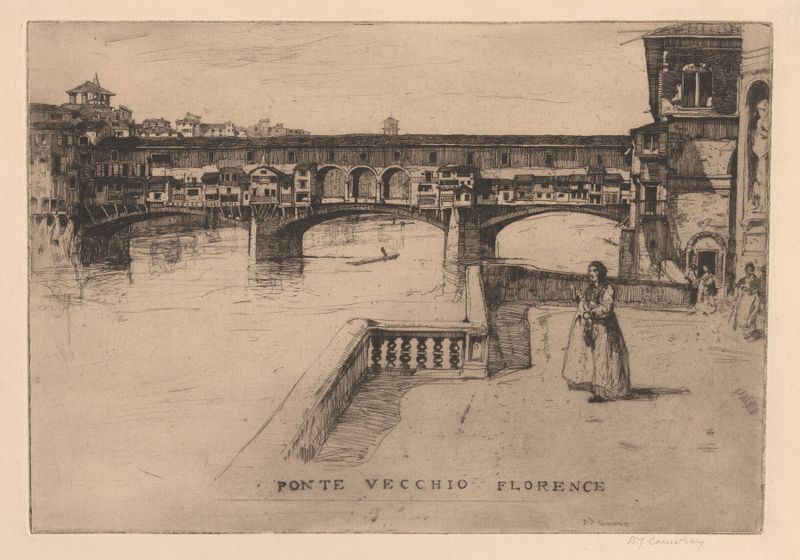
Ponte Vecchio
David Young Cameron

The Deanery, Winchester
David Young Cameron
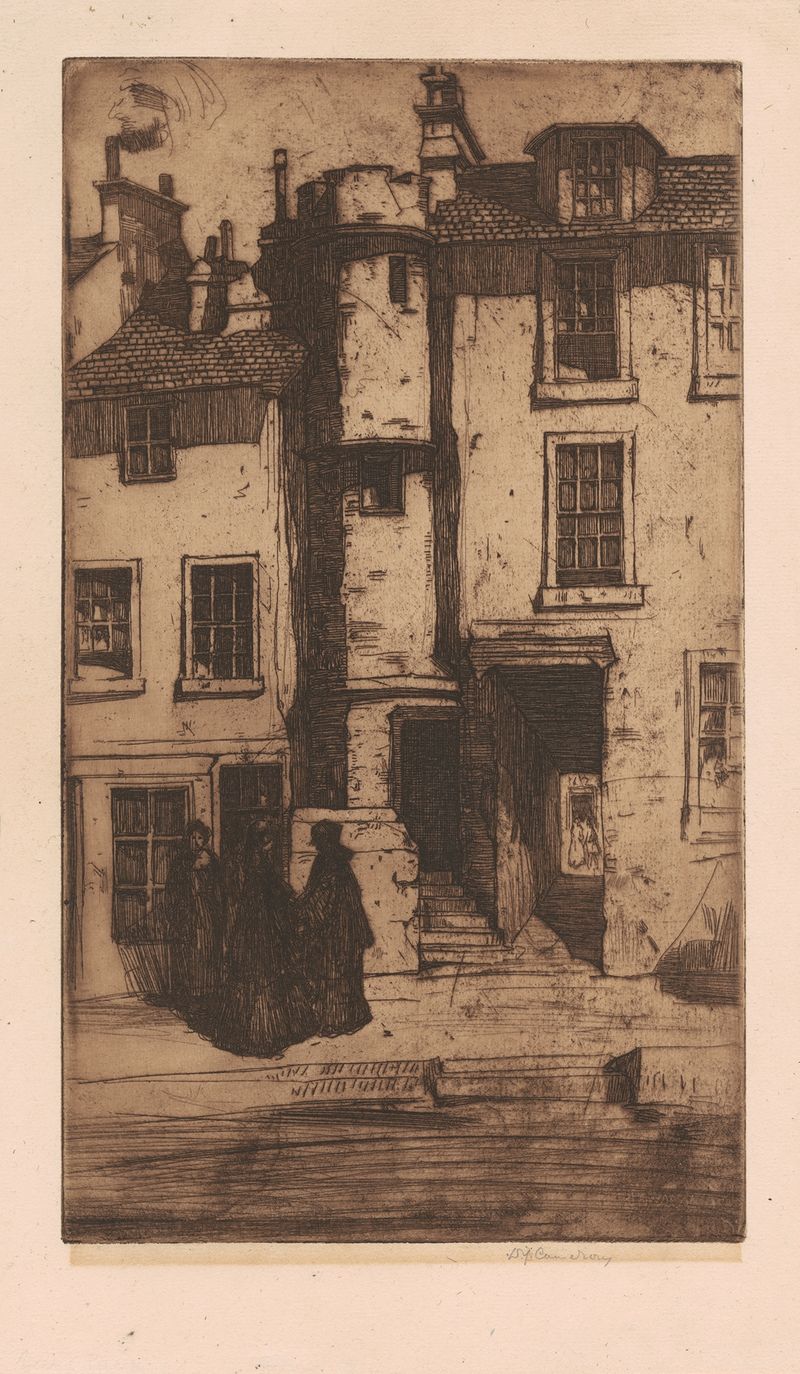
Old Houses, Stirling
David Young Cameron
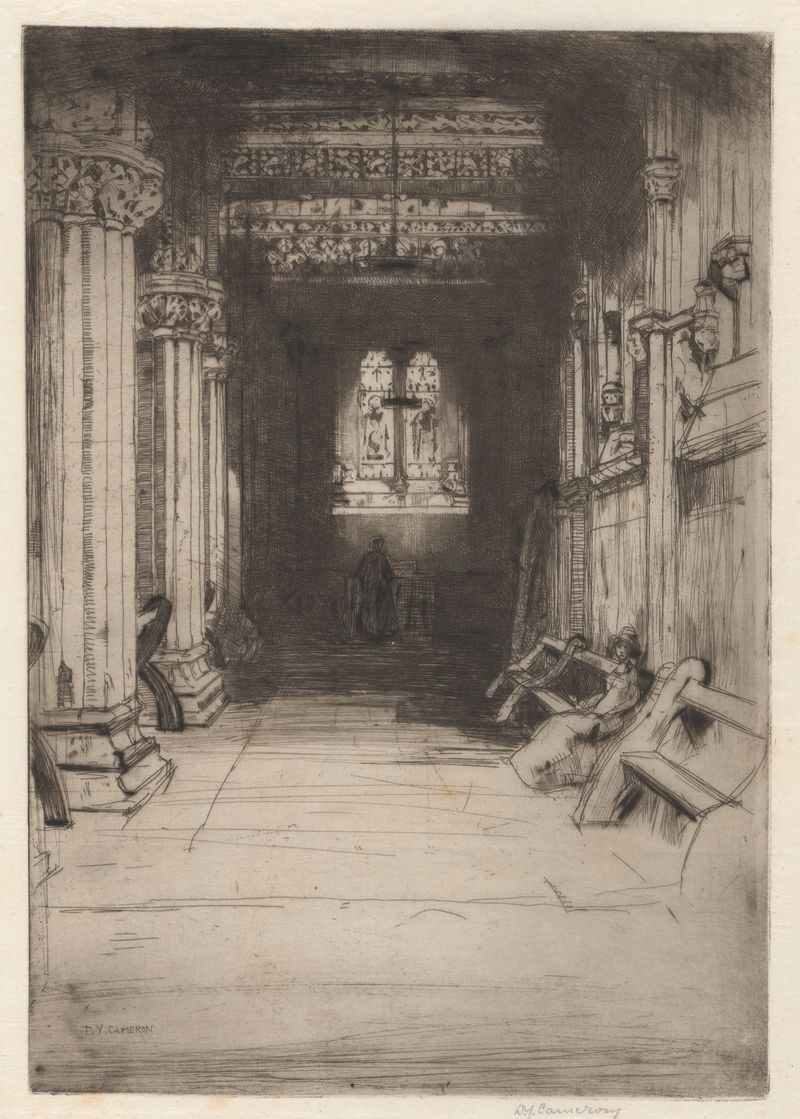
Rosslyn Chapel
David Young Cameron

The Old Museum, Beauvais
David Young Cameron
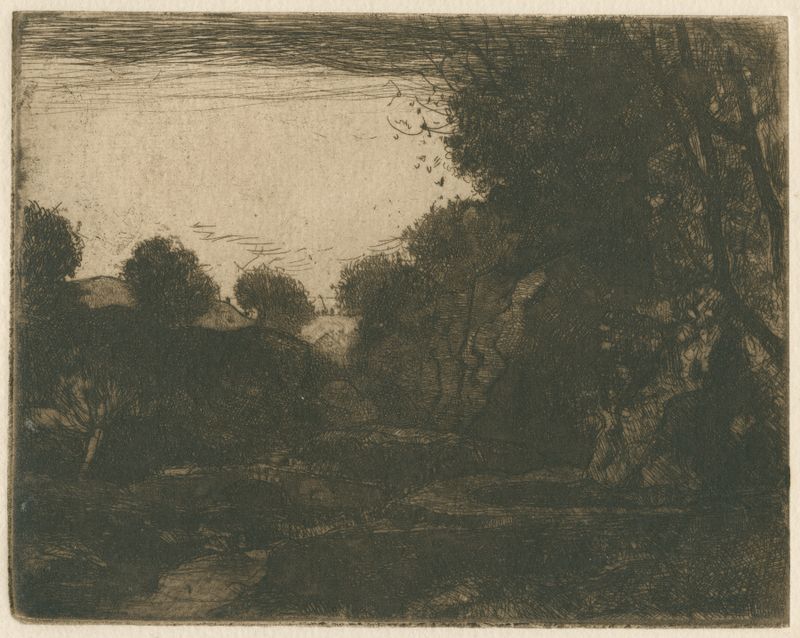
On the Bradford
David Young Cameron

The Smithy
David Young Cameron
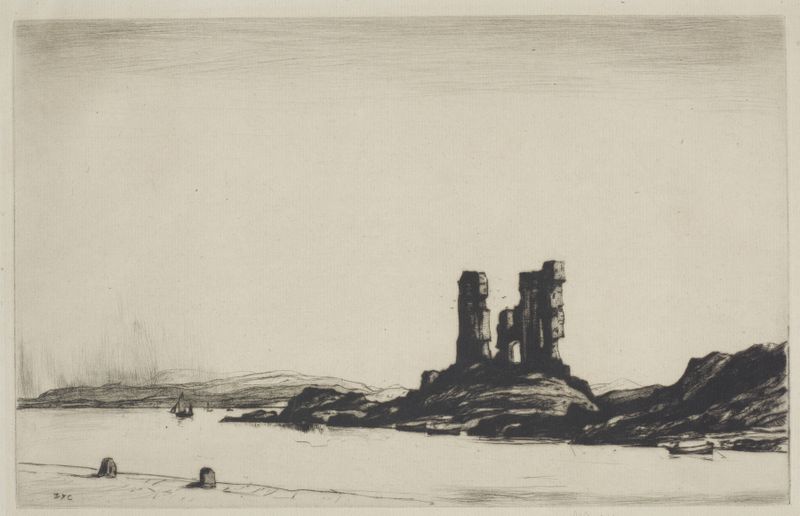
Castle Moyle
David Young Cameron
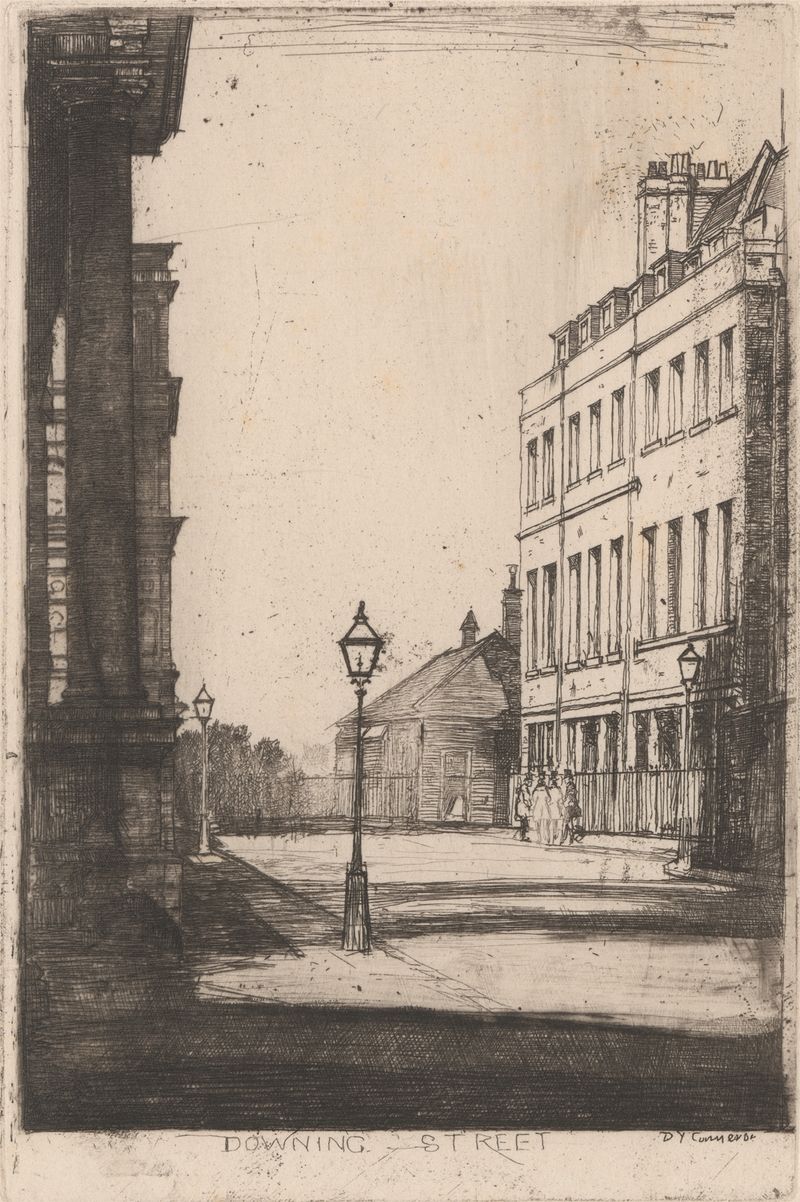
Downing Street
David Young Cameron

Glasgow Cathedral
David Young Cameron





