
Chinook Burial Grounds — History & Facts
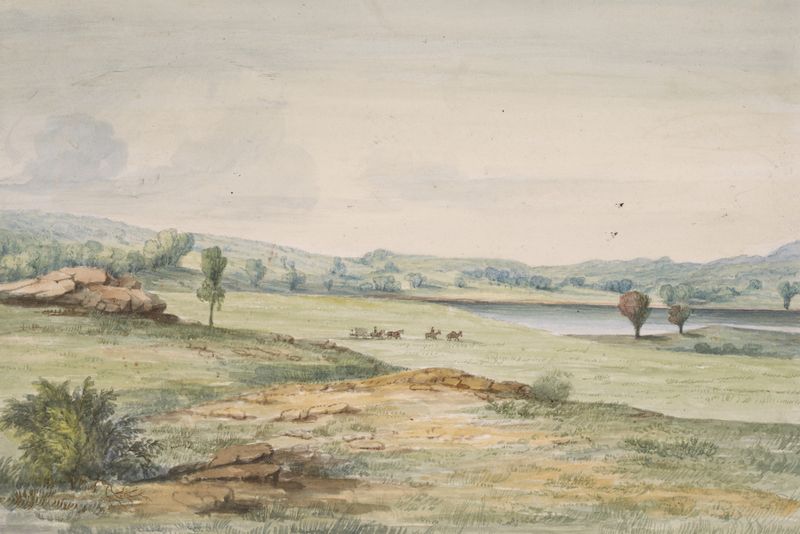
What if silence could speak through light? In the stillness of Chinook Burial Grounds, the weight of history lingers in the air, capturing a profound sense of longing that echoes through time. Look to the serene landscape, where gentle hills roll softly beneath a vast, open sky. Notice how the light bathes the burial mounds in a tender glow, illuminating the contours with a golden hue that contrasts with the cool shadows creeping in. The muted palette of browns and greens reflects a sense of reverence, inviting the viewer to pause and ponder the stories buried beneath the earth.
The delicate brushwork captures the texture of the grass and the ethereal quality of the clouds, allowing the viewer to feel both the tranquility and the melancholy of the scene. Beneath the peaceful exterior lies a deeper emotional tension, one that speaks to the loss of culture and identity. The mounds signify not just physical resting places but also the memories and traditions of a people. Each mound is a silent testament to lives once lived, longing for recognition and remembrance.
This palpable sense of absence is underscored by the vastness of the sky, which looms both ominously and protectively—a reminder of nature's indifference to human suffering and a call to acknowledge the past. In 1870, John Mix Stanley painted this piece during a time of significant upheaval in America, marked by westward expansion and the tragic impact on Indigenous peoples. Working in the Pacific Northwest, Stanley was deeply aware of the cultural erasure occurring around him, and his art reflects an urgency to document and honor the heritage that was so easily overlooked. This work stands as a poignant reminder of the stories that deserve to be told and remembered.
More Artworks by John Mix Stanley
Browse all →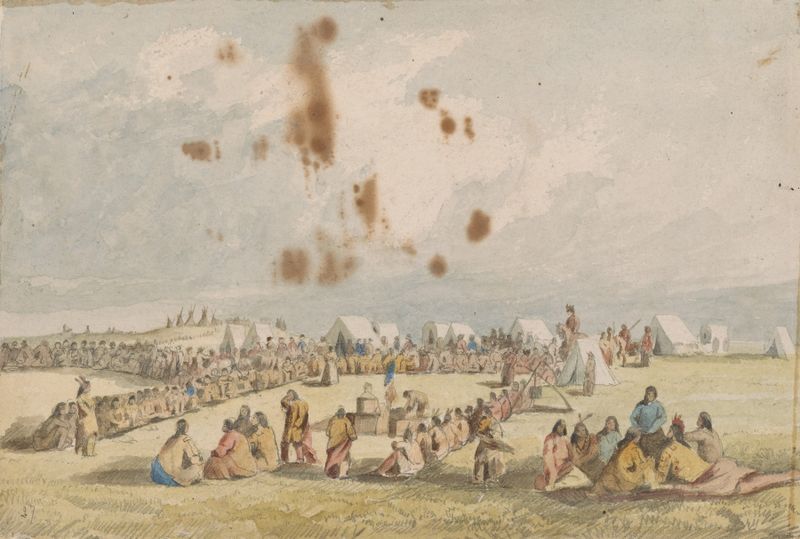
Distribution of Goods to the Assiniboins
John Mix Stanley
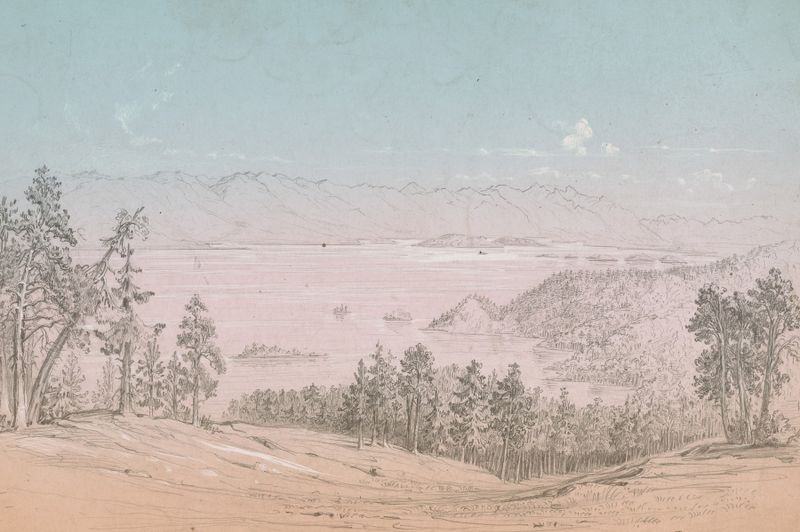
Flathead Lake, Looking toward the South
John Mix Stanley

A Morning in Milk River Valley
John Mix Stanley

Mount Rainier Viewed from Near Steilacoom
John Mix Stanley
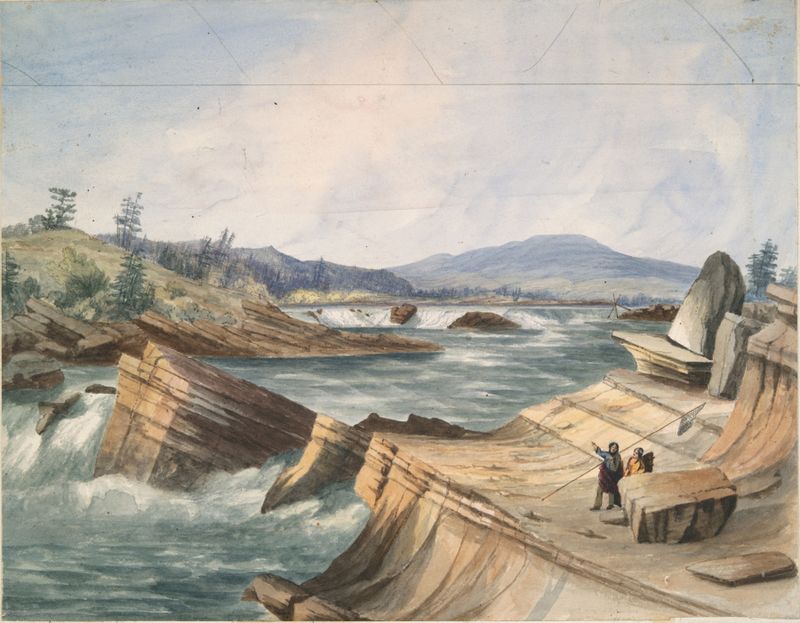
Kettle Falls, Columbia River
John Mix Stanley
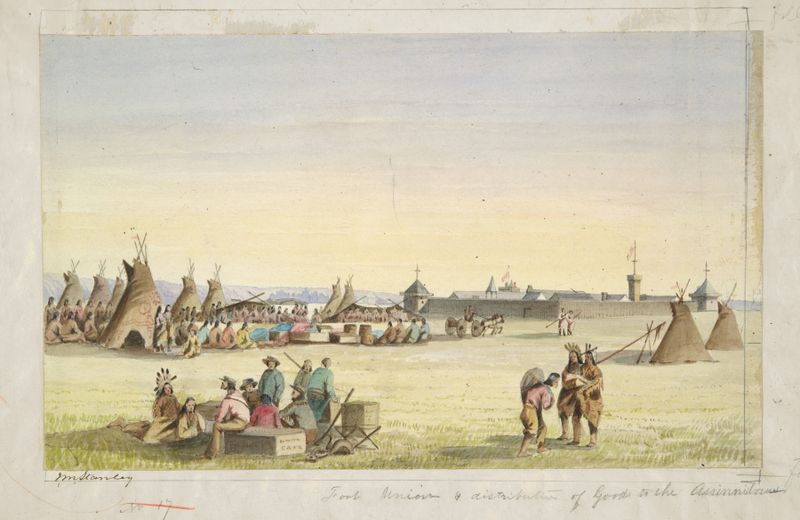
Fort Union and Distribution of Goods to the Assiniboins
John Mix Stanley

Pike Lake M.T.
John Mix Stanley
Sauk River
John Mix Stanley

Milk River – Bear’s Paw Mountain in Distance
John Mix Stanley

Fort Benton
John Mix Stanley





