
Château de Rochefort (Côte d’Or) — History & Facts
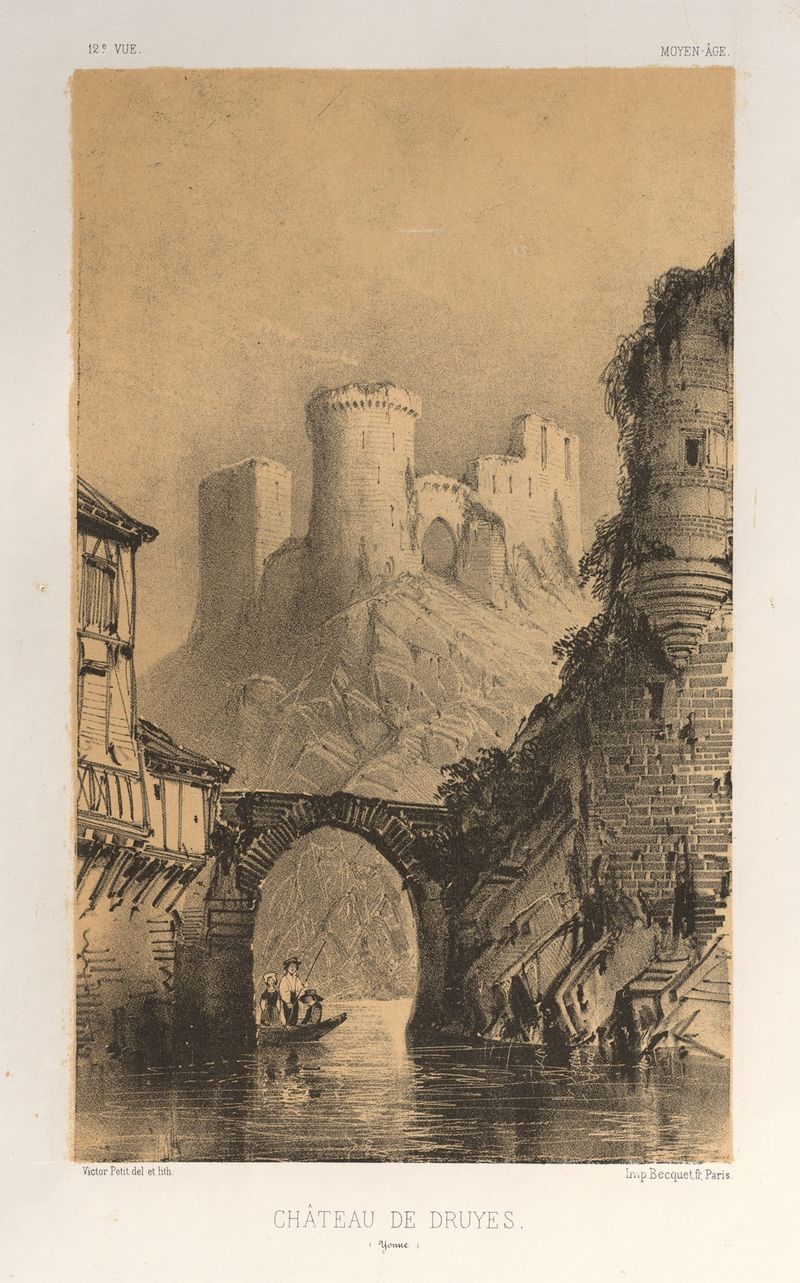
In Château de Rochefort (Côte d’Or), the viewer is welcomed into a realm where illusion reigns supreme, masterfully weaving together nature and architecture. Look to the foreground, where the château stands proud against a backdrop of swirling clouds and lush greenery. Notice how Petit deftly uses soft brushstrokes to create a sense of movement, making the foliage appear almost alive. The interplay of light and shadow breathes depth into the scene, with the sun breaking through the clouds to illuminate the castle’s elegant façade, drawing the eye towards its intricate details.
The color palette is rich, with deep greens and warm ochres, evoking a sense of both tranquility and vibrancy. As you delve deeper, consider the tension between the natural and the constructed. The imposing structure of the château contrasts sharply with the fluidity of the surrounding landscape, suggesting a dialogue between human ambition and the untamed beauty of nature. The painting captures the ephemeral quality of light, reflecting the transient moments that shape our reality.
In doing so, it invites reflection on the illusions we create within our lives—how the façade of stability often masks underlying chaos. In 1860, Petit painted this work during a period of great change in France, as the country was undergoing industrialization and urbanization. Amidst these transformations, he sought to celebrate the harmony of manmade structures within the natural world. His dedication to capturing the essence of landscapes was part of a broader movement in art, where artists began to embrace and explore the complex relationship between civilization and its environment.
More Artworks by Victor Petit
Browse all →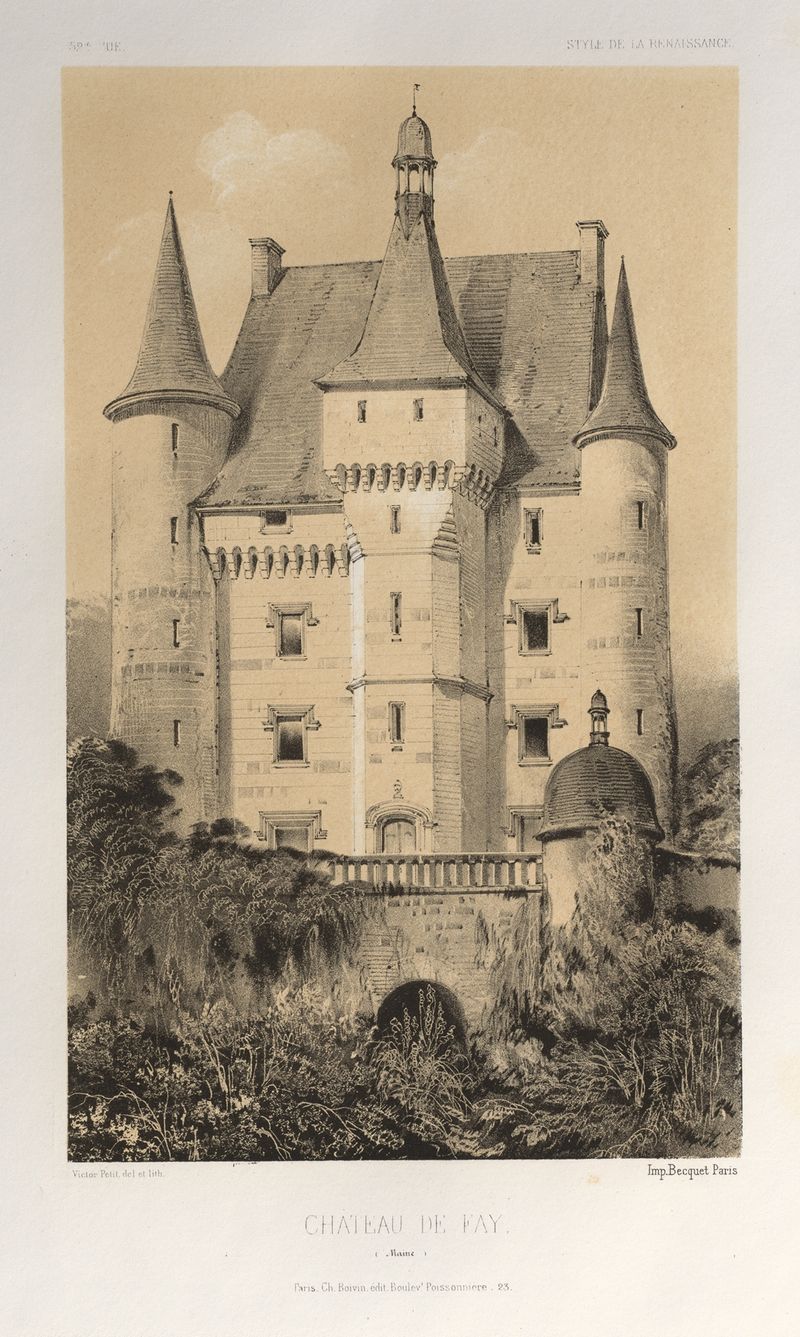
Château De Fay (Maine)
Victor Petit
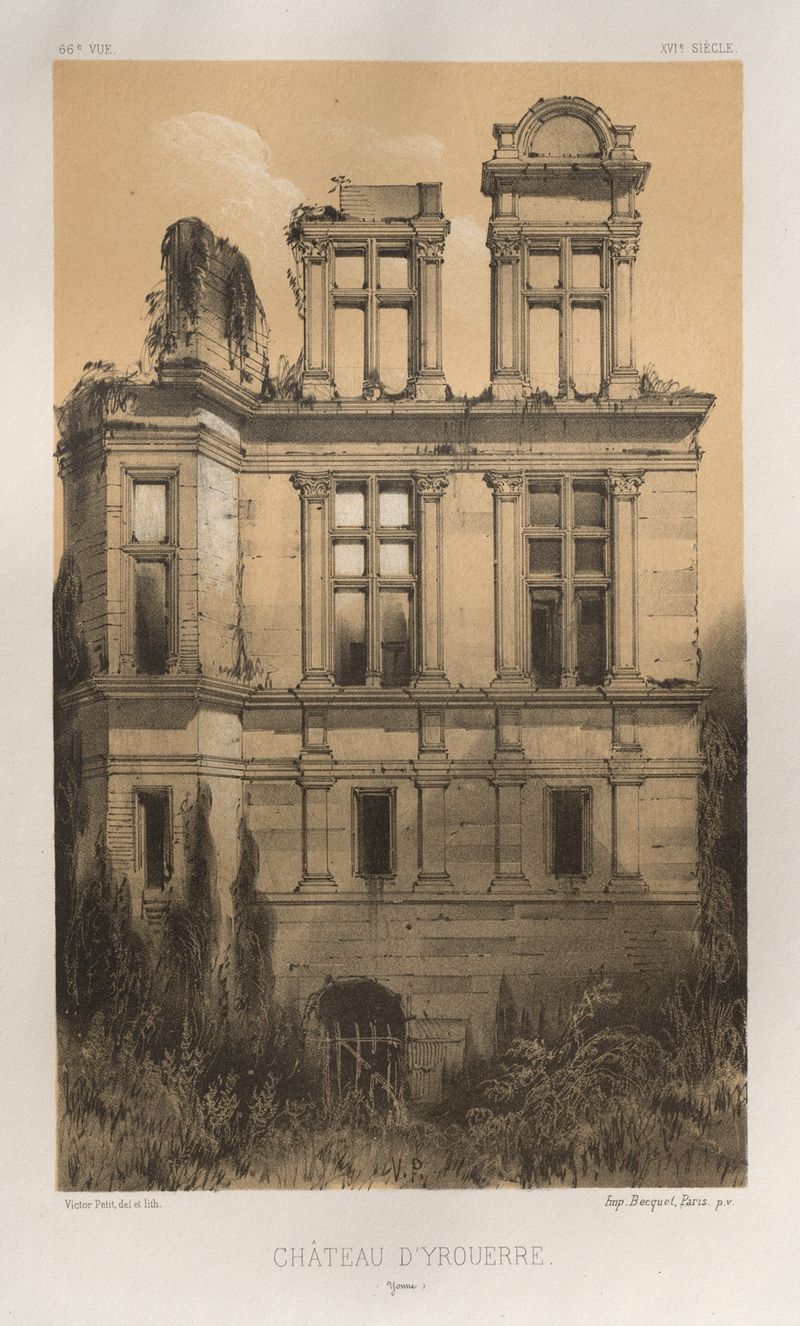
Château D’Yrouerre (Yonne)
Victor Petit
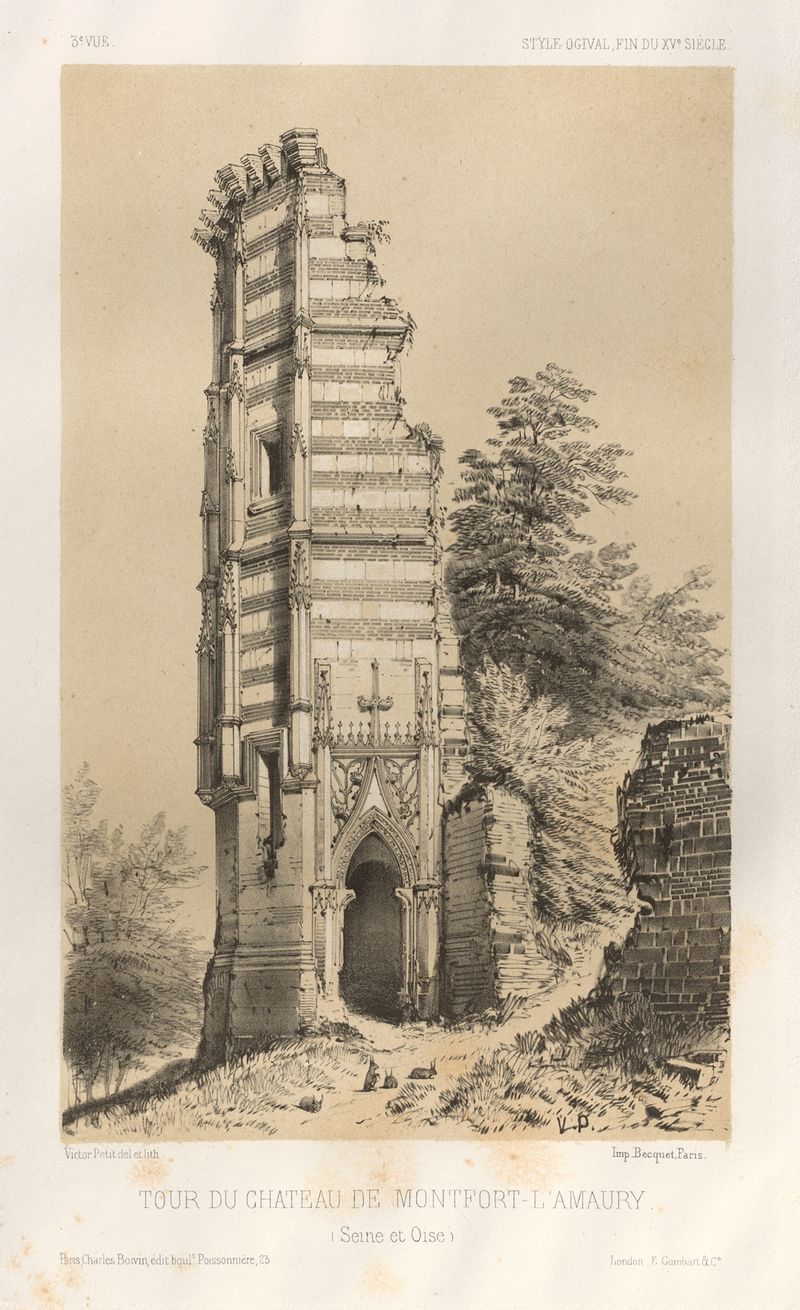
Tour du chateau de Montfort-l’Amaury (Seine-et-Oise)
Victor Petit

Tour Du Port De Marseille (Bouches Du Rhône)
Victor Petit
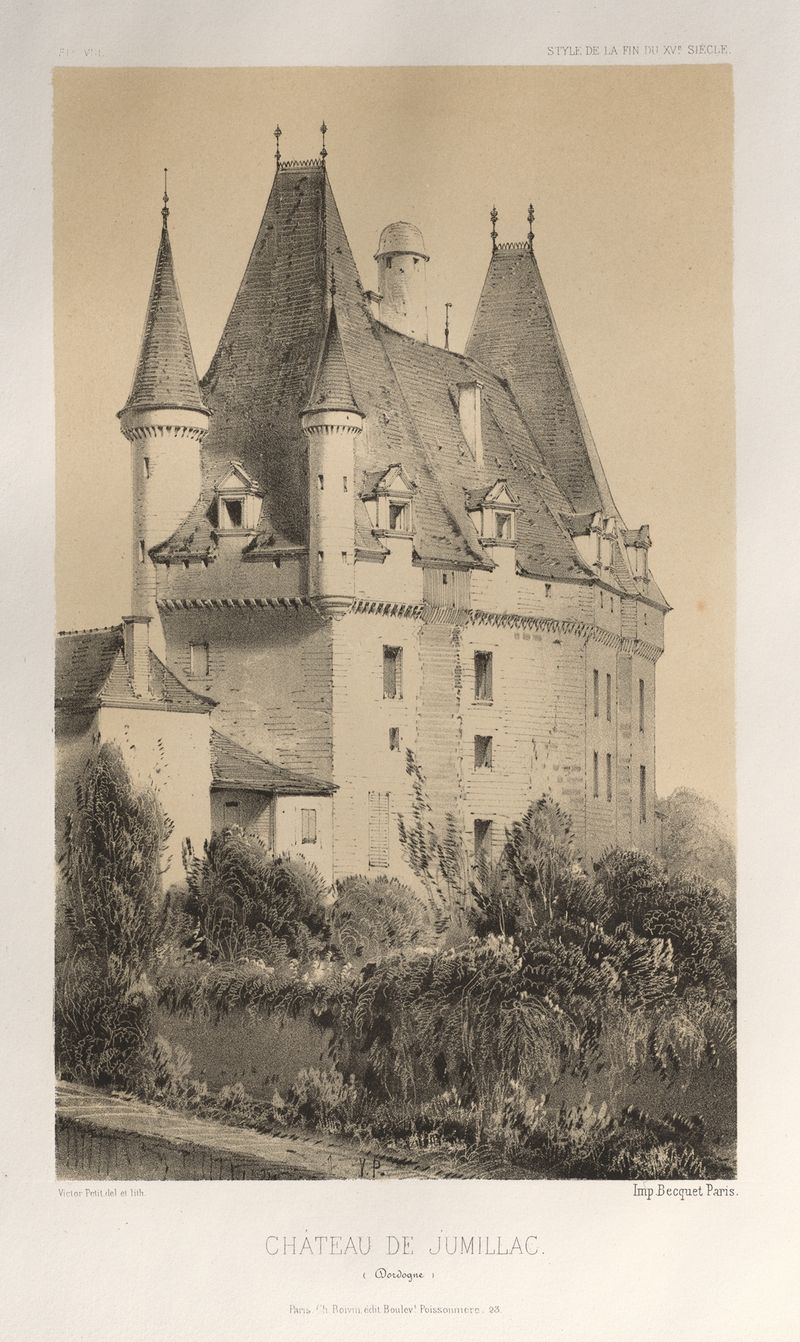
Château De Jumillac (Dordogne)
Victor Petit

Château de Tévray (Eure)
Victor Petit

Galerie Du Château De Jouancy (Saone et Loire)
Victor Petit

Château De Mello (Oise)
Victor Petit
Chateau De Druyes (Yonne)
Victor Petit

Le ChasteLet-Neuf (Corrèze)
Victor Petit
More Architecture Art
Browse all →
The statue of Liberty
Frédéric Auguste Bartholdi

View of Houses in Delft, Known as ‘The Little Street’
Johannes Vermeer

View of Houses in Delft, Known as ‘The Little Street’
Johannes Vermeer

The Cathedral in Rouen. The portal, Grey Weather
Claude Monet

The yellow house
Vincent van Gogh

The Church in Auvers-sur-Oise, View from the Chevet
Vincent van Gogh