
City Hall at Thorn — History & Facts
Could a single brushstroke hold eternity? In the quiet embrace of a sunlit day, the essence of a city unfolds, revealing both its splendor and shadows, whispering tales of betrayal hidden beneath its majestic façade. Look to the left at the grand City Hall, where intricate details emerge from the subtle interplay of light and shadow. The warm hues of ochre and amber breathe life into the structure, while sharp contrasts create a sense of depth and dimension. Observe how the artist captures the bustling activity surrounding the building; the small figures, seemingly insignificant, weave a narrative of their own against the monumental backdrop, drawing the viewer into the very heart of the scene. Yet, amidst the vibrancy, an undercurrent of tension pulses through the artwork.
The juxtaposition of the solid stone edifice and the soft, fleeting movements of the people hints at the fragility of human emotion. Each figure appears caught in their own world, perhaps harboring secrets or regrets that betray their outward appearances. The elegant architecture stands as a testament to civic pride, while the figures below evoke the transient nature of trust and ambition, reflecting the profound complexities of urban life. In 1848, when this piece was created, Eduard Gaertner was deeply engaged with the burgeoning Romantic movement, which emphasized emotional expression and the beauty of everyday life.
Living in Berlin during a period of political unrest and social change, he painted City Hall at Thorn amidst the backdrop of revolutionary fervor, capturing not only the architectural beauty but also the palpable tension of a society in flux.
More Artworks by Eduard Gaertner
Browse all →
View of Berlin with the Ephraim Palais at Left
Eduard Gaertner
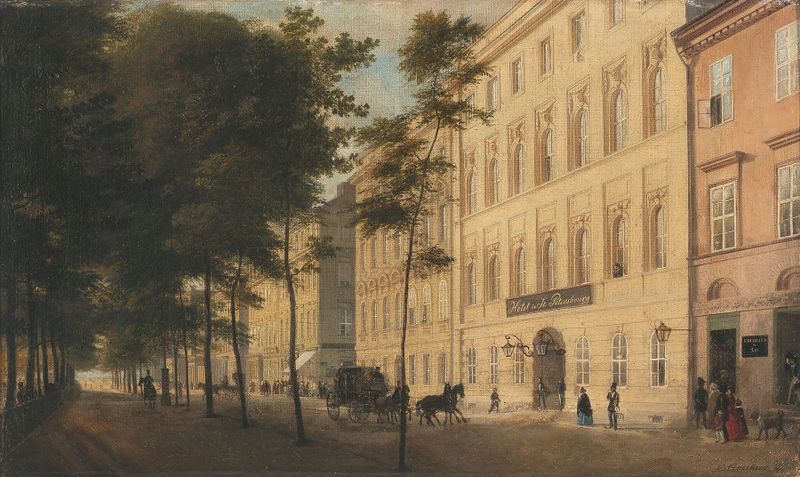
Blick in die Straße Unter den Linden, Ecke Charlottenstraße, mit dem Hôtel de St. Petersbourg
Eduard Gaertner

The Royal Opera, Unter den Linden, Berlin
Eduard Gaertner
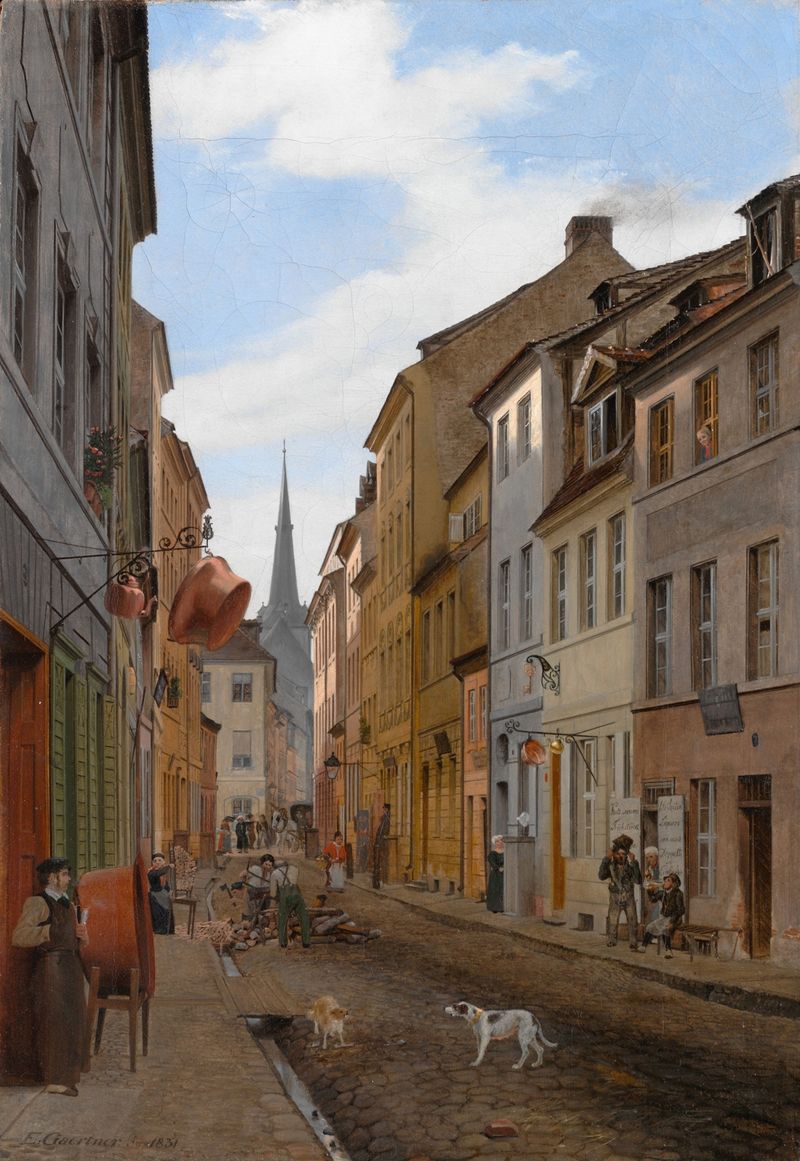
Parochialstrasse in Berlin
Eduard Gaertner
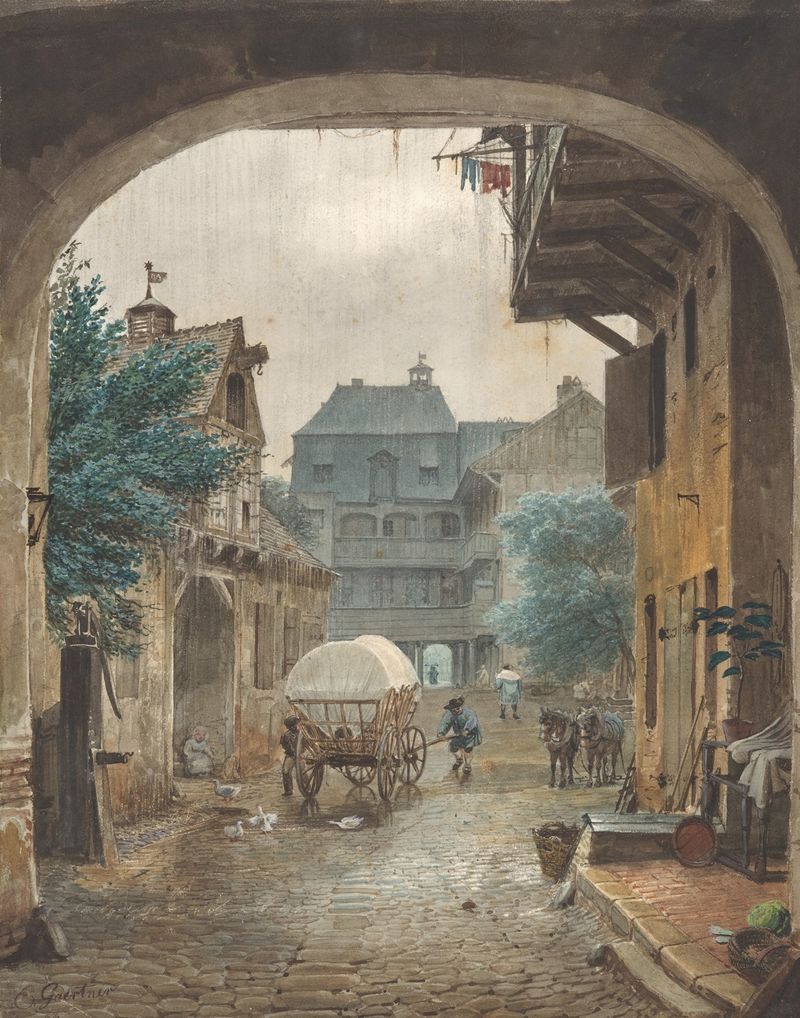
View into the Courtyard of an Inn at Colmar
Eduard Gaertner
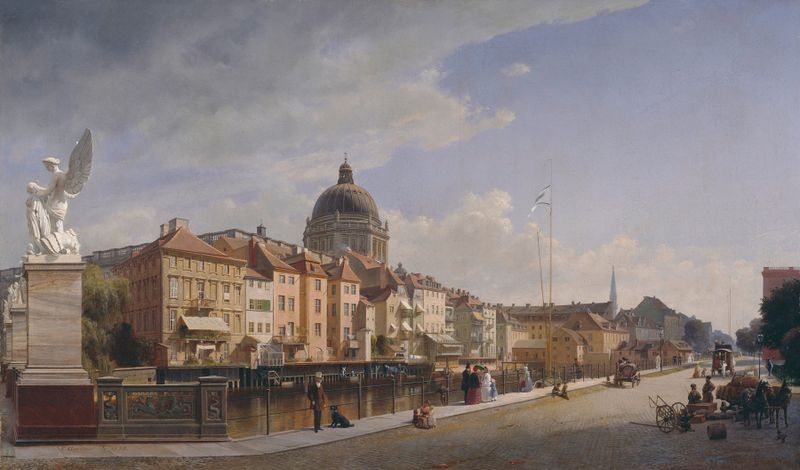
Rear view of the Houses at Schloßfreiheit
Eduard Gaertner
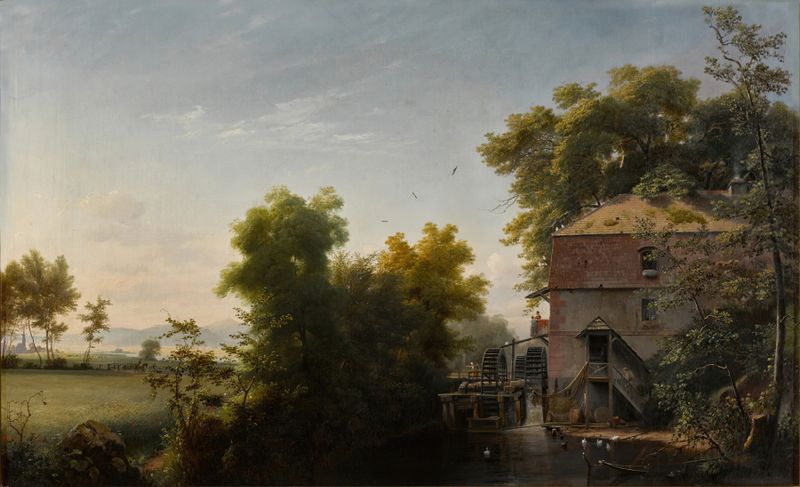
The Water Mill at Heilsberg
Eduard Gaertner

The Egyptian Temple Court in the Neues Museum, Berlin
Eduard Gaertner
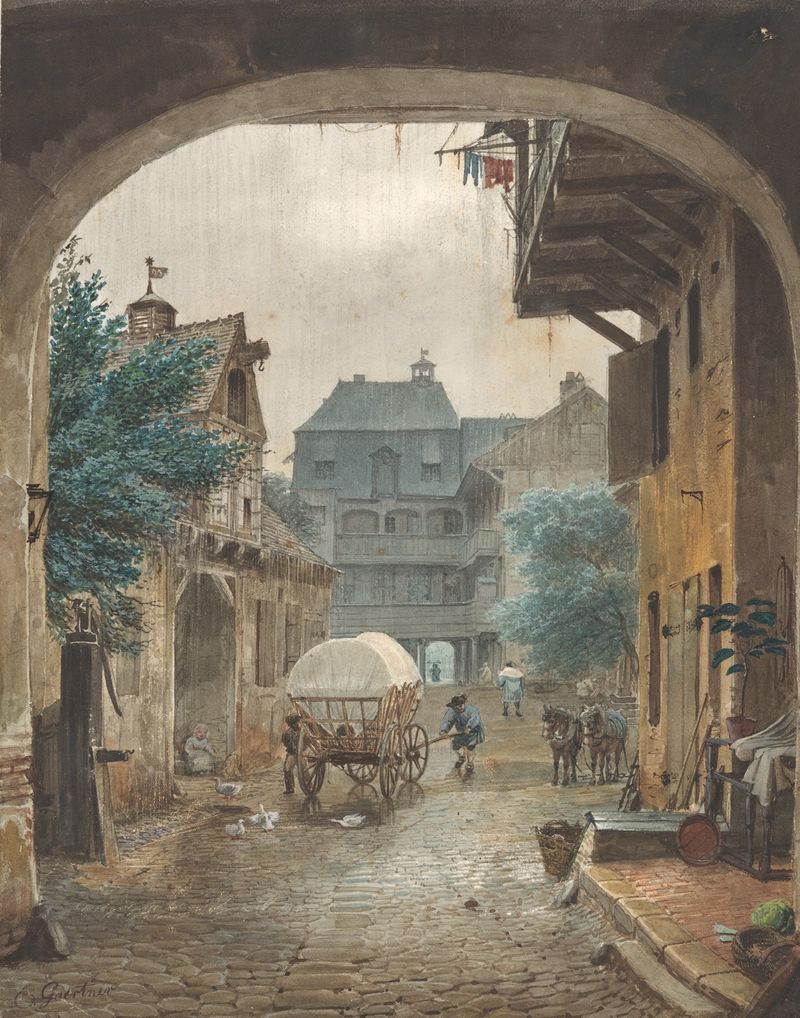
View into the Courtyard of an Inn at Colmar
Eduard Gaertner
More Architecture Art
Browse all →
The statue of Liberty
Frédéric Auguste Bartholdi

View of Houses in Delft, Known as ‘The Little Street’
Johannes Vermeer

View of Houses in Delft, Known as ‘The Little Street’
Johannes Vermeer

The Cathedral in Rouen. The portal, Grey Weather
Claude Monet

The yellow house
Vincent van Gogh

The Church in Auvers-sur-Oise, View from the Chevet
Vincent van Gogh